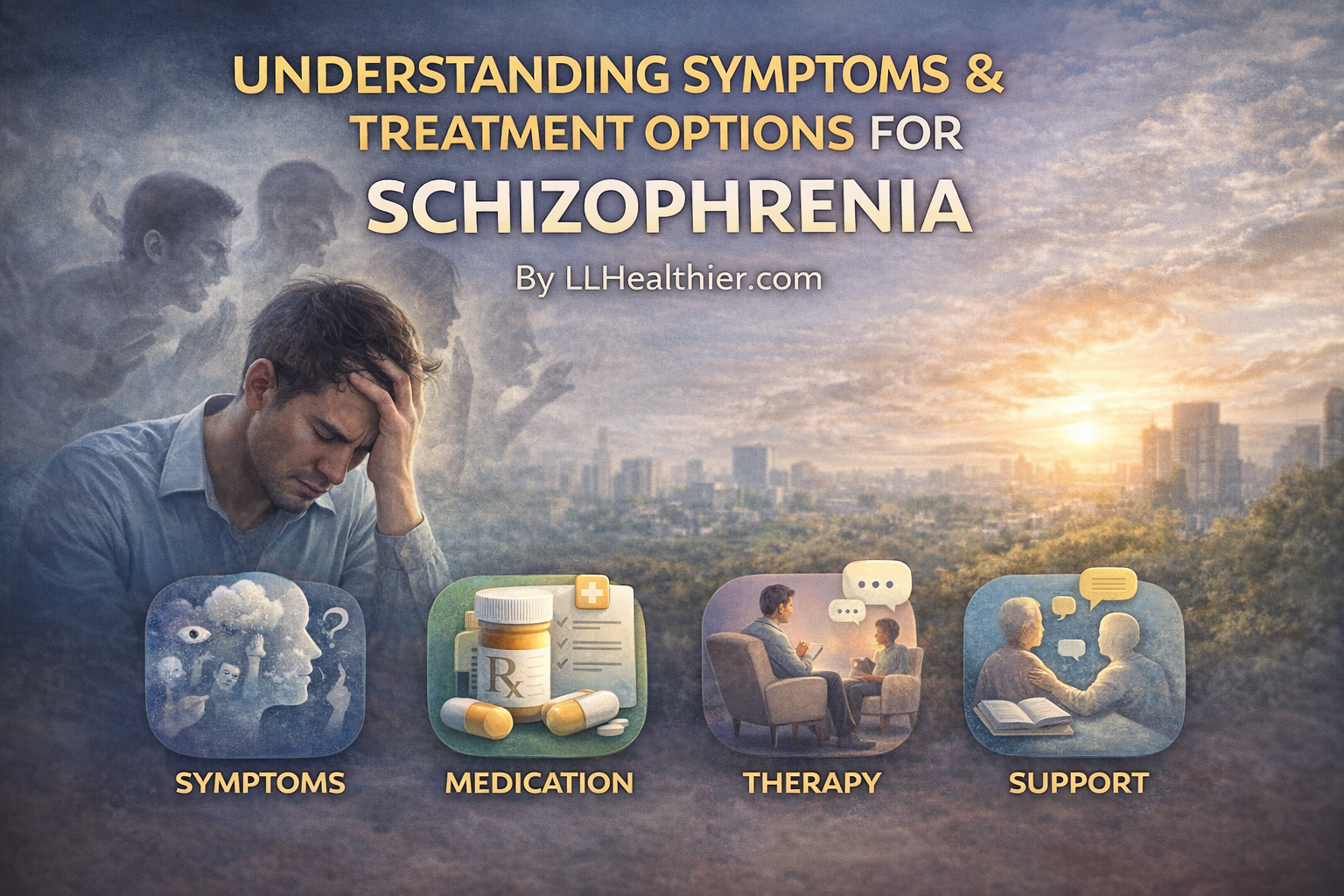
Understanding Symptoms and Treatment Options for Schizophrenia
Schizophrenia is one of the most misunderstood mental health conditions in the public conversation. Many people have heard the word, but fewer understand what it actually means. Popular culture has often portrayed schizophrenia in frightening or inaccurate ways, which can create stigma and confusion.
In reality, schizophrenia is a serious but treatable brain-based mental health disorder that affects how a person thinks, feels, interprets reality, and functions in daily life. It can disrupt relationships, work, school, and personal well-being. It can also be deeply distressing for family members who want to help but do not know where to begin.
The good news is that treatment has improved greatly over time. Many people with schizophrenia can manage symptoms, build meaningful lives, maintain relationships, and pursue work or education with the right support.
Understanding the symptoms and treatment options is an important first step.
What Schizophrenia Really Is
Schizophrenia is a chronic psychiatric disorder that affects perception, thinking, emotions, and behavior. It is not the same as having a “split personality,” which is a common myth. It also does not automatically mean violence or danger. Most people living with schizophrenia are not violent and are more likely to be harmed than to harm others.
The condition usually begins in late adolescence or early adulthood, though it can begin later in some cases. Symptoms often emerge gradually, but they can also appear more suddenly.
Schizophrenia exists on a spectrum. Some people experience severe symptoms that require hospitalization. Others have milder symptoms or long periods of stability.
Like many medical conditions, it varies from person to person.
Common Symptoms of Schizophrenia
Symptoms are often grouped into several categories. Understanding these categories can make the condition easier to recognize.
Positive Symptoms
The term “positive symptoms” does not mean good symptoms. It refers to experiences added to normal functioning.
Hallucinations are a well-known example. A person may hear voices, see things others do not see, or experience unusual sensations. Hearing voices is especially common.
Delusions are strongly held false beliefs that remain fixed even when evidence shows otherwise. A person may believe they are being watched, targeted, controlled, or given special messages.
Disorganized thinking can appear in speech. Thoughts may jump quickly, become hard to follow, or seem disconnected.
Unusual behavior may also occur. This can include agitation, odd movements, or behavior that seems out of place.
Negative Symptoms
Negative symptoms involve a reduction or loss of normal functioning.
A person may speak less, show reduced facial expression, or appear emotionally flat. Motivation often declines. Activities such as bathing, working, socializing, or keeping up with responsibilities may become difficult.
Pleasure from daily life may decrease. Energy may seem low. These symptoms are often mistaken for laziness or lack of effort, which can be painful and unfair.
Negative symptoms can be among the most disabling parts of schizophrenia.
Cognitive Symptoms
Many people with schizophrenia also struggle with thinking skills.
Attention may be weaker. Memory may suffer. Planning, organizing, and following through can become difficult.
These challenges can interfere with school, work, finances, and everyday routines.
Mood Symptoms
Some people experience depression, anxiety, irritability, or emotional distress along with schizophrenia. This can complicate recovery and increase suffering if not addressed.
Early Warning Signs
Before a clear psychotic episode develops, there may be subtle changes.
A person might withdraw socially, seem suspicious, lose interest in activities, struggle at work or school, neglect hygiene, or appear emotionally distant. Sleep patterns may change. Concentration may worsen.
Family members sometimes notice that “something feels off” before obvious symptoms emerge.
Early treatment can improve outcomes, so these signs matter.
What Causes Schizophrenia?
There is no single cause. Schizophrenia likely develops through a combination of factors.
Genetics can play a role. Having a close relative with schizophrenia may increase risk, though many people with the condition have no family history.
Brain chemistry and brain structure differences appear involved. Neurotransmitters such as dopamine and glutamate may contribute.
Environmental factors may also matter. Severe stress, trauma, pregnancy complications, substance use, or other developmental influences can increase risk in some people.
Cannabis use, especially heavy use in adolescence among vulnerable individuals, has been linked to increased risk.
It is important to understand that families do not “cause” schizophrenia through poor parenting. That outdated belief has been disproven.
How Schizophrenia Is Diagnosed
There is no single blood test or brain scan that confirms schizophrenia. Diagnosis is based on symptoms, history, behavior patterns, and professional evaluation.
A psychiatrist, psychologist, or other qualified clinician will assess experiences such as hallucinations, delusions, disorganized thought, emotional changes, and impaired functioning.
Medical causes must also be considered. Substance use, severe mood disorders, neurological conditions, infections, thyroid disease, and sleep deprivation can sometimes mimic psychosis.
This is why a careful evaluation matters.
Why Early Treatment Is So Important
When psychosis goes untreated for long periods, relationships, education, employment, and physical health can suffer. Distress often increases. Recovery may become harder.
Early treatment can reduce symptom severity, improve long-term functioning, and lower the risk of repeated crises.
Families often hesitate because they hope symptoms will pass on their own. Sometimes they fear stigma or conflict.
But schizophrenia is a medical condition, not a character flaw. Seeking help early is wise and compassionate.
Medication Treatment Options
Medication is often a central part of treatment. Antipsychotic medications can reduce hallucinations, delusions, agitation, and disorganized thinking.
These medications work in different ways, and individuals respond differently. Some people improve quickly. Others need adjustments over time.
There are older and newer antipsychotic medications. A psychiatrist helps choose based on symptom profile, side effects, medical history, and response.
For some people, long-acting injectable medications are helpful. These are given at scheduled intervals and can improve consistency when daily pills are difficult to maintain.
Medication does not “cure” schizophrenia, but it can greatly reduce symptoms and support stability.
Common Side Effects and Realistic Concerns
It is normal for patients and families to worry about medication side effects.
Depending on the medication, side effects may include drowsiness, weight gain, stiffness, tremor, restlessness, metabolic changes, dry mouth, or sexual side effects.
Because of this, treatment should involve regular follow-up, honest conversations, and monitoring of physical health.
Sometimes people stop medication because they dislike side effects or because they begin feeling better and assume they no longer need treatment. This can lead to relapse.
The answer is usually not silent suffering or abruptly stopping medication. It is working closely with a clinician to adjust the plan.
Therapy and Counseling
Medication helps many symptoms, but recovery usually involves more than medication alone.
Therapy can help individuals understand their illness, manage stress, cope with voices or suspicious thoughts, improve routines, and rebuild confidence.
Cognitive behavioral therapy for psychosis can help some people challenge distressing beliefs, reduce anxiety, and function better.
Supportive therapy also matters. Living with schizophrenia can be isolating. Having a safe place to talk can be healing.
Family therapy can improve communication and reduce household stress.
Social and Community Support
Schizophrenia often affects work, housing, finances, and relationships. Community support can be just as important as clinical care.
Case managers, social workers, supported employment programs, disability resources, peer specialists, and housing support services can all play meaningful roles.
Recovery is not only about symptom reduction. It is about helping someone live a stable and meaningful life.
That may include learning job skills, returning to school, managing money, cooking meals, or reconnecting socially.
Lifestyle Habits That Support Recovery
Healthy routines matter more than many people realize.
Sleep is important because sleep disruption can worsen mental health symptoms. Regular sleep habits can help stability.
Avoiding alcohol and recreational drugs is strongly advised. Substance use often worsens symptoms and increases relapse risk.
Regular exercise supports mood, stress reduction, and physical health. Nutritious food matters too, especially since some medications can increase weight or affect blood sugar.
Stress management is valuable. High stress can aggravate symptoms in some individuals.
Simple daily structure often helps more than chaos.
What Families Can Do
Families often feel overwhelmed, confused, or frightened after a loved one develops schizophrenia.
One of the most helpful steps is education. Learning about symptoms and treatment can reduce blame and panic.
Try to communicate calmly and clearly. Arguing aggressively about delusions usually does not help. It is often better to acknowledge the person’s distress without confirming false beliefs.
Encourage treatment, appointments, and medication follow-up. Offer practical help when appropriate.
At the same time, families need boundaries and support too. Caregiver stress is real.
Family support groups can be valuable.
What Recovery Can Look Like
Recovery does not always mean symptoms disappear completely. It often means symptoms are managed well enough that the person can function, build relationships, and pursue goals.
Some people experience only occasional episodes with long stable stretches. Others need ongoing treatment and support.
Many individuals with schizophrenia can work, study, marry, create art, parent, volunteer, and contribute richly to their communities.
The public often hears only the most severe stories. That gives an incomplete picture.
Crisis Situations and Safety
There are times when urgent help is needed.
If someone is suicidal, unable to care for basic needs, severely paranoid, extremely agitated, threatening harm, or disconnected from reality to the point of danger, emergency evaluation may be necessary.
Hospitalization can be life-saving and stabilizing during acute episodes.
This should be viewed as medical care during crisis, not punishment.
Reducing Stigma
Stigma remains one of the biggest barriers to treatment.
People with schizophrenia are often judged, mocked, feared, or dismissed. This can delay care and deepen isolation.
Language matters. A person is not “a schizophrenic.” They are a person living with schizophrenia.
Compassion matters too. No one chooses this illness.
When society becomes more informed, more people get help sooner.
Hope for the Future
Treatment continues to improve. Research into brain science, medications, therapy models, and early intervention programs offers hope.
Many communities now use coordinated specialty care for first-episode psychosis, combining medication, therapy, family education, employment support, and case management. These approaches can be highly effective.
The future for someone with schizophrenia today is often brighter than it was decades ago.
Schizophrenia is a serious but treatable mental health condition that affects thinking, perception, emotions, and daily functioning. Symptoms may include hallucinations, delusions, reduced motivation, social withdrawal, and cognitive difficulties.
Treatment often includes antipsychotic medication, therapy, family education, and practical community support. Healthy routines and early intervention can improve outcomes significantly.
Most importantly, schizophrenia does not erase a person’s value, dignity, or potential. With the right care, many people build meaningful and stable lives.
Understanding replaces fear. Treatment builds hope.
Found this article interesting? Bookmark it to read again later.
Then, share it for others to read. 🌎
Thank you!










Post Comment