How to Sleep Better and Feel Refreshed
Few things affect daily life as much as sleep. When sleep is good, the world feels more manageable. Energy is steadier. Patience comes easier. Focus improves. Even food cravings tend to calm down. When sleep is poor, the opposite often happens. Small problems feel bigger. Mood shortens. Motivation drops. The body feels heavy, and the mind never seems fully awake.
Many Americans live in a constant tug-of-war with sleep. Busy schedules, long work hours, parenting demands, stress, late-night screen time, caffeine, alcohol, and irregular routines all play a part. Some people assume poor sleep is simply the price of modern life. It is not.
Better sleep is often possible, and it usually begins with practical habits rather than dramatic solutions. You do not need a perfect bedroom, expensive supplements, or a complex routine. Most people improve sleep by understanding how the body works and making a few steady changes.
If your goal is to wake up feeling clearer, calmer, and more restored, this is where to start.
Why Sleep Matters More Than People Realize
Sleep is not passive downtime. While you rest, the body and brain stay busy repairing tissue, organizing memory, balancing hormones, regulating appetite, and supporting the immune system.
A single rough night can leave you irritable and foggy. Repeated poor sleep can affect blood pressure, mood, metabolism, concentration, and long-term health.
Many people try to outwork sleep loss with coffee and determination. That can help temporarily, but it does not replace real recovery. Sleep debt tends to show up somewhere, often as fatigue, cravings, poor judgment, or burnout.
Good sleep is not laziness. It is maintenance.
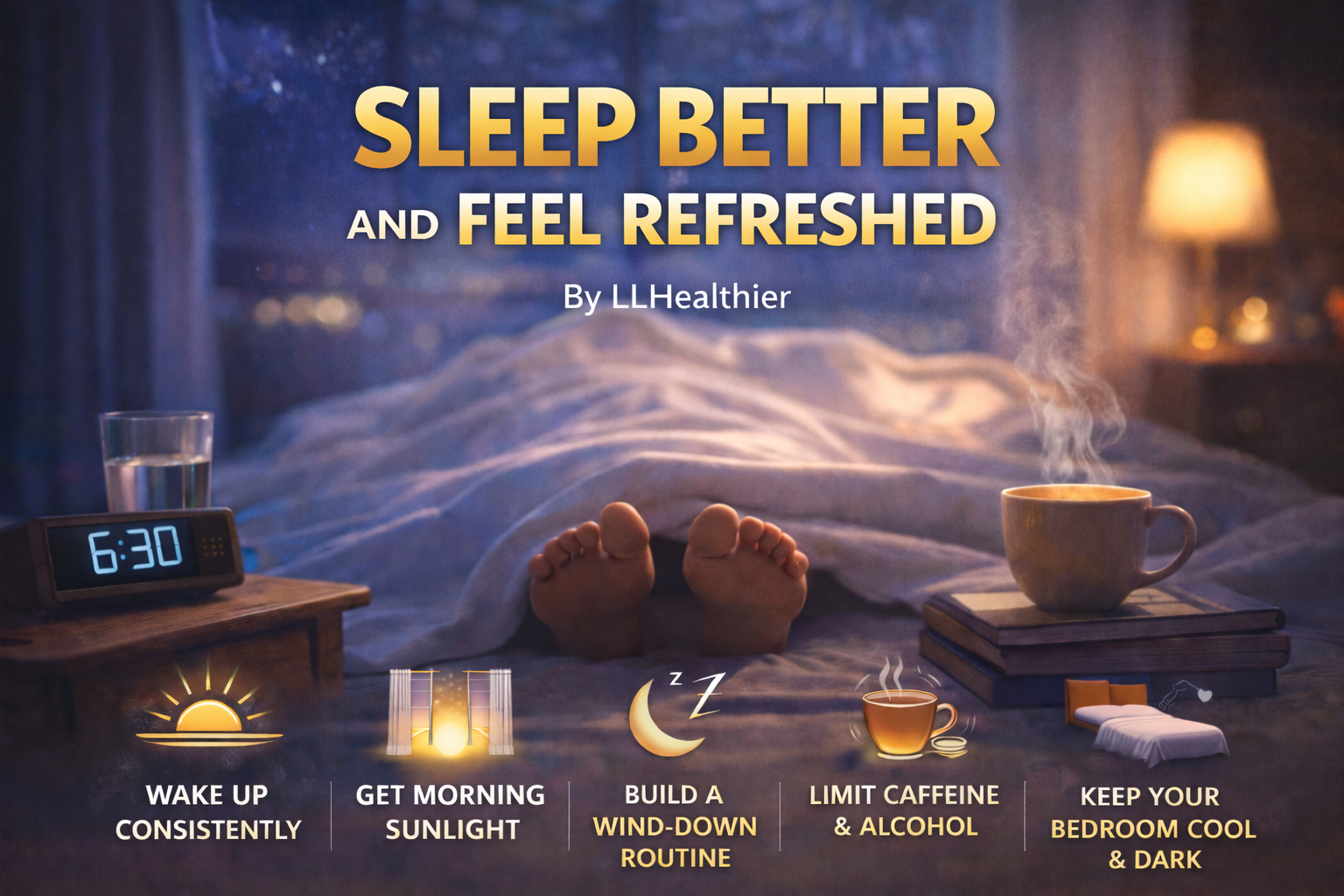
Start with a Consistent Wake Time
If I could give only one piece of sleep advice, it would be this: wake up at roughly the same time every day.
People often focus only on bedtime, but wake time is what anchors the body clock. Your internal rhythm responds strongly to regular patterns. When wake time changes drastically from day to day, sleep timing often becomes unstable.
This is common on weekends. Staying up late and sleeping in may feel rewarding, but it can create a mini jet lag by Monday morning.
Try to keep your wake time within the same one-hour range most days. You do not need perfection. You need rhythm.
Once wake time steadies, bedtime often begins to improve naturally.
Get Morning Light into Your Eyes
Morning light is one of the strongest signals for healthy sleep later that night.
When bright light reaches the eyes early in the day, it helps set your internal clock. It tells the brain when daytime begins, which supports the evening release of melatonin, the hormone tied to sleepiness.
Try stepping outside within the first hour after waking. Even ten to fifteen minutes can help. Walk the dog, drink coffee on the porch, or simply stand outside for a few minutes.
Cloudy days still count. Outdoor light is usually much stronger than indoor lighting.
This simple habit often improves both alertness in the morning and sleepiness at night.
Build a Wind-Down Period at Night
Many adults expect sleep to arrive instantly while living at full speed until the moment their head hits the pillow.
The body rarely works that way.
Sleep tends to come easier when there is a transition period between the demands of the day and bedtime. Think of it as landing the plane rather than crashing it onto the runway.
A wind-down routine might include dimming lights, taking a warm shower, stretching gently, reading something calming, journaling, prayer, or quiet conversation.
The activity matters less than the signal. Repeated nightly habits teach the brain that sleep is approaching.
Even twenty to thirty minutes can make a difference.
Reduce Evening Screen Stimulation
Phones, tablets, laptops, and televisions can interfere with sleep in two ways.
First, they keep the mind engaged. News, emails, work messages, games, and social media can stimulate attention when the brain should be settling.
Second, bright light exposure in the evening may delay melatonin release in some people.
This does not mean screens are forbidden forever. It means timing matters.
If possible, lower screen use in the hour before bed. If you need a device, dim the brightness and avoid emotionally charged content. A calm documentary affects the brain differently than reading stressful headlines or answering work emails at 11 p.m.
Many people notice sleep improves simply by putting the phone down earlier.
Watch Caffeine Timing
Caffeine can be useful. It improves alertness and helps many people function. But it lasts longer in the body than most realize.
Some people can drink coffee after dinner and sleep fine. Others are sensitive enough that an afternoon cup quietly disrupts sleep hours later.
If you struggle with falling asleep or wake feeling unrested, examine your caffeine habits honestly. Coffee, tea, energy drinks, pre-workout powders, and some sodas all count.
Try limiting caffeine to the morning or early afternoon for two weeks and see what changes. This experiment often reveals more than any article can.
Be Smart About Alcohol
Alcohol can make people sleepy, which leads many to think it helps sleep. In reality, alcohol often lowers sleep quality.
It may help you fall asleep faster, but later in the night it can increase awakenings, reduce restorative sleep stages, worsen snoring, and leave you feeling dull in the morning.
This is especially true with larger amounts or drinking close to bedtime.
If sleep is a priority, keep alcohol moderate and allow several hours between drinking and bedtime when possible.
Keep the Bedroom Sleep Friendly
The sleep environment matters more than many people think.
A cool room often supports deeper sleep. Many people rest better in a slightly cooler bedroom than a warm one.
Darkness helps as well. Blackout curtains, a sleep mask, or reducing hallway light can be surprisingly helpful.
Noise is another factor. Some people need quiet. Others sleep well with a fan or white noise machine that masks sudden sounds.
Comfort matters too. An old mattress, poor pillow support, or overheating bedding can quietly chip away at sleep quality night after night.
You do not need luxury. You need comfort and consistency.
Use the Bed for Sleep, Not Everything
When the bed becomes a place for work calls, scrolling, stressful conversations, bills, and television marathons, the brain may stop linking bed with sleep.
Try to rebuild that connection. Use the bed mainly for sleep and intimacy when possible.
If you lie awake for long periods frustrated, get up briefly. Sit in dim light and do something quiet until you feel sleepy again, then return to bed.
This prevents the bed from becoming associated with tossing, turning, and worry.
Exercise Helps More Than Many Pills
Regular physical activity is one of the strongest natural sleep aids available.
Movement helps regulate stress, improves mood, supports metabolic health, and often deepens sleep quality. Walking counts. Strength training counts. Gardening counts. Biking, swimming, yoga, and sports all count.
You do not need intense workouts to benefit.
Timing can matter for some people. Vigorous exercise too close to bedtime may feel energizing rather than calming. If that applies to you, shift harder workouts earlier and keep evening movement gentle.
The main point is consistency.
Be Careful with Naps
Naps can be helpful, especially after a rough night, illness, or shift work. But long or late naps can reduce sleep pressure and make bedtime harder.
If naps help you, keep them shorter and earlier in the day when possible.
A brief nap can refresh energy. A two-hour late afternoon nap may set up a frustrating night.
Pay attention to your own pattern.
Calm the Racing Mind
Many people do not have a sleep problem. They have a thinking problem at bedtime.
The house gets quiet, distractions fade, and suddenly the brain starts reviewing mistakes, planning tomorrow, replaying arguments, and imagining worst-case scenarios.
This is common and very human.
A useful strategy is to give worry a place earlier in the evening. Write tomorrow’s tasks down. Make a short plan. Journal concerns onto paper. The mind often quiets when it trusts things have been captured.
Breathing exercises can help as well. Slow exhales signal safety and calm.
If anxiety is persistent or overwhelming, counseling can be life-changing. Mental health support often improves sleep faster than supplements ever could.
Eat in a Way That Supports Sleep
Large heavy meals right before bed can trigger reflux, discomfort, and restless sleep. Going to bed starving can also be distracting.
Try to finish dinner a few hours before sleep when possible. If hunger appears later, a light snack may be better than ignoring it. Something simple such as yogurt, fruit, oatmeal, or toast often works well.
People vary widely here. Notice what your own body tolerates.
Spicy foods, heavy fried meals, and late-night overeating commonly create problems.
Supplements Can Help, But They Are Not the Foundation
Many people hope a supplement will solve sleep trouble overnight. Some products can help certain people, but they work best after habits are addressed.
Melatonin may be useful for schedule changes, jet lag, or trouble falling asleep. More is not always better. Lower doses are often enough.
Magnesium may help those with tension or low intake. Herbal teas such as chamomile can support relaxation.
Still, no supplement can fully overcome late caffeine, high stress, erratic schedules, alcohol excess, or constant midnight screen use.
Use supplements thoughtfully, not as the first and only answer.
When to Consider a Medical Cause
Sometimes poor sleep is not just habit related.
Loud snoring, choking during sleep, morning headaches, severe daytime fatigue, high blood pressure, and witnessed breathing pauses can suggest sleep apnea. This condition is common and treatable.
Restless legs, chronic pain, depression, anxiety disorders, reflux, thyroid issues, and medication side effects can also disrupt sleep.
If you have tried good habits and still feel exhausted, it is worth speaking with a healthcare professional. You may need treatment, not just tips.
What Feeling Refreshed Really Means
Many adults assume refreshed means waking up ecstatic at dawn every day. That is unrealistic.
Feeling refreshed usually means waking with enough energy to start the day without dragging yourself forward. It means mental clarity returns within a reasonable time. It means fewer crashes, better patience, and more stable mood.
Even healthy sleepers sometimes have rough nights. The goal is not perfection. It is a strong average.
A Practical Sleep Reset for the Average Busy Adult
If sleep has been off track, keep the reset simple.
Wake at the same time daily. Get outside for morning light. Limit caffeine after lunch. Move your body most days. Reduce evening screen intensity. Create a short wind-down routine. Keep the bedroom cool and dark. Save the bed for sleep. Be patient for one to two weeks.
These basics often work better than people expect.
Common Mistakes That Quietly Sabotage Sleep
Many people chase bedtime earlier while still sleeping in late on weekends. Others use alcohol to unwind, scroll in bed for an hour, or consume caffeine late while insisting it has no effect.
Some stay in bed for ten hours hoping to catch sleep, but spend much of it awake and frustrated.
Others panic after one bad night and create even more pressure around sleep.
Sleep responds best to steady behavior, not desperation.
Sleeping better and feeling refreshed usually comes from small habits repeated consistently.
Keep a regular wake time. Get morning light. Wind down at night. Respect caffeine and alcohol timing. Make the bedroom comfortable. Move during the day. Calm the mind before bed.
Most importantly, give it time. The body often needs several days or weeks to trust a new rhythm.
Better sleep is not reserved for the lucky few. For many people, it is built one evening and one morning at a time.
Found this article interesting? Bookmark it to read again later.
Then, share it for others to read. 🌎
Thank you!









Post Comment