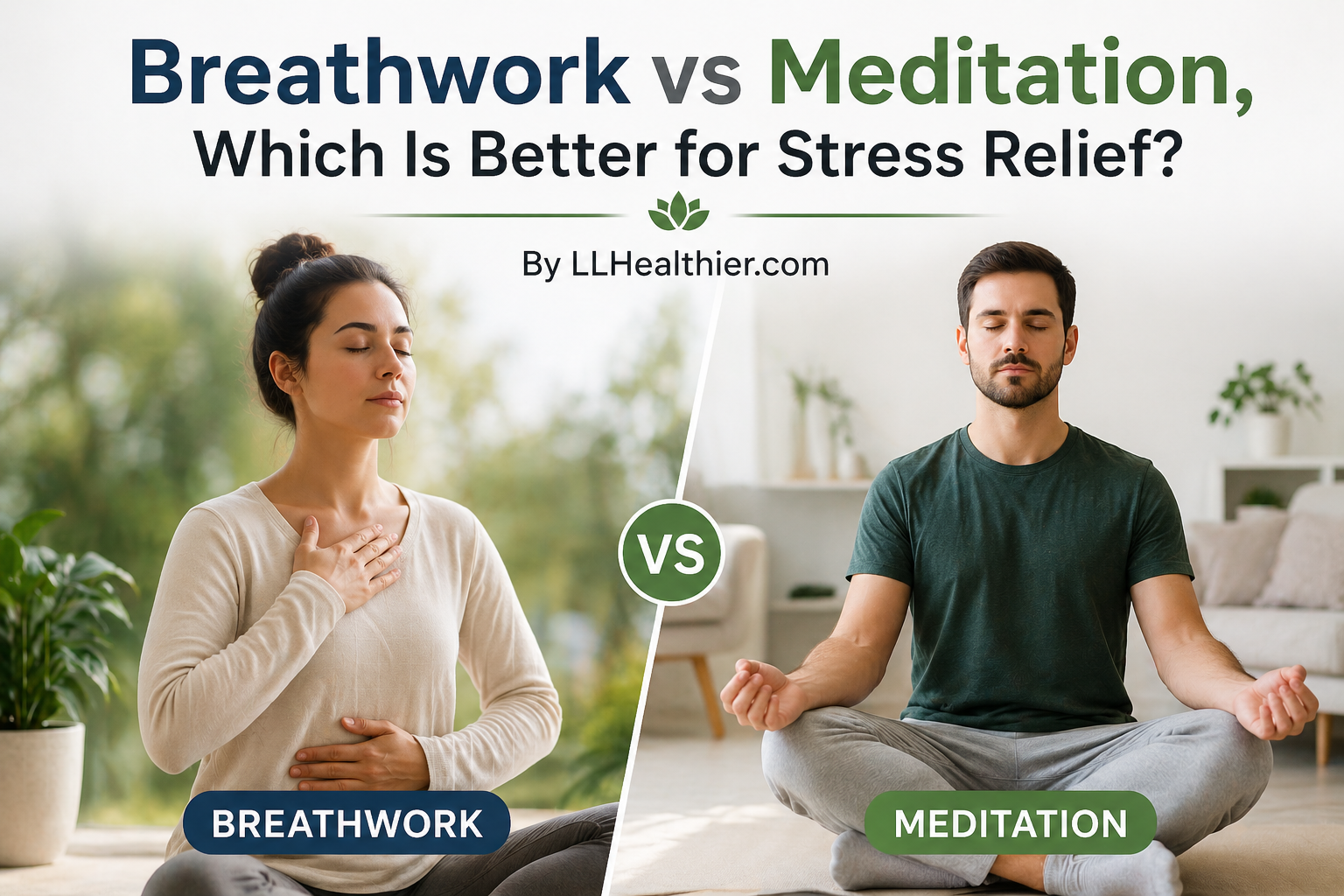
Breathwork vs Meditation, Which Is Better for Stress Relief?
Stress has become a daily companion for many Americans. Busy schedules, financial pressure, family responsibilities, constant notifications, and a nonstop news cycle can keep the body in a state of tension. When stress builds for too long, it can affect sleep, mood, digestion, focus, and overall health. That is why more people are searching for natural ways to calm the mind and reset the nervous system.
Two of the most popular tools for stress relief are breathwork and meditation. Both practices have been used for generations, and both can be highly effective. Yet many people wonder which one works better. The honest answer is that each offers unique benefits, and the best choice often depends on your personality, stress level, and what you need in the moment.
Understanding Stress in the Body
Stress is not only something you feel mentally. It also creates physical changes throughout the body. Your heart rate may rise, muscles may tighten, breathing can become shallow, and stress hormones like cortisol may increase. This response can be helpful in a true emergency, but when it happens all day long, the body begins to wear down.
That is where calming practices can make a real difference. Both breathwork and meditation help shift the body from a fight-or-flight state into a calmer, more balanced mode. They can lower tension, improve awareness, and help you feel more in control.
What Is Breathwork?
Breathwork refers to intentional breathing techniques used to influence the body and mind. Instead of breathing automatically, you guide your breath with a pattern or rhythm. This may include slow inhales, longer exhales, box breathing, alternate nostril breathing, or diaphragmatic breathing.
Breathwork works quickly because breathing is directly connected to the nervous system. When you slow the breath and lengthen the exhale, the body often responds by lowering heart rate and reducing tension. Many people feel calmer within minutes. This makes breathwork especially helpful during moments of acute stress.
What Is Meditation?
Meditation is the practice of training attention and awareness. It often involves sitting quietly, focusing on the breath, noticing thoughts without judgment, or using a word or phrase to center the mind. Some forms include guided meditation, mindfulness meditation, loving-kindness meditation, or body scan meditation.
Meditation tends to work by changing your relationship with stress rather than only calming the body in the moment. Instead of being swept away by every thought or emotion, you learn to observe them with more space and steadiness. Over time, this can lead to greater emotional resilience and a calmer baseline state.
Which Works Faster?
If you are overwhelmed right now, breathwork often works faster. The reason is simple. You can directly influence your physical state through breathing. A few minutes of slow, controlled breathing can reduce the feeling of panic, racing thoughts, and physical tension.
Meditation can also calm you quickly, especially if you already have experience with it. But for beginners, sitting still with a stressed mind can feel frustrating at first. Many people find it easier to focus on counting breaths or following a breathing pattern than trying to quiet the mind immediately.
Which Is Better for Long-Term Stress?
Meditation often shines when it comes to long-term stress management. Regular meditation can improve emotional regulation, patience, concentration, and self-awareness. It teaches you to notice stress triggers sooner and respond more thoughtfully rather than react automatically.
Breathwork can also support long-term wellness, especially when practiced consistently. Better breathing habits may improve sleep, lower chronic tension, and help reduce everyday anxiety. Still, meditation often provides a deeper mental training effect over time.
Which Is Easier for Beginners?
Many beginners find breathwork easier because it gives the mind something concrete to do. You follow a count, a pace, or a breathing pattern. This structure can feel comforting, especially when stress is high. It is simple, practical, and can be done almost anywhere.
Meditation can feel more challenging in the beginning because thoughts tend to become louder when you first sit quietly. This is normal. The mind is not failing, it is simply revealing what was already there. With patience and guidance, meditation becomes easier and more natural.
When Breathwork May Be the Better Choice
Breathwork can be especially helpful before a stressful meeting, during traffic, after an argument, or anytime your body feels tense and keyed up. It is useful when anxiety feels physical. Tight chest, shallow breathing, racing heart, and restlessness often respond well to breathing exercises.
It can also be helpful for people who struggle to sit still. If meditation feels too passive or difficult at first, breathwork may be the easier doorway into nervous system regulation.
When Meditation May Be the Better Choice
Meditation can be especially helpful if stress comes from overthinking, worry, irritability, emotional exhaustion, or feeling mentally scattered. It creates room between you and your thoughts. Instead of believing every fearful thought, you learn to observe it and let it pass.
Meditation is also powerful for improving sleep habits, patience in relationships, and general emotional steadiness. Many people notice that regular practice helps them stay calmer even when life becomes busy.
Why You May Not Need to Choose
The truth is that breathwork and meditation are not rivals. They often work best together. Breathwork can prepare the body for meditation by calming physical tension first. Once the body settles, meditation may feel easier and more effective.
For example, five minutes of slow breathing followed by ten minutes of mindfulness meditation can be an excellent stress relief routine. One practice calms the system, the other trains the mind.
A Simple Breathwork Practice for Stress Relief
Try inhaling gently through the nose for four seconds. Then exhale slowly for six seconds. Continue for five minutes without forcing the breath. Keep the shoulders relaxed and let the belly expand naturally.
This longer exhale pattern often helps signal safety to the body. Many people feel calmer, clearer, and less reactive afterward.
A Simple Meditation Practice for Stress Relief
Sit comfortably and close your eyes if that feels safe. Bring your attention to the natural feeling of breathing. When thoughts arise, notice them without frustration, then gently return attention to the breath. Continue for five to ten minutes.
The goal is not to have zero thoughts. The goal is to practice returning. That repeated return builds steadiness over time.
What If You Have Trouble Relaxing?
Some people feel uncomfortable when they first slow down. That does not mean these tools are not for you. It usually means your nervous system has been in overdrive for a long time. Start small, perhaps two minutes a day, and build gradually.
You may also prefer guided support through an app, a class, or a teacher. There is no prize for doing it perfectly. The real benefit comes from consistency, not performance.
The Final Verdict
So, which is better for stress relief, breathwork or meditation? If you need fast relief in the moment, breathwork often has the edge. If you want deeper long-term resilience, meditation often offers more lasting mental benefits.
For many people, the best answer is both. Use breathwork when stress spikes. Use meditation to strengthen calm over time. Together, they create a practical and powerful approach to handling modern stress.
Stress may be part of life, but living in constant tension does not have to be. Your breath is always with you, and your attention can be trained. Those are two tools available every day, free of charge.
Start with whichever feels more approachable. A few mindful breaths or a few quiet minutes can begin to shift your day. Small practices, repeated often, can create meaningful change.
Found this article interesting? Bookmark it to read again later.
Then, share it for others to read. 🌎
Thank you!





Post Comment