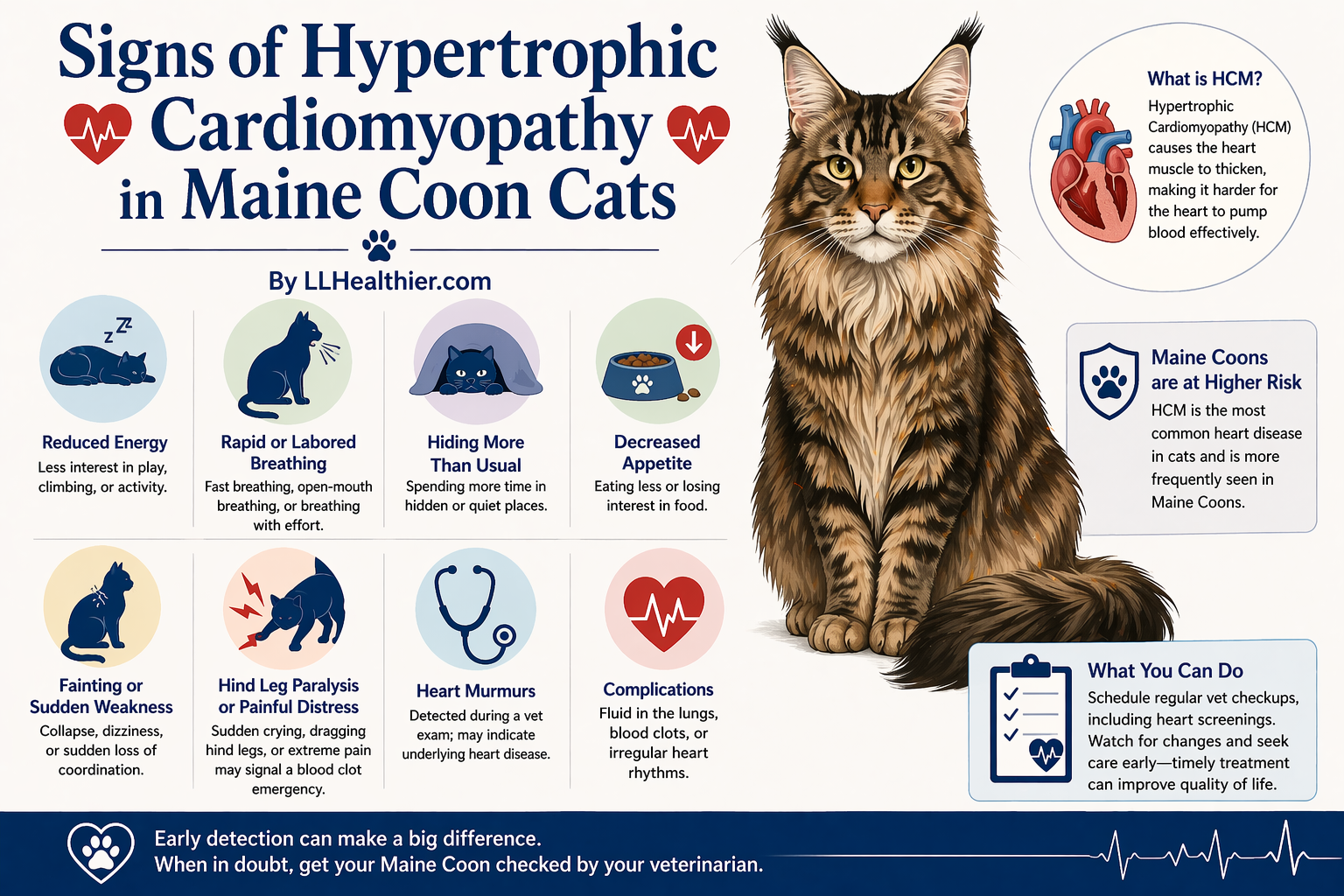
Signs of Hypertrophic Cardiomyopathy in Maine Coon Cats
Maine Coon cats are beloved for their large size, thick coats, playful personalities, and affectionate nature. They are often described as gentle giants, and many families form deep bonds with them. Like all breeds, however, Maine Coons can have certain inherited health risks that owners should understand. One of the most important is hypertrophic cardiomyopathy, often shortened to HCM.
Hypertrophic cardiomyopathy is one of the most common heart diseases seen in cats. It affects the heart muscle, causing the walls of the heart, especially the left ventricle, to become abnormally thickened. As the muscle thickens, the heart may have a harder time filling and pumping blood efficiently. Over time, this can place stress on circulation and lead to serious complications.
Because Maine Coons have a known genetic predisposition, awareness matters. Many cats with HCM appear normal in the early stages, which can make the condition difficult for owners to detect without veterinary care. Learning the possible warning signs can help families seek attention sooner and give their cat the best chance for proper management.
Why Maine Coon Cats Are at Higher Risk
Researchers have identified inherited forms of hypertrophic cardiomyopathy in Maine Coon cats. This does not mean every Maine Coon will develop heart disease, but it does mean the breed deserves closer attention than some others. Responsible breeders often screen breeding cats to reduce the risk, though no screening program can guarantee complete protection.
Even cats from excellent bloodlines may still develop HCM. Some cases are genetic, while others may occur without a clearly known family history. Owners should focus less on blame and more on regular wellness care and observation.
The presence of risk does not mean panic is needed. It means informed vigilance is wise.
Early Stages May Show No Obvious Symptoms
One of the most challenging parts of feline heart disease is that many cats hide illness well. Cats are naturally skilled at masking weakness, which is a survival instinct. A Maine Coon with early HCM may eat, play, groom, and behave normally for quite some time.
This is why routine veterinary exams are so valuable. A veterinarian may detect subtle clues before owners notice anything unusual. In some cases, a heart murmur, abnormal rhythm, or enlarged heart on imaging becomes the first sign.
Never assume silence means nothing is happening. Cats can look comfortable while changes develop quietly.
Rapid or Labored Breathing
One of the more noticeable warning signs of heart trouble is a change in breathing. A cat may breathe faster than usual while resting, use more effort to inhale, or seem uncomfortable lying down. Some owners notice the sides moving more dramatically or the cat keeping its neck extended.
Healthy cats can breathe faster temporarily after excitement, stress, or play. What raises concern is persistent rapid breathing during rest or sleep. Open-mouth breathing in a cat is especially serious and should be treated as urgent.
Any breathing difficulty deserves prompt veterinary attention.
Reduced Energy and Exercise Tolerance
Maine Coons are often playful and curious, though personality varies. If a normally interactive cat becomes less interested in climbing, chasing toys, or moving around, it may be worth investigating. Cats with heart disease can tire more easily because circulation is not working as efficiently.
Some owners describe their cat as slowing down with age. Sometimes that is true, but sometimes it is an early clue that something medical is changing. Subtle declines in stamina can be easy to overlook because they happen gradually.
Pay attention to patterns, not just dramatic events.
Hiding More Than Usual
Cats commonly seek privacy when they feel unwell. A Maine Coon who suddenly spends more time under beds, behind furniture, or in closets may be trying to cope with discomfort or fatigue. Hiding can occur with many illnesses, not only heart disease, but it should not be ignored when behavior changes are new.
A social cat becoming withdrawn often tells us something important. Even calm breeds that enjoy lounging usually maintain familiar routines unless they are stressed or unwell.
Behavior changes are health clues as much as physical symptoms.
Decreased Appetite
Some cats with hypertrophic cardiomyopathy begin eating less. This may happen because they feel tired, nauseated, stressed, or simply not themselves. Appetite loss in cats can quickly become a concern because they do not tolerate prolonged poor intake well.
A skipped meal once in a while may not mean disease. A pattern of reduced eating, weight loss, or lack of interest in favorite foods deserves evaluation. Cats often communicate illness quietly through appetite changes.
Never wait too long with a cat who stops eating.
Fainting or Sudden Weakness
Though less common, some cats with significant heart disease may experience collapse, fainting episodes, or sudden weakness. This can happen when circulation becomes compromised or abnormal heart rhythms occur. Even a brief episode should be taken seriously.
Owners sometimes describe the cat as falling over, seeming disoriented, or recovering after a short time. Because these events can have several causes, immediate veterinary care is important.
Do not assume your cat simply “got dizzy.”
Hind Leg Paralysis or Painful Distress
One of the most frightening complications of feline heart disease is a blood clot called a thromboembolism. In some cats with HCM, blood flow changes inside the heart can contribute to clot formation. If a clot travels and lodges near the back legs, it may suddenly block circulation.
The cat may cry out, drag the hind legs, appear paralyzed, or show severe pain and distress. This is an emergency requiring immediate veterinary treatment. Time matters greatly in these situations.
While not every cat with HCM develops this complication, owners should know the signs.
Heart Murmurs and Why They Matter
Many owners first hear about possible HCM when a veterinarian detects a murmur during a routine exam. A murmur is an abnormal sound created by turbulent blood flow. Not every murmur means severe heart disease, and not every cat with HCM has a murmur, but it often signals the need for further testing.
This is why annual or semiannual exams are so valuable, especially for higher-risk breeds. Cats cannot tell us their heart sounds different. Your veterinarian can.
A murmur is information, not a sentence.
How Veterinarians Diagnose HCM
Diagnosis usually involves a combination of physical examination and testing. Chest X-rays may help evaluate heart size or fluid in the lungs. Electrocardiograms may assess rhythm abnormalities. Blood pressure and lab work can also be useful.
The gold standard for diagnosing hypertrophic cardiomyopathy is an echocardiogram, which is an ultrasound of the heart. This allows a veterinary cardiologist or trained veterinarian to see the heart walls, chambers, movement, and blood flow in real time.
It is one of the best tools available for clarity.
Treatment and Management
There is no single cure that reverses every case of HCM, but many cats can be managed successfully. Treatment depends on severity, symptoms, heart rhythm changes, and complications. Some cats need medication to help the heart work more efficiently, control fluid buildup, reduce clot risk, or manage blood pressure.
Other cats may simply need monitoring at first. Your veterinarian may recommend follow-up imaging and home observation. Management plans are highly individual.
Many cats live meaningful, comfortable lives with appropriate care.
What Owners Can Do at Home
Owners play an important role in early detection and long-term management. Watch resting breathing rate, appetite, energy, and normal habits. Give medications exactly as directed. Reduce major stress where possible and keep follow-up appointments.
It can also help to know your cat’s normal personality. When you know what is typical, change becomes easier to spot. Small observations often lead to timely care.
You know your cat better than anyone else.
Signs of hypertrophic cardiomyopathy in Maine Coon cats may include rapid breathing, fatigue, hiding, appetite loss, weakness, or sudden distress. Some cats show no obvious symptoms at all in early stages, which makes routine veterinary exams especially important. Because Maine Coons carry a higher breed risk, proactive attention is wise rather than excessive.
If your Maine Coon seems different, trust that instinct and schedule an evaluation. Early recognition can improve comfort, guide treatment, and sometimes prevent emergencies. Loving ownership often begins with noticing the quiet signs others might miss.
Found this article interesting? Bookmark it to read again later.
Then, share it for others to read. 🌎
Thank you!







Post Comment