
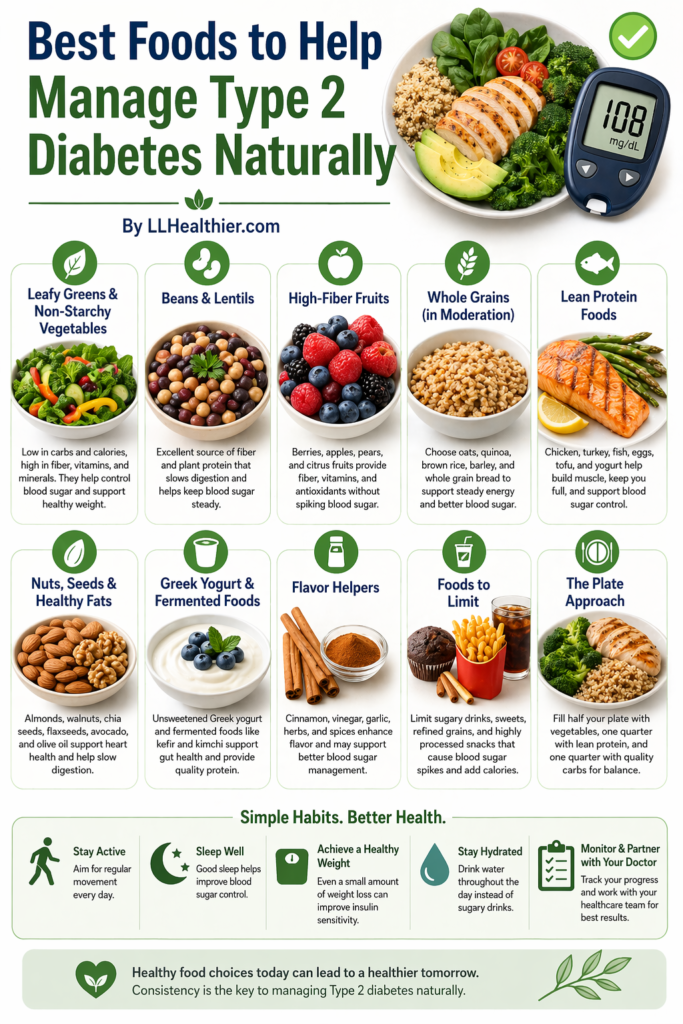
Best Foods to Help Manage Type 2 Diabetes Naturally
Type 2 diabetes is one of the most common health conditions in America, and many people feel overwhelmed when they first hear the diagnosis. Questions about medications, blood sugar numbers, meal planning, and long-term health can arrive all at once. The encouraging truth is that food choices can play a major role in helping manage blood sugar and improving overall wellness. While food is not a replacement for medical care, it can become one of the strongest daily tools available.
Managing type 2 diabetes naturally does not mean chasing miracle foods or extreme diets. It usually means building steady habits with meals that support stable blood sugar, healthy weight, heart health, and energy levels. Many of the best choices are simple, affordable foods already found in regular grocery stores. The goal is not perfection, but consistency over time.
Type 2 diabetes often improves when meals focus on fiber, protein, healthy fats, and slower-digesting carbohydrates. These foods tend to digest more gradually, which may reduce large blood sugar spikes after eating. They can also improve fullness, making overeating less likely. Small repeated choices often create the biggest long-term change.
Why Food Matters So Much
When you eat carbohydrates, the body breaks them down into glucose, which enters the bloodstream. In type 2 diabetes, the body may not respond well to insulin, or may not produce enough insulin to keep glucose levels in a healthy range. This can lead to elevated blood sugar over time.
Not all carbohydrates affect the body the same way. Sugary drinks, candy, pastries, and refined grains tend to raise blood sugar quickly. Fiber-rich foods, beans, vegetables, and whole grains usually digest more slowly and create a steadier response.
The way meals are balanced also matters. Carbohydrates eaten alongside protein, fat, and fiber are often easier for the body to manage.
Leafy Greens and Non-Starchy Vegetables
Vegetables are among the most useful foods for diabetes management, especially non-starchy varieties. Leafy greens such as spinach, kale, romaine, collards, and arugula are low in calories and carbohydrates while providing vitamins, minerals, and fiber. Broccoli, cauliflower, zucchini, green beans, cucumbers, peppers, mushrooms, and asparagus are also strong choices.
These foods help fill the plate without dramatically raising blood sugar. They support digestion, heart health, and healthy weight goals. Many people find that increasing vegetables naturally crowds out less helpful foods without feeling deprived.
Aim to make vegetables a regular part of lunch and dinner. Frozen vegetables can be just as practical and nutritious as fresh.
Beans and Lentils
Beans are one of the most underrated foods for blood sugar support. Black beans, chickpeas, kidney beans, navy beans, and lentils provide fiber, plant protein, and slow-digesting carbohydrates. This combination often leads to steadier energy and improved fullness after meals.
Many people avoid beans because they contain carbohydrates, but context matters. Beans digest differently than highly processed carbs due to their fiber content. Portion size still matters, but they can be an excellent part of a diabetes-friendly eating plan.
They are also affordable, versatile, and satisfying. Soups, salads, chili, and grain bowls are easy ways to use them.
High-Fiber Fruits
Fruit is often misunderstood by people with diabetes. Some assume all fruit should be avoided because it contains natural sugar. In reality, many fruits can fit well into a balanced plan when portions are thoughtful.
Berries are especially helpful because they are rich in fiber and antioxidants. Blueberries, strawberries, raspberries, and blackberries tend to have a gentler blood sugar effect than many processed sweets. Apples, pears, peaches, and citrus fruits can also work well.
Whole fruit is usually a better choice than juice. Juice removes much of the fiber and can raise blood sugar quickly.
Whole Grains in Reasonable Portions
Whole grains can be a useful carbohydrate source when chosen carefully. Oats, quinoa, barley, brown rice, bulgur, and whole grain breads with high fiber content may be better options than white bread, sugary cereals, or refined pasta.
Fiber slows digestion and may help with fullness and blood sugar control. Portion size remains important because grains still contain carbohydrates. Even healthy carbs can raise glucose if portions become excessive.
Many people do well using modest servings and pairing grains with vegetables and protein.
Lean Protein Foods
Protein helps with fullness and slows digestion when eaten with carbohydrates. It can be especially useful for reducing large post-meal glucose swings. Good options include chicken, turkey, eggs, fish, Greek yogurt, cottage cheese, tofu, edamame, and lean cuts of beef in moderation.
Fish such as salmon, sardines, trout, and tuna offer protein along with heart-healthy fats. Since type 2 diabetes raises heart disease risk, this added benefit matters.
Protein does not need to dominate every meal, but including some can improve balance and satisfaction.
Nuts, Seeds, and Healthy Fats
Healthy fats can help meals feel satisfying and may improve heart health when used wisely. Almonds, walnuts, pistachios, chia seeds, flaxseeds, pumpkin seeds, and natural peanut butter are common examples. Avocados and olive oil are also excellent additions.
These foods are calorie-dense, so portions matter, but small servings can be very useful. A handful of nuts with fruit or chia seeds stirred into yogurt can create a steadier snack than crackers or sweets alone.
Fats slow digestion, which can help with blood sugar response.
Greek Yogurt and Fermented Foods
Unsweetened Greek yogurt can be a helpful choice because it provides protein and often fewer carbohydrates than flavored yogurts. It pairs well with berries, cinnamon, or nuts. Many flavored yogurts contain added sugars that can quickly increase carbohydrate intake.
Some people also benefit from fermented foods such as kefir, sauerkraut, kimchi, or plain yogurt. These foods may support gut health, which is an area of growing interest in metabolic wellness.
Choose options lower in added sugar whenever possible.
Cinnamon, Vinegar, and Flavor Helpers
No spice or supplement cures diabetes, but certain flavor additions may support healthier eating habits. Cinnamon can add sweetness without sugar and works well in oatmeal, yogurt, or coffee. Vinegar-based dressings may slightly slow digestion for some meals and can make vegetables more enjoyable.
Herbs, garlic, onion, lemon, and spices also make healthy meals more satisfying. Taste matters. People are more likely to stick with changes when food remains enjoyable.
Sustainable eating should feel pleasant, not punishing.
Foods Worth Limiting
While focusing on what to eat is more helpful than fear-based restriction, some foods are worth reducing. Sugary drinks are among the biggest offenders because they deliver large amounts of sugar quickly with little fullness. Soda, sweet tea, energy drinks, and many coffee beverages can drive glucose spikes.
Highly refined snacks such as pastries, candy, chips, white bread, and sugary cereal may also make control harder. Large portions of any carbohydrate can be challenging, even healthier ones.
The issue is often pattern and quantity, not one isolated meal.
A Realistic Plate Approach
Many people do better with simple structure rather than complicated rules. A practical plate often includes half non-starchy vegetables, one quarter lean protein, and one quarter quality carbohydrates such as beans, fruit, or whole grains. Adding a healthy fat can improve satisfaction.
This style of eating is easier to sustain than constant counting or obsessing. It also works in many restaurants and family settings with small adjustments.
Simple systems often outperform perfect intentions.
Weight Loss and Insulin Sensitivity
For people who carry excess weight, even modest weight loss can improve insulin sensitivity and blood sugar control. This does not require starvation or shame. It usually comes from consistent habits such as better food quality, portion awareness, walking, sleep improvement, and stress management.
Food choices that improve fullness make this easier. Protein, fiber, vegetables, and whole foods can reduce the urge to overeat compared with highly processed foods.
Progress of five to ten percent body weight can be medically meaningful for many people.
Why Monitoring Matters
Different bodies respond differently to foods. One person may tolerate oatmeal well, while another sees a larger glucose rise. This is where blood sugar monitoring can be useful if recommended by your healthcare provider.
Checking patterns helps personalize food choices. Instead of guessing, you can learn what works best for your body.
Personal data often beats generic advice.
The best foods to help manage type 2 diabetes naturally are usually simple whole foods that support steady blood sugar. Non-starchy vegetables, beans, lentils, berries, whole grains, lean proteins, nuts, seeds, Greek yogurt, and healthy fats can all play valuable roles. These foods often improve fullness, energy, and metabolic health when eaten consistently.
Managing diabetes naturally does not mean doing it alone or avoiding medical care. It means partnering healthy daily habits with professional guidance. Thoughtful meals, movement, sleep, and regular checkups can make a powerful difference over time.
You do not need a perfect diet. You need repeatable habits that move health in the right direction.
Found this article interesting? Bookmark it to read again later.
Then, share it for others to read. 🌎
Thank you!










Post Comment