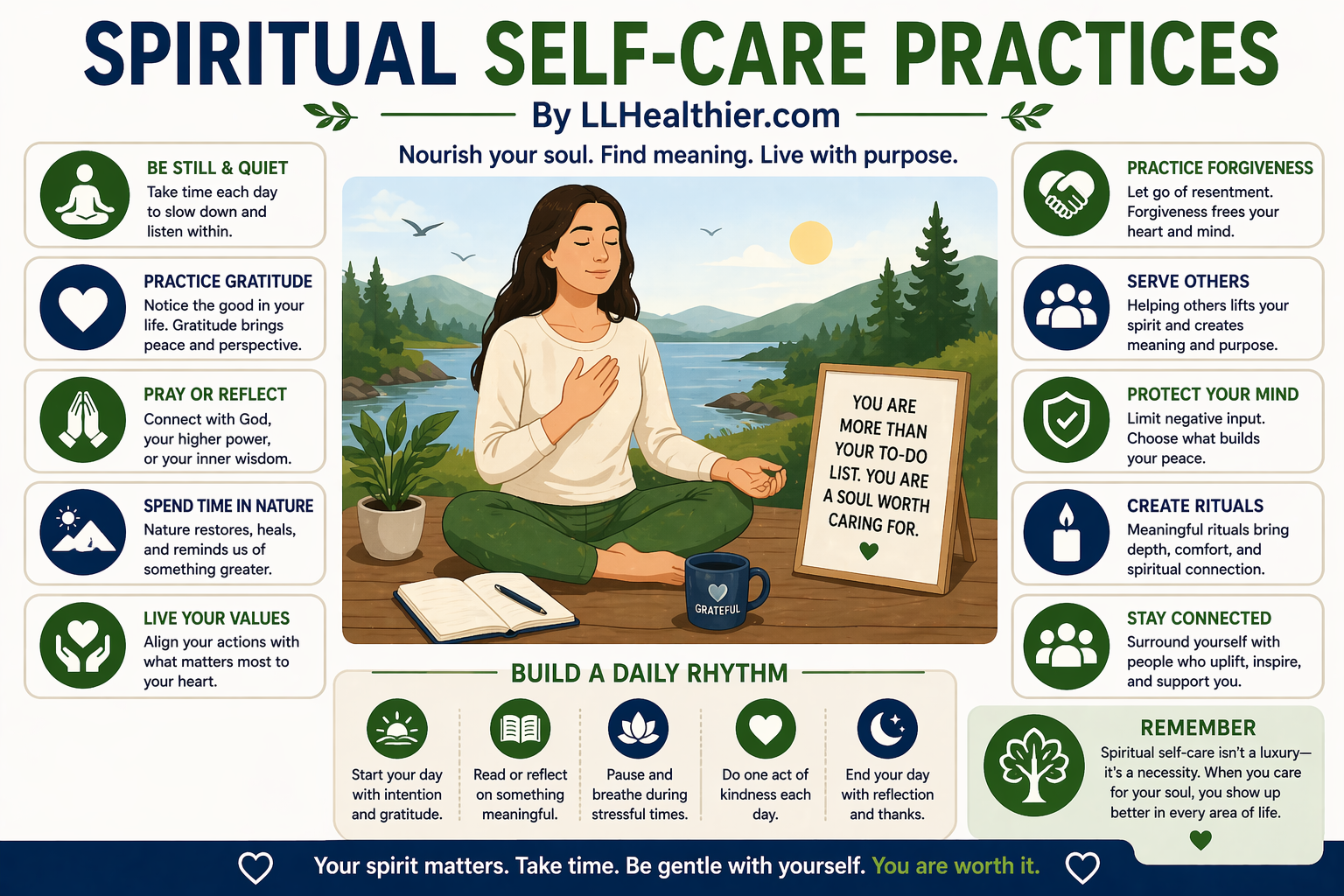
Spiritual Self-Care Practices
Many people hear the phrase self-care and immediately think of sleep, nutrition, exercise, skincare, or taking a break from work. Those forms of care matter, but they are only part of the picture. Human beings also have an inner life that needs attention. When that inner life is neglected, a person can feel restless, disconnected, empty, or emotionally worn down even when everything looks fine on the outside.
Spiritual self-care is the practice of caring for the deeper part of yourself. It involves meaning, values, peace, connection, gratitude, and the sense that life is more than endless tasks and obligations. For some people, spirituality is closely tied to organized religion. For others, it may involve nature, reflection, service, prayer, meditation, or living in alignment with deeply held principles.
You do not need to follow one belief system to benefit from spiritual self-care. At its core, it is about tending to the soul, however you understand that word. It is about creating space for what gives life depth.
In a busy modern culture, this kind of care is often ignored. Yet many people discover that when spiritual health improves, emotional resilience often improves with it.
What Spiritual Self-Care Really Means
Spiritual self-care is not about perfection or performing holiness. It is not about pretending to be calm all the time or having all of life’s answers. It is a steady practice of reconnecting with what matters most.
That may include asking meaningful questions. It may include remembering gratitude, seeking peace, practicing forgiveness, honoring your conscience, or making time for quiet reflection. It may also include faith traditions such as worship, scripture reading, prayer, or gathering in community.
Spiritual care reminds people they are more than their productivity.
You are a human being, not only a human doing.
Why So Many People Feel Spiritually Drained
Modern life often rewards speed, noise, comparison, and constant stimulation. Many Americans move from alarms to traffic to emails to responsibilities to screens without a moment of inner stillness.
A person can become highly efficient while slowly losing connection to themselves. They may feel numb, cynical, irritated, or strangely empty.
This does not always mean something is wrong externally. Sometimes it means something important internally has been unattended.
Spiritual self-care helps restore that neglected space.
Begin with Quiet Time
One of the most healing practices is simple quiet.
Set aside a few minutes each day without television, scrolling, podcasts, or conversation. Sit with your thoughts. Breathe slowly. Let your nervous system settle. Notice what rises inside when noise is removed.
At first, quiet can feel uncomfortable because many people are unused to it. Stay with it gently.
Silence often reveals what constant distraction hides.
Practice Gratitude Daily
Gratitude is one of the strongest spiritual habits available because it shifts attention from scarcity to awareness.
This does not mean denying pain or pretending life is perfect. It means noticing what is still good, still present, and still meaningful even during difficult seasons.
You might reflect each day on three things you are thankful for. They do not need to be dramatic. A safe bed, a loyal friend, clean water, laughter, a sunrise, a second chance, or a peaceful moment all count.
Gratitude softens the hard edges of life.
Pray or Reflect Intentionally
For people of faith, prayer can be a profound source of strength, guidance, humility, and comfort. Prayer creates space to speak honestly, ask for wisdom, surrender burdens, and reconnect with trust.
For those who do not practice prayer, intentional reflection can offer similar benefits. Journaling, meditating, or speaking your thoughts aloud in private can help organize emotion and restore perspective.
The goal is not polished words.
The goal is sincere connection.
Spend Time in Nature
Many people feel spiritually restored outdoors.
A walk through trees, sitting near water, gardening, watching birds, or noticing the sky can quiet mental clutter and create a sense of perspective. Nature often reminds people that life moves in seasons and that not every moment must be forced.
You do not need a mountain retreat.
A neighborhood park, backyard, beach, trail, or porch can be enough when approached with presence.
Live in Alignment with Your Values
One reason people feel internally unsettled is that their daily life may conflict with what they deeply believe.
They may value honesty but keep avoiding truth. They may value family but give every ounce of energy to work. They may value health but ignore their body. They may value kindness but live in constant irritation.
Spiritual self-care includes asking, “Does my life reflect what matters to me?”
Peace often grows when values and behavior become more aligned.
Practice Forgiveness Carefully
Unforgiveness can become a heavy spiritual burden.
Carrying resentment for years often harms the person holding it. Forgiveness does not mean approving harm, excusing abuse, or removing wise boundaries. It means releasing the desire to live chained to bitterness.
Sometimes forgiveness is immediate. More often it is gradual.
Even the willingness to begin can be healing.
Serve Someone Else
One of the fastest ways to nourish the spirit is to help another person.
Acts of service pull attention away from endless self-focus and reconnect us with shared humanity. This may be volunteering, checking on a neighbor, mentoring someone younger, helping family, or giving generously where needed.
Many people search for purpose through achievement alone.
Often purpose becomes clearer through contribution.
Protect Your Mind from Constant Input
Modern life floods the mind with opinions, outrage, advertising, bad news, and comparison.
A spiritually healthy life often requires boundaries around what enters your attention. This may mean limiting doom-scrolling, taking breaks from social media, reducing gossip, or choosing media that uplifts rather than drains.
What you consume shapes your inner climate.
Guarding peace is a form of self-care.
Create Meaningful Rituals
Rituals help bring depth into ordinary life.
You might begin mornings with prayer, gratitude, and tea. You may light a candle before journaling. You may walk every Sunday morning in reflection. You may end the day reviewing what mattered most.
These repeated acts teach the mind and body that life contains sacred pauses.
Ritual does not need to be elaborate to be powerful.
Stay Connected to Community
Spiritual health often grows in healthy community.
That may be a church, synagogue, mosque, meditation group, recovery group, volunteer circle, book group, or trusted circle of friends. Being around people who value growth, compassion, and honesty can strengthen your own practice.
Isolation can distort perspective.
Wise connection often restores it.
Accept Seasons of Dryness
Many people think spiritual health should feel inspiring all the time.
That is unrealistic.
There are seasons when prayer feels flat, motivation is low, grief is heavy, or meaning feels harder to access. These periods do not necessarily mean failure. They may simply be part of being human.
Stay steady during dry seasons.
Depth is often built quietly.
Let Go of Perfectionism
Some people avoid spiritual practice because they feel unworthy, inconsistent, or not disciplined enough.
You do not need to be perfect to begin. You do not need the perfect morning routine, flawless focus, or complete certainty.
Show up honestly.
A few sincere minutes practiced regularly can matter more than grand intentions never lived.
A Simple Daily Rhythm
A realistic spiritual self-care rhythm might include a few quiet minutes in the morning, gratitude during the day, mindful breathing under stress, reduced digital noise, and evening reflection before sleep.
That may sound small.
Small daily practices often create the deepest roots.
Consistency matters more than intensity.
Spiritual self-care practices help nourish the inner life in a world that often pulls attention outward. Quiet time, gratitude, prayer or reflection, time in nature, forgiveness, service, values-based living, and healthy boundaries can restore peace and meaning.
You do not need to escape your life to care for your spirit.
You need moments of honesty, presence, and reconnection woven into ordinary days.
When the inner life is tended well, many people find they become calmer, stronger, kinder, and more grounded in everything else.
Found this article interesting? Bookmark it to read again later.
Then, share it for others to read. 🌎
Thank you!









Post Comment