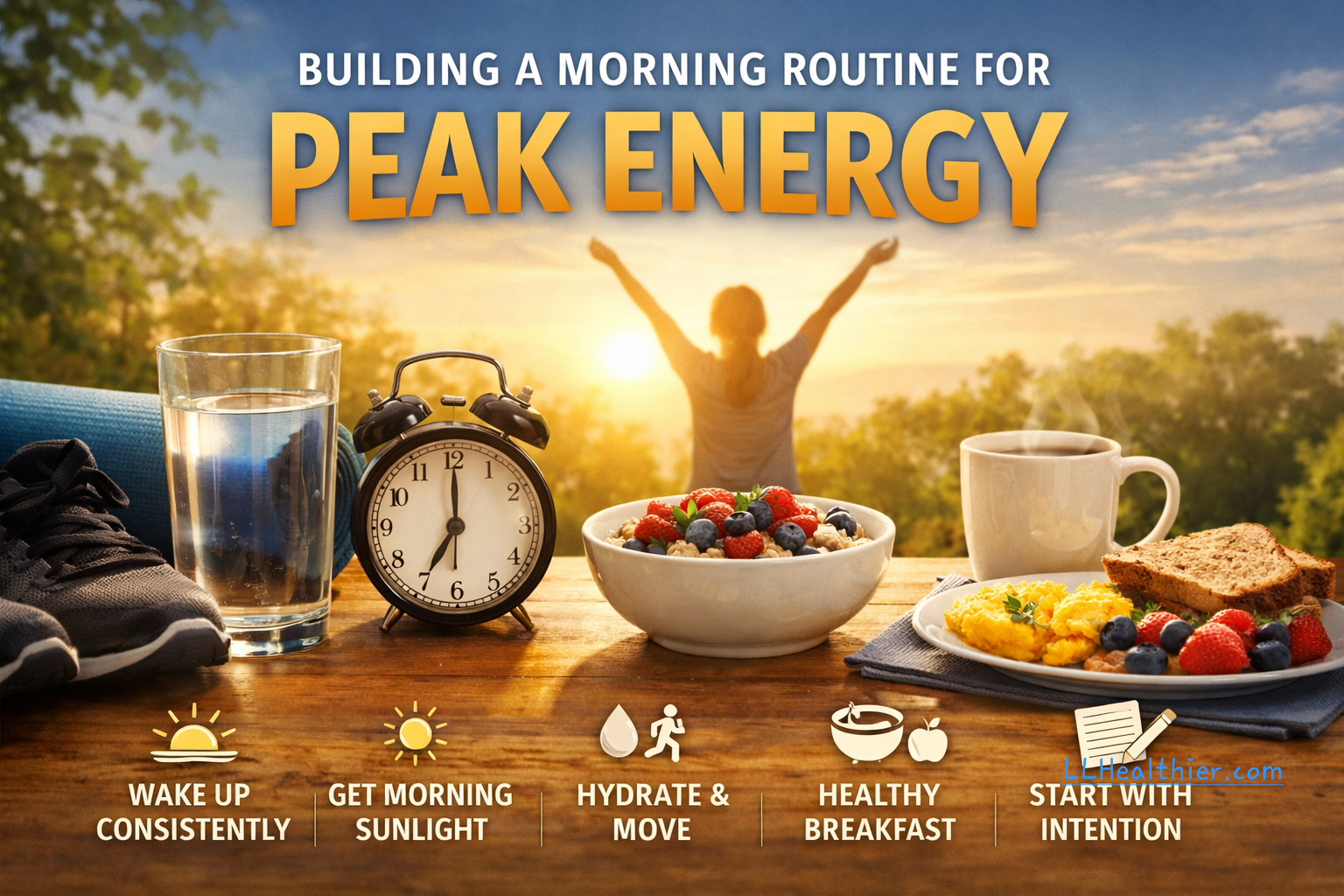
Building a Morning Routine for Peak Energy
Many people wake up already feeling behind. The alarm goes off, the phone lights up, and within minutes the day feels rushed. By mid-morning, energy dips. Focus slips. Another cup of coffee starts to feel like the only answer.
It does not have to be that way.
A well-built morning routine can help you feel more alert, steady, and productive throughout the day. It does not require waking up at 4 a.m., running five miles, or following some extreme wellness trend. In most cases, the best morning routine is simple, realistic, and repeatable.
Peak energy comes from giving your body and brain the signals they need after sleep. Light, movement, hydration, nourishment, and calm direction all play a role. When these pieces come together, mornings become less chaotic and the rest of the day often improves.
Why Mornings Matter So Much
Your body runs on a built-in clock known as the circadian rhythm. This system helps control sleep, hormone release, body temperature, digestion, and alertness. What you do in the first hour after waking can either support that rhythm or confuse it.
Think of the morning as a reset point. Good habits early in the day often create momentum. Poor habits can do the opposite.
When people start the day with stress, dehydration, poor food choices, and constant screen stimulation, they often feel drained by noon. When they start with intention, energy tends to last longer.
Start with a Consistent Wake Time
One of the strongest ways to improve energy is to wake up around the same time each day. That includes weekends when possible.
Your body likes rhythm. A steady wake time helps regulate sleep quality, morning alertness, and hormone timing. Sleeping in late on weekends may feel good in the moment, but it can leave you groggy on Monday morning.
You do not need perfection. Even staying within the same one-hour window can make a difference.
If you struggle to wake up, start by moving bedtime earlier in small steps. Fifteen to twenty minutes at a time is often more realistic than trying to overhaul your schedule overnight.
Get Light into Your Eyes Early
Morning light is one of the most powerful signals for energy and alertness. Sunlight tells the brain that the day has started. It helps reduce melatonin, the hormone linked to sleepiness, and supports healthy timing for cortisol, which helps you feel awake.
Try to get outside within the first hour after waking, even for ten minutes. A short walk, standing on the porch, or drinking coffee near a sunny window can help.
Natural light is usually stronger than indoor lighting, especially in the early morning. If you wake before sunrise or live in a darker climate, bright indoor light can still be helpful.
Hydrate Before You Caffeinate
After several hours of sleep, mild dehydration is common. Even a small fluid deficit can affect mood, concentration, and energy.
Before reaching for coffee, drink water. A full glass is a smart place to start. If you sweat heavily, exercise early, or live in a hot climate, you may need more.
This does not mean coffee is bad. Coffee can be part of a healthy routine. But when caffeine becomes the first and only tool for energy, it often masks the real issue.
Hydration first, then coffee, is a smarter sequence.
Move Your Body, Even Briefly
You do not need an hour-long workout every morning to feel better. Light movement can be enough to wake the nervous system, improve circulation, and sharpen mental focus.
A brisk walk, gentle stretching, bodyweight exercises, yoga, or a few minutes on a bike can all work. The goal is not punishment. The goal is activation.
Many people notice that movement in the morning reduces stiffness and helps them feel mentally clearer. It can also improve mood by lowering stress and releasing feel-good brain chemicals.
If mornings are tight, even five to ten minutes counts.
Eat a Breakfast That Supports Steady Energy
Some people feel great with breakfast. Others prefer to eat later. Both can work. The key is to notice how your body responds.
If you eat in the morning, choose foods that help keep blood sugar steady. Meals built around protein, fiber, and healthy fats tend to last longer than pastries or sugary cereal.
Examples include eggs with fruit, Greek yogurt with berries, oatmeal with nuts, or whole grain toast with peanut butter.
A breakfast heavy in sugar may give a quick lift followed by a crash. That pattern often leads to cravings, irritability, and another search for caffeine.
If you are not hungry early, do not force it. Some people do better with a later first meal. The real goal is stable energy, not following a rule.
Delay the Phone if You Can
Many people begin the day by checking messages, news, and social media before even leaving bed. This can create stress before the mind has fully woken up.
Your attention is fresh in the morning. Protecting it matters.
Try giving yourself fifteen to thirty minutes before diving into notifications. Use that time for light, water, movement, planning, or quiet reflection.
This one shift often creates a calmer mood and better focus for the rest of the day.
Give the Day a Clear Direction
Mental energy is just as important as physical energy. If you begin the day reacting to everything, your focus gets scattered.
A simple morning check-in can help. Ask yourself what matters most today. Identify one or two priorities. That is enough.
You do not need a complicated planner system. A sticky note or quick journal entry works fine.
When people know what they are aiming at, they usually waste less energy deciding all day long.
Keep Stress Low in the First Hour
The body can handle stress, but constant stress drains energy. The first hour of the day sets a tone.
This is a good time for calm habits such as slow breathing, prayer, journaling, meditation, or simply sitting quietly with coffee… even a few minutes can steady the nervous system.
Some people assume they need to rush from the second they wake up. In truth, a calm start often makes people faster and more effective later.
Build a Routine You Can Actually Maintain
The biggest mistake people make is creating a fantasy routine. They plan a ninety-minute morning packed with workouts, reading, meditation, meal prep, and cold plunges, then abandon it within a week.
Real routines fit real lives.
If you have kids, commute early, or work shifts, your routine may be short. That is fine. A strong ten-minute routine done daily beats a perfect routine done twice.
Start small. Pick three anchors you can repeat most mornings. For example, wake at the same time, drink water, and get outside. Once those feel normal, add another habit.
A Simple Example for the Average Busy Adult
Wake at a consistent time. Drink water. Open the blinds or step outside for light. Move for five to ten minutes. Eat a balanced breakfast if hungry. Review the top priorities for the day. Then begin work.
Nothing flashy. Very effective.
What to Avoid
If your goal is peak energy, watch for habits that quietly sabotage mornings.
Too little sleep is the biggest one. No routine can fully overcome chronic sleep debt.
Heavy alcohol use the night before often disrupts sleep quality. Late-night overeating can do the same.
Hitting snooze multiple times may seem harmless, but it can leave you more sluggish.
Starting with sugary foods, doomscrolling, or immediate work stress can also drag energy down.
Give It Two Weeks
Energy habits need time to settle in. Try a realistic morning routine for two weeks before judging it.
Track how you feel by late morning and early afternoon. Are you more focused? Less hungry? Less dependent on caffeine? More patient? Those are meaningful signs.
Small changes often create bigger results than people expect.
Peak energy is rarely about one magic product or one perfect habit. It usually comes from steady basics practiced often.
Wake at a regular time. Get light early. Hydrate. Move. Eat in a way that supports you. Protect your attention. Start calmly and with purpose.
That kind of morning routine does more than improve mornings. It can improve your whole day, one sunrise at a time.
Found this article interesting? Bookmark it to read again later.
Then, share it for others to read. 🌎
Thank you!





Post Comment