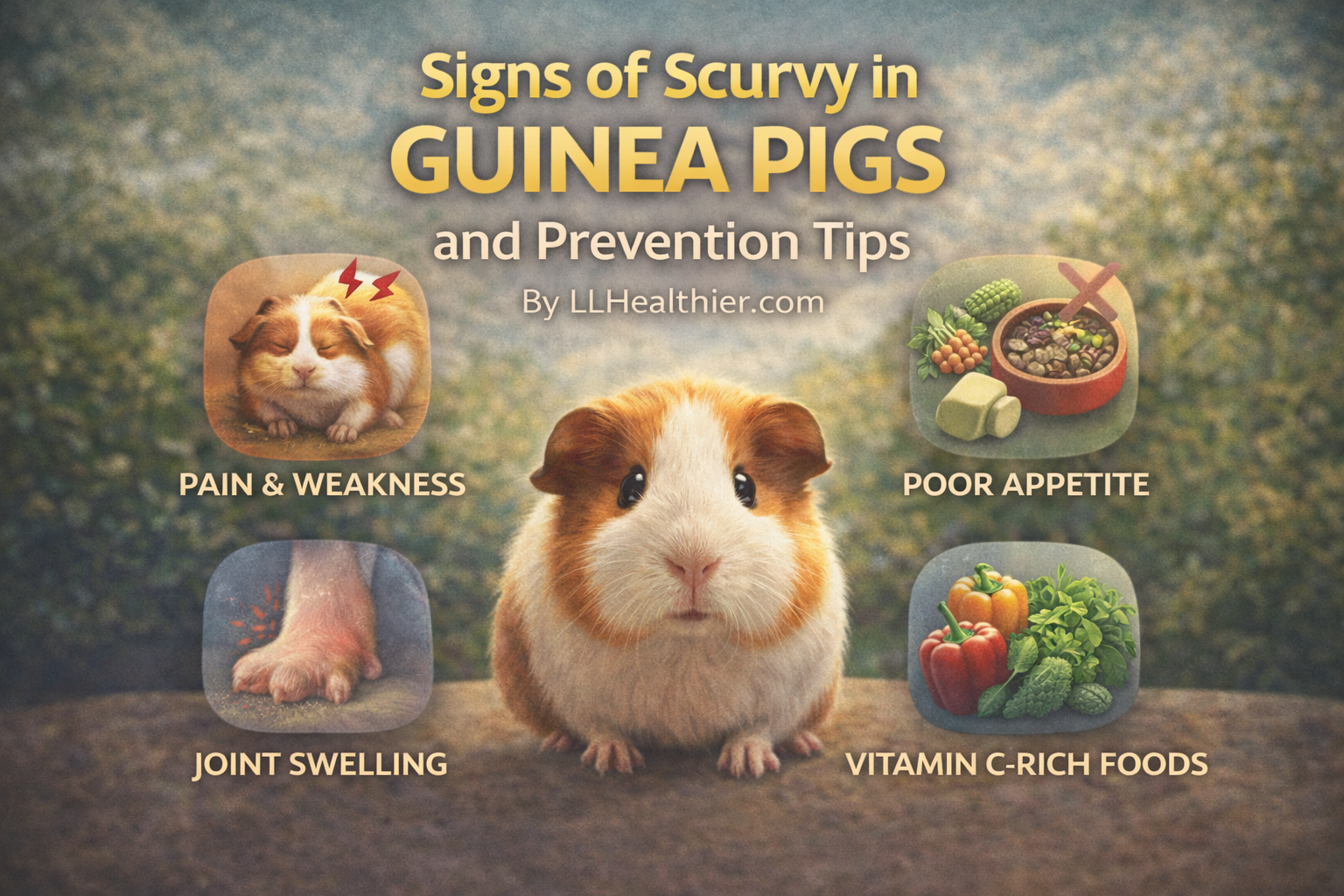
Signs of Scurvy in Guinea Pigs and Prevention Tips
Guinea pigs are gentle, social pets that bring a lot of joy to their owners. They are expressive, curious, and often full of personality. But they also have some unique health needs that surprise many first-time owners. One of the most important is their need for vitamin C.
Unlike many animals, guinea pigs cannot make their own vitamin C inside the body. Humans share this trait, which is why people can also develop scurvy when vitamin C intake is too low. If guinea pigs do not receive enough vitamin C through diet or supplementation, they can become seriously ill.
Scurvy in guinea pigs is more common than many people realize, especially when diet quality is poor or early warning signs are missed. The good news is that it is also one of the more preventable health problems when owners understand what to watch for.
Knowing the signs of scurvy and how to prevent it can help your guinea pig stay active, comfortable, and healthy.
Why Guinea Pigs Need Vitamin C
Vitamin C plays many roles in the body. It helps support healthy skin, joints, blood vessels, gums, immune function, and tissue repair. It is also involved in collagen production, which is the material that helps hold tissues together.
Because guinea pigs cannot manufacture vitamin C on their own, they depend completely on what they eat.
If their intake falls too low, body stores begin to drop. Over time, tissues weaken, pain can develop, and normal healing becomes harder. Without treatment, scurvy can become severe and life-threatening.
This is why vitamin C is not just a helpful nutrient for guinea pigs. It is a daily necessity.
How Scurvy Develops
Scurvy usually develops gradually. A guinea pig may receive a diet that appears adequate on the surface but still lacks enough usable vitamin C.
This often happens when a guinea pig eats mostly pellets that are old or poorly stored. Vitamin C breaks down over time, especially when exposed to heat, light, and air. A bag of pellets that sat open for months may contain far less vitamin C than expected.
It can also happen when fresh vegetables rich in vitamin C are not offered regularly, or when a guinea pig is picky and avoids healthier foods.
Stress, illness, pregnancy, injury, and aging may increase vitamin C needs, making deficiency more likely in some pets.
Early Signs of Scurvy in Guinea Pigs
The first signs are often subtle. Many owners assume the guinea pig is just slowing down or having an off day.
One common early clue is reduced energy. A guinea pig that usually explores, wheeks for food, or moves around the cage may become quieter and less interested.
Appetite may decline. Some guinea pigs eat less hay or pellets, while others seem hesitant to chew.
Weight loss may begin slowly. Because guinea pigs are small animals, even modest weight loss can matter.
A rough or poor-quality coat may also appear. Fur may look dull, thin, or unkempt.
These early changes are easy to miss, which is why regular observation is so important.
Pain and Mobility Problems
As vitamin C deficiency worsens, many guinea pigs develop pain.
They may move stiffly, limp, or seem reluctant to walk. Some will stay in one corner of the cage and avoid activity. Others may cry out when touched or picked up.
Swollen joints can occur, especially in the legs. Because vitamin C supports connective tissue and joint health, deficiency can make movement uncomfortable.
Young growing guinea pigs may show leg weakness or trouble standing normally.
Owners sometimes mistake these signs for injury or arthritis. While those problems are possible, scurvy should always be considered, especially if diet has been less than ideal.
Mouth and Dental Symptoms
Vitamin C deficiency can affect the gums and mouth.
A guinea pig with scurvy may drool, chew awkwardly, drop food, or avoid crunchy foods. Gums may become swollen or tender. In some cases, bleeding can occur.
Because eating becomes uncomfortable, appetite often worsens.
This creates a harmful cycle. The guinea pig eats less, receives even fewer nutrients, and becomes weaker.
Dental disease can also exist at the same time, so veterinary evaluation is important.
Skin, Healing, and Bleeding Issues
Vitamin C helps maintain healthy blood vessels and tissue repair. Without enough of it, the body becomes more fragile.
Bruising may occur more easily. Minor injuries may heal slowly. Skin may seem delicate or irritated.
In advanced cases, bleeding under the skin or around joints may develop, contributing to pain and swelling.
These are serious warning signs and should not be ignored.
Behavioral Changes
Guinea pigs often hide illness. In the wild, showing weakness can attract predators, so prey animals naturally mask symptoms.
That means behavior changes can be one of the most useful clues.
A guinea pig with scurvy may become withdrawn, less social, quieter than usual, or irritable when handled. Some become unusually fearful or stop interacting with cage mates.
Owners who know their pet’s normal personality are often the first to sense something is wrong.
Trust that instinct.
How Veterinarians Diagnose Scurvy
There is no single home test for scurvy. Diagnosis usually comes from a combination of history, symptoms, physical exam, and response to treatment.
Your veterinarian will ask about diet, pellet brand, vegetable intake, supplements, weight changes, and behavior.
During the exam, they may look for joint pain, gum changes, poor body condition, weakness, or other health concerns.
X-rays may sometimes be recommended, especially in severe or chronic cases, to evaluate bones and joints.
Because several illnesses can mimic scurvy, professional diagnosis matters.
Treatment Options
The good news is that many guinea pigs improve significantly when vitamin C deficiency is caught early and treated properly.
Treatment usually includes veterinarian-guided vitamin C supplementation. This may be given by mouth or injection depending on severity.
Pain control may be needed if the guinea pig is sore or reluctant to move.
Nutritional support is often part of care. If appetite is low, syringe feeding or supportive feeding formulas may be recommended to keep the digestive system moving.
Hydration support may also be needed.
At home, owners usually need to improve diet immediately by providing fresh, vitamin C-rich foods and high-quality guinea pig pellets.
Many guinea pigs begin acting brighter within days, though full recovery can take longer depending on how advanced the deficiency became.
Best Food Sources of Vitamin C
Fresh vegetables are one of the safest and most reliable ways to support daily vitamin C intake.
Bell peppers are an excellent choice and are often one of the best foods for guinea pigs in this category. Red, green, or yellow peppers can be offered in appropriate portions.
Leafy greens such as romaine lettuce, cilantro, parsley, and certain other greens can help as part of a balanced rotation.
Small portions of fruits like strawberries or kiwi contain vitamin C but should be fed more sparingly because of sugar content.
Variety helps, but changes should be introduced gradually to avoid digestive upset.
Always wash produce thoroughly and offer fresh portions daily.
Choosing the Right Pellets
Pellets should be formulated specifically for guinea pigs, not rabbits or mixed small-animal diets.
Look for plain pellets rather than colorful mixes with seeds, dried fruit, or sugary extras. Mixed diets often encourage selective eating and poorer nutrition.
Buy smaller bags that can be used within a reasonable time. Once opened, vitamin C content declines over time.
Store pellets in a cool, dry, dark place in a sealed container.
If the pellets smell stale or have been open for many months, replace them.
Hay Still Matters
While hay is not the main source of vitamin C, it remains a cornerstone of guinea pig health.
Unlimited grass hay such as timothy hay supports digestion, dental wear, and natural behavior. Guinea pigs should have access to fresh hay at all times.
A guinea pig that eats plenty of hay often has better digestive health overall, which supports recovery and wellness.
Think of hay as the foundation, with pellets and vegetables completing the plan.
Should You Use Vitamin C Supplements?
Some guinea pigs benefit from supplements, especially picky eaters, seniors, pets recovering from illness, or those with increased needs.
However, supplements should be used thoughtfully.
Vitamin C drops added to water are often not ideal because the vitamin breaks down quickly, and some guinea pigs drink less when water tastes different.
Direct oral supplements or veterinarian-approved chewables are usually more reliable.
It is best to discuss dosing with your veterinarian because needs vary by age, health, and diet.
More is not always better.
Prevention Through Daily Habits
Preventing scurvy is much easier than treating advanced deficiency.
Offer a consistent diet built around unlimited hay, quality guinea pig pellets, and daily fresh vegetables rich in vitamin C.
Watch appetite, stool output, movement, and behavior regularly. Weigh your guinea pig weekly if possible. A kitchen scale can be very helpful because weight loss often appears before obvious illness.
Keep cages clean, reduce stress, provide companionship when appropriate, and schedule veterinary visits when concerns arise.
Healthy routines protect health quietly over time.
Common Mistakes Owners Make
One common mistake is assuming pellets alone are enough forever, especially if the bag is old.
Another is feeding rabbit food or generic small-animal mixes that do not meet guinea pig vitamin C needs.
Some owners avoid vegetables because they fear digestive upset, then unknowingly create nutrient gaps.
Others wait too long when signs of pain or reduced appetite appear.
Because guinea pigs can decline quickly, delays matter.
Special Risk Groups
Young growing guinea pigs need strong nutrition to support development. Pregnant or nursing females may have higher needs. Older guinea pigs may eat less efficiently or have dental issues that reduce intake.
Pets recovering from surgery, infection, or stress may also need closer attention.
These animals benefit from especially careful diet monitoring.
When to Call a Veterinarian Immediately
Seek prompt veterinary care if your guinea pig stops eating, loses weight, appears weak, limps, cries in pain, has swollen joints, drools, struggles to chew, or seems suddenly quiet and withdrawn.
Guinea pigs should never go long without eating. Their digestive systems depend on regular food intake.
Even if scurvy is only one possibility, quick action can save a life.
The Long-Term Outlook
When recognized early, the outlook for scurvy is often very good. Many guinea pigs regain appetite, energy, and comfort after treatment and dietary correction.
If deficiency has gone on for a long time, recovery may take longer, and some complications may require additional care.
The most important factor is timing. Earlier treatment usually means smoother recovery.
Scurvy in guinea pigs is caused by vitamin C deficiency and can lead to pain, weakness, poor appetite, swollen joints, gum problems, weight loss, and serious illness if ignored.
Because guinea pigs cannot make their own vitamin C, they must receive it daily through fresh foods, quality pellets, and supplements when needed.
The best prevention plan is simple: unlimited hay, proper pellets, fresh vegetables rich in vitamin C, regular observation, and quick veterinary care when symptoms appear.
With the right care, your guinea pig can stay bright-eyed, active, and healthy for years to come.
Found this article interesting? Bookmark it to read again later.
Then, share it for others to read. 🌎
Thank you!







Post Comment