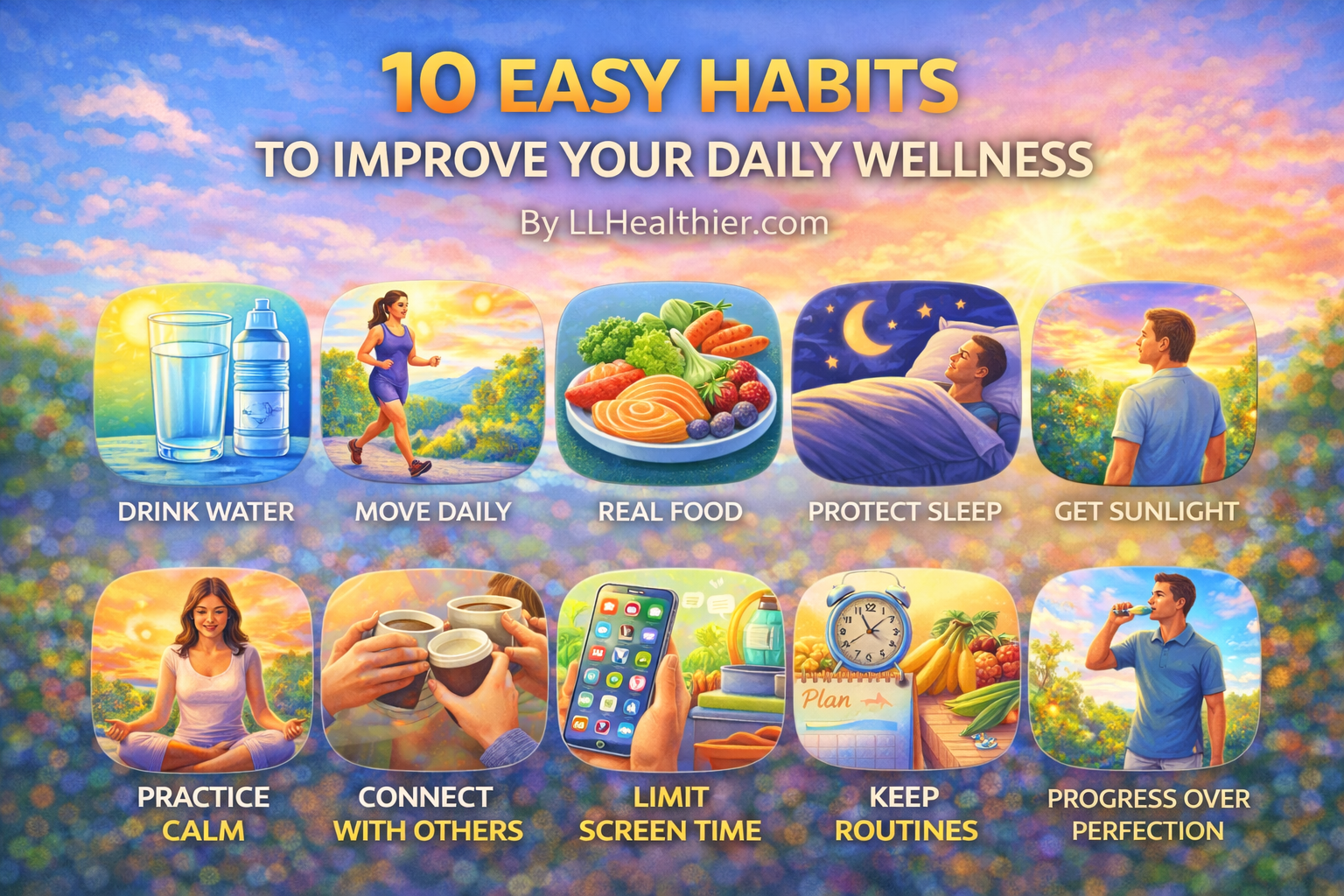
10 Easy Habits to Improve Your Daily Wellness
Many people think wellness requires a dramatic overhaul. They picture strict meal plans, expensive supplements, complicated workout routines, and a level of discipline that feels hard to sustain. That belief keeps many good people from starting at all.
The truth is much simpler. Daily wellness is usually built through ordinary habits repeated consistently. Small choices made each day often matter more than occasional bursts of motivation.
For the average American juggling work, family, finances, errands, and stress, realistic habits are the ones that last. You do not need to become perfect. You need a few steady routines that support your body and mind.
Wellness is not only about avoiding illness. It is about having more energy, clearer thinking, steadier mood, better sleep, stronger resilience, and a greater sense of balance in daily life.
The habits below are simple by design. They do not require special talent or extreme schedules. They work because they are practical.
1. Start the Day with Water
After several hours of sleep, the body often wakes up mildly dehydrated. Many people go straight to coffee while forgetting the simplest first step.
Drinking water soon after waking can help with alertness, digestion, and overall hydration. It may also reduce the sluggish feeling some people carry into the morning.
This does not mean coffee is bad. Coffee can fit into a healthy routine. But water first is often a smart move.
Keep a glass or bottle nearby so the habit becomes easy. When healthy choices are convenient, they happen more often.
2. Move Your Body Every Day
Daily movement is one of the strongest habits for wellness, yet people often overcomplicate it.
You do not need a perfect gym plan or a ninety-minute workout. Walking, stretching, cycling, yard work, dancing in the kitchen, strength training, and playing with your kids all count.
Movement supports heart health, mood, sleep, blood sugar control, mobility, and stress relief. It also tends to create momentum. People who move regularly often make better choices in other areas too.
Aim to become someone who moves daily, even if the amount changes from day to day.
Ten minutes still matters.
3. Eat More Real Food
Many Americans eat in a hurry, in the car, at a desk, or from packages designed for convenience more than nourishment.
You do not need to follow a trendy diet to improve wellness. Start by eating more real food.
That often means fruits, vegetables, beans, nuts, seeds, eggs, yogurt, fish, lean proteins, potatoes, oats, rice, and other minimally processed staples.
The more meals built around real ingredients, the easier it becomes to support steady energy and better nutrition.
This does not require perfection. It requires direction.
4. Protect Your Sleep
Sleep is often sacrificed first and missed most later.
When sleep is poor, appetite regulation worsens, stress feels heavier, patience shrinks, and energy drops. Many people try to solve these problems with caffeine alone, but the root issue may be rest.
Better sleep habits can include keeping a regular wake time, reducing late-night screen stimulation, limiting caffeine later in the day, and creating a calmer evening routine.
Think of sleep as maintenance, not laziness.
A well-rested person often handles life better than an exhausted one.
5. Get Sunlight and Fresh Air
Modern life keeps many people indoors under artificial light for long stretches.
Stepping outside each day can help mood, focus, and sleep rhythms. Morning light is especially helpful because it supports the body’s internal clock.
Fresh air and natural surroundings can also calm the nervous system. Even a short walk outside may lower stress more than people expect.
You do not need a mountain retreat. A neighborhood walk, lunch outside, porch coffee, or time in a local park can be enough.
Small contact with the outdoors adds up.
6. Practice a Few Minutes of Calm
Many people carry stress from morning to night without pause. The nervous system stays activated, and over time that becomes draining.
A few minutes of calm each day can help interrupt that pattern.
This might be slow breathing, prayer, meditation, journaling, quiet reflection, or simply sitting without input for a short time.
You do not need to become a monk. You need a moment.
Even five minutes of deliberate calm can create more steadiness than another hour of mindless distraction.
7. Strengthen Relationships
Wellness is not only physical. Social connection plays a major role in health.
Supportive relationships can reduce stress, improve resilience, and make life richer. Isolation often does the opposite.
One easy habit is regular connection. Send the text. Make the call. Invite someone for coffee. Eat dinner without phones. Check on a family member. Thank a friend.
These moments may seem small, but they are powerful.
Human beings tend to do better when they feel connected.
8. Limit Mindless Screen Time
Phones and screens are useful tools, but they can quietly drain wellness when used without boundaries.
Many people lose hours to scrolling, comparison, overstimulation, and fragmented attention. Then they wonder why they feel anxious, distracted, or behind.
You do not need to throw your devices away. You need intention.
Try setting screen-free times, especially during meals, the first part of the morning, and before bed. Remove apps that pull more than they give. Notice how certain digital habits affect your mood.
Attention is part of health. Protecting it matters.
9. Keep Simple Routines
Decision fatigue wears people down. If every healthy choice requires debate, habits often collapse during busy weeks.
Simple routines reduce friction.
Prepare lunches the night before. Keep fruit visible. Walk after dinner. Exercise at the same time most days. Charge your phone outside the bedroom. Grocery shop with a plan. Keep water accessible.
Routine creates ease.
Many people assume discipline means constant force. Often it means building systems that make good choices easier.
10. Focus on Progress, Not Perfection
This may be the most important habit of all.
Many wellness efforts fail because people think one bad meal, one missed workout, or one rough week means they have failed.
That mindset turns ordinary setbacks into quitting points.
Real wellness is messy. There will be birthdays, vacations, deadlines, illness, stress, and imperfect weeks.
The goal is not flawless behavior. It is returning to helpful habits again and again.
Progress compounds. Perfection does not exist.
Why Easy Habits Work Better Than Extreme Plans
Extreme plans often create excitement. They promise fast results, dramatic transformation, and total control.
They also tend to clash with real life.
When schedules get busy or motivation dips, rigid plans often break. Easy habits survive because they fit normal life.
A twenty-minute walk is easier to maintain than a heroic two-hour gym routine. A balanced breakfast is easier to repeat than a complex cleanse. Going to bed thirty minutes earlier is easier than trying to become a different person overnight.
The best wellness plan is usually the one you can continue.
How to Start Without Feeling Overwhelmed
Many people read wellness advice and feel pressure to fix everything immediately.
That pressure is unnecessary.
Choose one or two habits first. Maybe it is morning water and a daily walk. Maybe it is earlier bedtime and eating more real lunches. Maybe it is screen limits and five minutes of calm.
Once those habits feel normal, add another.
Change built slowly often lasts longer than change forced quickly.
What to Expect Emotionally
Healthy habits do more than affect the body. They often change mood and confidence.
When people keep small promises to themselves, self-trust grows. Energy improves. Stress becomes easier to manage. Life feels less chaotic.
This does not mean every day becomes easy. It means you become better supported.
That distinction matters.
Common Obstacles and Honest Solutions
Time is a common concern. Yet many helpful habits take less time than endless scrolling or recovering from burnout.
Motivation is another challenge. Motivation comes and goes, which is why habits should not depend on it. Build routines that happen whether motivation is high or low.
Family demands can complicate wellness. In those seasons, lower the bar instead of quitting. Shorter walks, simpler meals, earlier lights out, and small resets still count.
Money worries also matter. Wellness does not require luxury. Walking, water, sleep, beans, oats, eggs, sunlight, and breathing exercises are affordable basics.
A Sample Day of Realistic Wellness
A practical day might begin with water, a few minutes of quiet, and a simple breakfast. Midday could include a walk and a balanced lunch. Afternoon might involve hydration and brief movement instead of only caffeine. Evening may include a home-cooked meal, phone-free time with family, and a calmer bedtime routine.
Nothing dramatic.
Yet repeated often, this kind of day can change how a person feels.
When to Seek More Help
Habits matter greatly, but they are not the answer to everything.
Persistent fatigue, severe anxiety, depression, chronic pain, major sleep issues, rapid weight changes, or lasting brain fog deserve professional evaluation.
Sometimes people blame themselves when a medical issue is present.
Use habits as a foundation, and seek care when needed.
Daily wellness is rarely built through extremes. It is built through simple actions repeated often.
Drink water. Move your body. Eat more real food. Protect sleep. Get outside. Practice calm. Strengthen relationships. Limit draining screen time. Keep routines simple. Choose progress over perfection.
These habits may sound modest, but modest habits can create major change over time.
You do not need a new life by next Monday.
You need better rhythms starting today.
Found this article interesting? Bookmark it to read again later.
Then, share it for others to read. 🌎
Thank you!









Post Comment