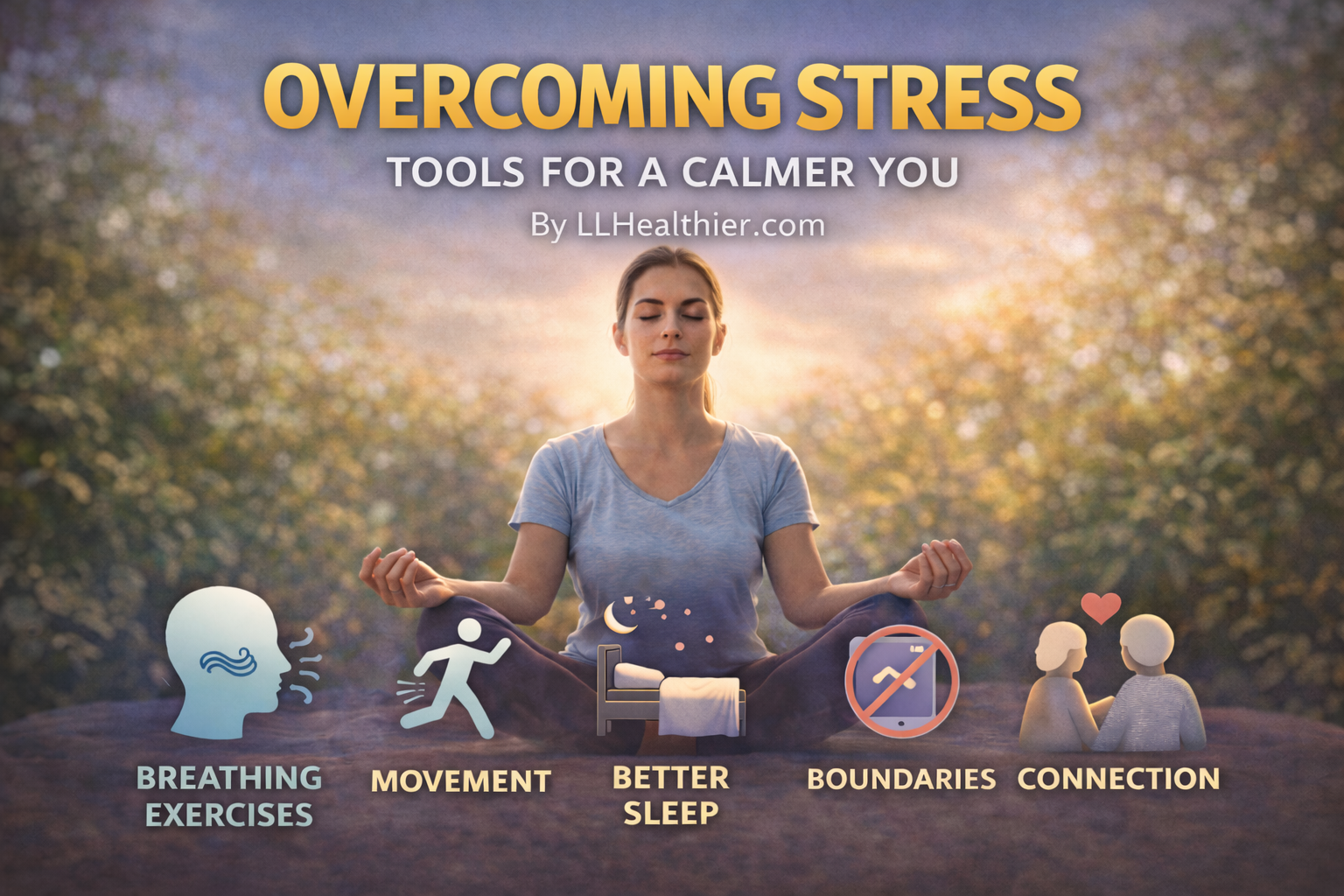
Overcoming Stress: Tools for a Calmer You
Stress has become so common that many people treat it like background noise. It is the rushed morning, the overflowing inbox, the traffic jam, the unpaid bill, the family tension, the worry that follows you into bed. After a while, stress can feel normal. That does not mean it is harmless.
A certain amount of stress is part of life. It can help us meet deadlines, respond to danger, and rise to a challenge. The problem begins when stress becomes constant. When the body never gets the signal that it is safe to relax, wear and tear starts to build.
Many Americans are living in that state more often than they realize. The mind stays busy. Muscles stay tight. Sleep gets lighter. Patience shrinks. Cravings increase. Small problems feel larger than they are.
The good news is that stress is not something you are forced to simply endure. It can be managed. You may not control every situation around you, but you can influence how your body and mind respond.
Learning to calm stress is not about becoming passive or pretending problems do not exist. It is about creating steadiness in the middle of real life.
What Stress Really Is
Stress is the body’s response to challenge, uncertainty, or threat. That threat may be physical, such as slamming on the brakes in traffic. It may also be emotional, financial, social, or mental.
When stress activates, the nervous system prepares you for action. Heart rate rises. Breathing changes. Muscles tighten. Stress hormones such as cortisol and adrenaline increase. Attention narrows.
This response can be useful in short bursts. It becomes draining when it runs too often or too long.
The body does not always distinguish between a true emergency and an unanswered email from your boss. It simply reacts.
That is why modern stress can feel so exhausting. The triggers may be smaller than life-or-death danger, but they happen all day.
Signs Stress Is Taking Too Much Space
Many people think stress only means feeling worried. In reality, it can show up in many forms.
Some people become irritable and impatient. Others feel tired, foggy, or unmotivated. Some notice headaches, jaw clenching, stomach discomfort, poor sleep, or frequent tension in the neck and shoulders.
Stress can also lead to emotional eating, overuse of alcohol, procrastination, social withdrawal, and trouble concentrating.
Sometimes the clearest sign is this simple thought: “I never feel fully relaxed.”
If that sounds familiar, it is worth taking seriously.
Start with Breathing
One of the fastest ways to calm the stress response is through breathing.
When people are tense, breathing often becomes shallow and rapid. This quietly tells the nervous system to stay alert. Slowing the breath sends the opposite message.
Try inhaling gently through the nose for a count of four, then exhaling for a count of six. Do not force it. Keep the shoulders relaxed. Continue for two to five minutes.
The longer exhale matters because it signals the body to downshift.
This technique is invaluable because you can use it in traffic, before a meeting, during an argument pause, or while lying in bed.
It may seem simple, but simple methods often work best when practiced consistently.
Move the Body to Clear the Mind
Stress lives in the body as much as in the mind. Physical movement is one of the best ways to discharge built-up tension.
You do not need a punishing workout. A brisk walk, light jog, bike ride, yoga session, stretching routine, or strength workout can all help.
Movement lowers stress hormones and often boosts mood-regulating brain chemicals. Many people notice that problems feel more manageable after exercise, even if nothing about the situation has changed.
That shift matters.
If your day feels packed, think smaller. Ten minutes of walking after lunch or before dinner still counts. Consistency beats intensity.
Protect Your Sleep
Stress and sleep often feed each other. Stress makes sleep harder. Poor sleep makes stress feel worse the next day.
If life feels heavy, sleep deserves attention.
Keep a regular wake time when possible. Reduce late-night screen stimulation. Limit caffeine later in the day. Create a short wind-down routine before bed.
Evening habits send signals to the nervous system. If you work, scroll, argue, snack heavily, and answer emails until midnight, the body receives a message to stay alert.
A calmer evening often creates a calmer morning.
You do not need a perfect routine. You need a repeatable one.
Watch the Stimulants
Many people rely on caffeine to push through stress-related fatigue. This can help in the short term, but too much caffeine can also increase jitteriness, racing thoughts, rapid heartbeat, and sleep disruption.
That creates a cycle. You feel tired from stress, use caffeine to cope, then sleep worse and feel more stressed.
The answer is not always to quit coffee completely. It may simply mean reducing the amount, avoiding energy drinks, or keeping caffeine earlier in the day.
Alcohol deserves mention too. Some people use it to unwind. While it may create temporary relaxation, it often worsens sleep quality and can increase anxiety the next day.
Relief and recovery are not always the same thing.
Calm the Mind with Boundaries
Not every stress tool is physical. Some are practical.
Many people feel overwhelmed because too many demands are entering their life without filters. Messages arrive at all hours. Work follows them home. Social obligations pile up. News flows nonstop.
Boundaries are not selfish. They are protective.
This may mean turning off notifications, limiting news intake, saying no to commitments you cannot carry, or deciding that work emails stop after a certain hour.
Every yes has a cost. Every no creates space.
People often feel guilty setting boundaries until they notice how much calmer and kinder they become afterward.
Use the Power of Writing Things Down
Stress grows in vague mental clutter. When everything is swirling in your head, problems often feel bigger than they are.
Writing creates structure.
Take five minutes and list what is stressing you. Then separate what you can act on today from what is outside your control for now.
This simple act can reduce mental noise.
Journaling can also help process emotions. You do not need elegant sentences. You need honesty.
Many people discover they are carrying fears that become less intense once placed on paper.
Learn to Separate Problems from Predictions
Stress often comes less from what is happening now and more from what the mind predicts may happen next.
You receive one difficult email and suddenly imagine losing your job. A partner seems quiet and you imagine the relationship is failing. A symptom appears and you assume catastrophe.
The mind is built to anticipate danger. It does not always predict accurately.
When stress rises, ask yourself: “What is the actual problem right now, and what am I imagining?”
This question can be grounding.
Sometimes there is a real issue that needs action. Other times there is only a story the mind is telling.
Knowing the difference saves energy.
Build Small Moments of Recovery
Many people think relaxation must happen in a vacation cabin or on a perfect free weekend. In reality, the nervous system responds well to smaller moments throughout the day.
Step outside for five minutes. Stretch between meetings. Sit quietly in the car before going inside the house. Drink water slowly. Listen to music while cooking. Take a short walk after dinner.
These moments may seem minor, but they interrupt the buildup of tension.
Stress accumulates. Relief can accumulate too.
Stay Connected to People Who Steady You
Stress often pushes people into isolation. They withdraw, cancel plans, and carry everything alone.
Human connection can be deeply regulating. A conversation with a trusted friend, a laugh with family, a hug, shared silence, or honest support can lower stress in ways productivity hacks never will.
Choose people who leave you steadier, not more drained.
If your circle is small right now, consider joining a walking group, volunteer effort, faith community, class, or support group. Connection does not need to be dramatic to be healing.
Feed Yourself Like You Matter
During stressful periods, many people skip meals, overeat late at night, live on snacks, or run on sugar and caffeine.
Blood sugar swings can worsen irritability, anxiety, and fatigue.
Try to eat regular meals with protein, fiber, and nourishing foods. This might be eggs and fruit in the morning, a balanced lunch, or a steady dinner rather than random grazing.
Nutrition will not solve every stressor, but it can improve your ability to handle them.
A stressed body still needs care.
Accept What You Cannot Control
This may be the hardest skill and one of the most freeing.
Some stress comes from fighting reality. We replay the past. We try to control other people’s behavior. We demand certainty about the future.
Those battles are exhausting.
Acceptance does not mean approval. It means seeing clearly what is true right now.
You may not control the economy, another person’s choices, traffic, aging, or yesterday’s mistake. You do control how you respond today.
When energy stops pouring into unwinnable fights, more becomes available for useful action.
When Professional Support Helps
Sometimes stress reaches a level where self-help tools are not enough. That is not failure. It is information.
If stress is causing panic attacks, chronic insomnia, depression, heavy drinking, constant irritability, relationship strain, or trouble functioning, support can help greatly.
Therapists, counselors, and healthcare professionals can offer treatment, perspective, and skills tailored to your situation.
Many people wait too long because they think they should be able to manage alone. You do not need to earn support through suffering.
A Realistic Daily Calm Plan
A calmer life usually comes from habits, not one breakthrough moment.
Wake at a regular time. Get morning light. Move your body most days. Eat steady meals. Use brief breathing resets during the day. Limit unnecessary stimulation. Protect sleep. Stay connected to supportive people. Write down what is stressing you instead of carrying it all mentally.
None of these steps need to be perfect. Together, they create resilience.
Think of calm not as a personality trait, but as a practice.
Common Mistakes People Make
One mistake is waiting until stress becomes unbearable before doing anything. Another is searching for one magic trick while ignoring daily habits that keep stress high.
Some people confuse distraction with recovery. Endless scrolling, overeating, or drinking may numb stress briefly but often deepen it later.
Others believe calm people have easier lives. Often they simply have better tools.
Stress is part of life, but living in constant stress does not have to be.
You can train your nervous system toward steadiness through breath, movement, sleep, boundaries, connection, perspective, and practical habits. These tools may seem modest, but repeated daily they can change how you feel.
A calmer you is not someone with zero problems. It is someone who meets problems with more space, more clarity, and less internal chaos.
That version of you is possible, and it is built one small choice at a time.
Found this article interesting? Bookmark it to read again later.
Then, share it for others to read. 🌎
Thank you!




Post Comment