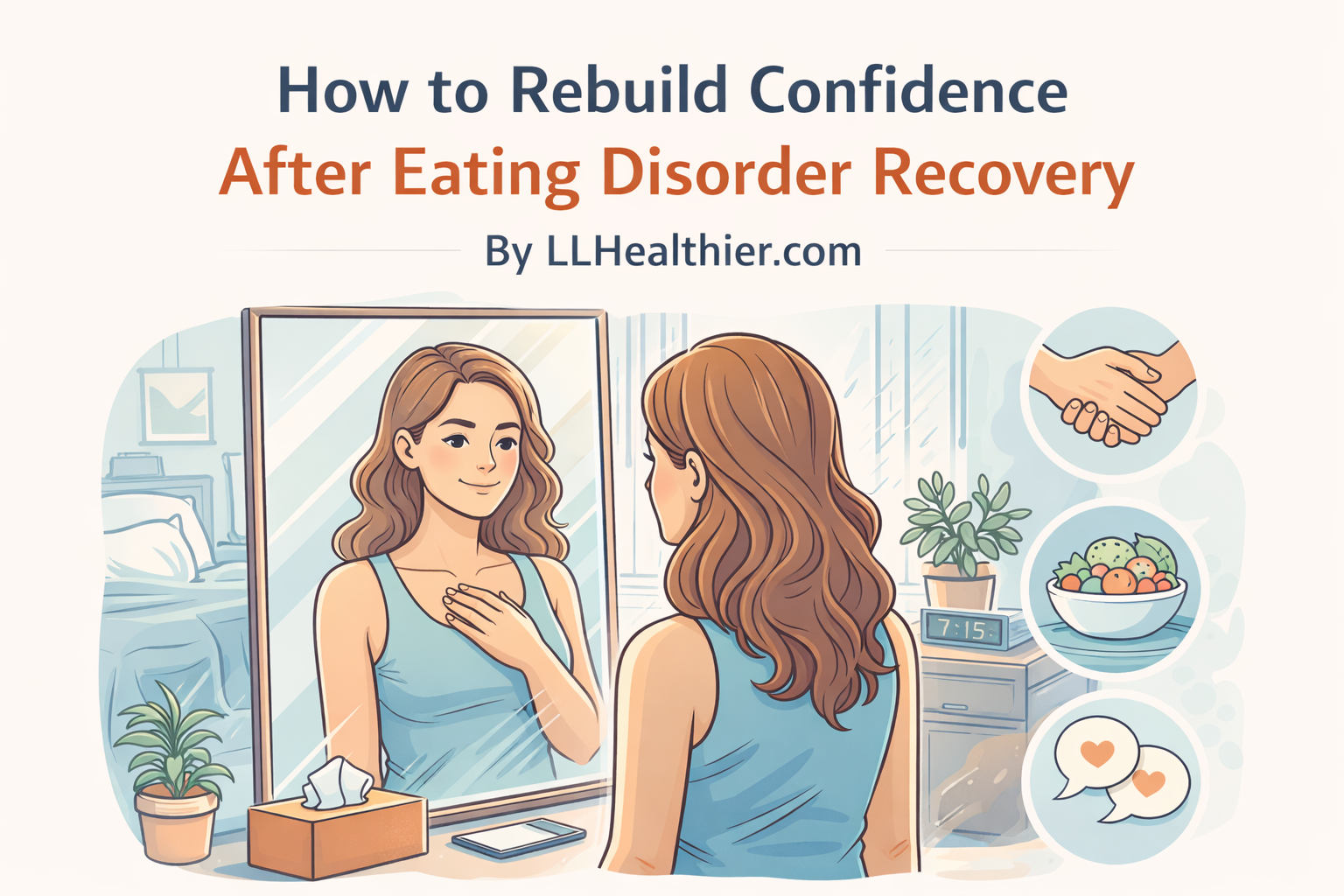
How to Rebuild Confidence After Eating Disorder Recovery
Recovering from an eating disorder is one of the most courageous things a person can do. It often requires facing fears, changing deeply rooted habits, challenging painful beliefs, tolerating uncertainty, and learning to trust the body again. Many people outside that experience do not fully understand how much strength recovery demands.
Yet something important often happens after the most urgent symptoms begin to improve. A person may be medically safer, eating more consistently, and functioning better, but confidence still feels fragile. They may wonder why they do not feel fully “better” yet. They may look in the mirror and still feel uncertain. They may struggle socially, question their worth, or feel disconnected from who they are.
This stage is common.
Eating disorder recovery is not only about food. It is also about identity, self-trust, emotional regulation, body image, relationships, and confidence. Many people spent years tying their value to weight, control, appearance, discipline, or perfection. When recovery removes those coping tools, there can be an emotional rebuilding period.
The good news is that confidence can be rebuilt. In many cases, it becomes healthier and stronger than the confidence that existed before.
Understanding What Confidence Really Is
Many people think confidence means always liking how you look, never feeling insecure, or walking into every room with certainty. That version of confidence is unrealistic and often performative.
Real confidence is steadier.
It is trusting yourself to handle discomfort. It is knowing your worth does not collapse on a hard day. It is being able to care for yourself even when emotions rise. It is showing up imperfectly and still respecting yourself.
For someone healing from an eating disorder, confidence often begins not with appearance, but with trust.
Can I trust myself to nourish my body?
Can I trust myself to cope without harmful behaviors?
Can I trust myself to be seen without hiding?
Can I trust that I am more than my body?
These are deeper questions than surface confidence, and answering them takes time.
Why Confidence Often Feels Low After Recovery
Eating disorders frequently provide a false sense of control. They may create rigid rules, identity labels, temporary praise from others, or the illusion of safety through numbers, routines, and body management.
When recovery begins, those structures often loosen or disappear. That can feel disorienting.
A person may no longer use food restriction, bingeing, purging, compulsive exercise, or obsessive body checking to regulate distress. Without those habits, old insecurities can feel louder before healthier coping skills fully develop.
Some people also experience body changes during recovery. This can trigger grief, fear, comparison, or confusion in a culture that often glorifies thinness and control.
Confidence can dip during this phase not because recovery is failing, but because healing is asking for new foundations.
Separate Worth from Appearance
One of the most important confidence shifts in recovery is learning that body size, shape, or weight does not determine human worth.
This sounds simple, but for many people it is revolutionary.
If years were spent believing attractiveness equals value, changing that belief takes repetition and evidence. You may need to ask difficult questions.
Do I value my friends only for appearance?
Do I believe loved ones earn dignity through size?
Would I tell a child their worth depends on their body?
Most people answer no.
Yet they apply harsher rules to themselves.
Real confidence grows when worth is rooted in character, compassion, resilience, humor, intelligence, honesty, creativity, and presence. Bodies matter because they carry life. They do not define life.
Rebuild Trust Through Daily Actions
Confidence is often built less through thoughts and more through evidence.
Every time you eat regularly, attend therapy, challenge a food fear, rest when tired, speak kindly to yourself, or resist harmful urges, you create evidence that you can be trusted.
This matters because many people in recovery feel ashamed of past behaviors and doubt themselves.
Trust returns through repeated care.
You do not need one dramatic breakthrough. You need many ordinary moments where you choose healing again.
Confidence built this way tends to last because it is grounded in action.
Expect Body Image to Fluctuate
Many people believe they must love their body every day before they can feel confident. That belief keeps them trapped.
Body image often changes from day to day, especially during recovery. Hormones, stress, sleep, clothing fit, social comparison, and emotional state can all affect perception.
You do not need perfect body image to build confidence.
Sometimes confidence means saying, “I do not love how I feel today, but I will still nourish myself, leave the house, wear the clothes, and live my life.”
That is strength.
Body neutrality can also help. Instead of demanding constant love for appearance, focus on respecting the body for what it does.
It breathes, heals, walks, digests, laughs, hugs, carries you through life.
That perspective can be grounding.
Challenge the Inner Critic
Eating disorders are often accompanied by a harsh internal voice.
It may criticize your body, question your worth, demand perfection, compare you to others, or insist you are failing.
Many people mistake this voice for truth because it has been present so long.
Begin noticing the voice without automatically believing it. Ask yourself:
Would I speak this way to someone I love?
Is this statement factual or cruel?
Does this voice help recovery or harm it?
What would a wise, compassionate response sound like?
Confidence grows when the inner critic loses authority.
You may still hear it sometimes. The goal is not silence overnight. The goal is reduced control.
Build Identity Beyond Recovery
Some people spend so long battling the eating disorder that life becomes organized around it. Thoughts revolve around food, body, exercise, treatment, secrecy, or survival.
When healing begins, there may be a strange emptiness.
Who am I when I am not managing symptoms all day?
This is an important stage.
Recovery creates space to rediscover identity.
You may be artistic, funny, analytical, spiritual, nurturing, adventurous, curious, thoughtful, ambitious, playful, or deeply caring. Those parts may have been overshadowed.
Explore interests. Take classes. Volunteer. Travel locally. Create things. Join groups. Reconnect with passions that have nothing to do with body image.
Confidence grows when life becomes bigger than the disorder.
Be Selective About Your Environment
Confidence struggles do not happen in a vacuum. Environment matters.
Some social spaces are saturated with diet talk, appearance obsession, comparison, and casual body shaming. Some social media feeds normalize disordered thinking while calling it wellness.
Protecting recovery may require boundaries.
Curate what you consume online. Unfollow accounts that trigger comparison. Spend less time with people who constantly criticize bodies, calories, or aging. Seek spaces where people talk about ideas, joy, growth, art, work, family, and meaningful life.
You are allowed to protect your mind.
Confidence grows faster in healthier soil.
Learn to Tolerate Being Seen
Eating disorders often involve hiding.
People hide meals, symptoms, struggles, bodies, emotions, needs, or true feelings. Even after recovery begins, visibility can feel uncomfortable.
Being seen might mean eating with others, wearing normal clothes, attending events, dating again, speaking honestly, or showing up without the old protective rituals.
This vulnerability can feel intense. Take it gradually.
Confidence often grows each time you survive visibility and realize the world did not collapse.
You can be imperfect, human, and still accepted.
Use Competence to Build Confidence
Confidence does not need to come only from body image work. It can also grow through capability.
Learn practical skills. Improve at work. Take a course. Manage finances. Build fitness through joyful movement rather than punishment. Cook meals. Create art. Practice public speaking. Develop hobbies.
Competence reminds you that you are a full person with abilities and potential.
When confidence depends only on appearance, it remains fragile. When it includes skill, resilience, and contribution, it becomes steadier.
Redefine Strength
Many people in recovery once associated strength with hunger tolerance, self-denial, relentless exercise, or extreme discipline.
Those are painful distortions.
Real strength may look different now.
It may look like eating enough when fear is loud.
It may look like resting when tired.
It may look like asking for help.
It may look like crying honestly.
It may look like going to dinner with friends and staying present.
It may look like choosing health over approval.
This new definition of strength often leads to deeper confidence than the old one ever could.
Allow Grief for Lost Time
Some people in recovery feel anger or sadness about years consumed by the disorder. They may grieve missed relationships, school experiences, career opportunities, joy, fertility, health, or peace.
This grief is valid.
Confidence can be hard to build while carrying unspoken sorrow.
Allow yourself to mourn what was lost without deciding your future is ruined. Many people build meaningful lives after painful chapters.
Your story is not over because part of it was difficult.
Relationships and Confidence
Eating disorders often strain intimacy. Recovery may bring fears about dating, being touched, being judged, eating around others, or disclosing history.
Go gently.
You do not need to earn love through appearance. Healthy partners value honesty, warmth, humor, depth, loyalty, and emotional presence.
Let relationships become places where you practice being known rather than places where you perform perfection.
Confidence grows when love is experienced without hiding.
Expect Setbacks Without Panic
Recovery is rarely flawless. Body image dips, stressful seasons, urges, comparison spirals, or temporary slips can happen.
Many people interpret any difficult moment as failure. It is not.
Confidence includes the ability to respond to setbacks wisely.
A hard week does not erase progress. One trigger does not undo growth. Feeling insecure does not mean you are back at the beginning.
Repair quickly. Reach for support. Return to routines. Keep perspective.
When Professional Support Helps
Confidence rebuilding can benefit greatly from therapy, dietitian support, group counseling, trauma work, or psychiatric care when needed.
Sometimes low confidence is tied to deeper depression, anxiety, trauma, obsessive thinking, or family wounds that deserve attention.
You do not need to do this alone.
Strong people use support systems.
What Confidence Often Looks Like in Real Life
Confidence after recovery may be quieter than expected.
It may look like eating lunch without negotiation.
It may look like buying clothes that fit now instead of waiting.
It may look like going to the beach and joining the day.
It may look like saying no to diet talk.
It may look like trusting hunger cues.
It may look like pursuing dreams once postponed.
It may look like being kind to yourself after a hard mirror moment.
It may look like peace.
Rebuilding confidence after eating disorder recovery takes patience, repetition, and a new definition of worth. Confidence grows when you separate value from appearance, trust yourself through daily care, challenge the inner critic, expand identity beyond the disorder, and keep showing up for life.
You do not need to become flawless to feel strong.
You need to become rooted.
The confidence that emerges after recovery is often deeper than surface self-esteem. It is built from courage, honesty, resilience, and the decision to choose yourself again and again.
Found this article interesting? Bookmark it to read again later.
Then, share it for others to read. 🌎
Thank you!






Post Comment