How to Communicate Anger in Healthy Ways
Anger is one of the most misunderstood emotions. Many people grow up believing anger is bad, dangerous, embarrassing, or something that should always be hidden. Others grow up seeing anger expressed through yelling, intimidation, insults, or emotional shutdown. As a result, many adults either suppress anger until it leaks out sideways or express it in ways that damage trust and relationships.
The truth is that anger itself is not the problem. Anger is a normal human emotion that often signals something important. It may point to hurt, injustice, disappointment, disrespect, fear, exhaustion, or crossed boundaries. When understood and communicated wisely, anger can become useful information rather than destructive force.
Healthy communication of anger does not mean pretending to be calm when you are not upset. It means expressing what is real in a way that is honest, respectful, and productive. This is a skill, and like any skill, it can be learned with practice.
For many people, learning to communicate anger well becomes life-changing. It improves relationships, reduces resentment, and creates stronger self-respect.
Why Anger Happens
Anger usually appears when something feels wrong. You may feel ignored by a partner, dismissed at work, disrespected by a stranger, overwhelmed by repeated stress, or disappointed by unmet expectations. Sometimes anger is about the present moment. Other times it is connected to old wounds being stirred by current events.
For example, being interrupted in a meeting may create more anger if you spent years feeling unheard in childhood. A small event can activate a much larger emotional history. This does not mean your anger is fake. It means emotions often carry layers.
When you understand that anger has roots, it becomes easier to communicate it thoughtfully rather than impulsively.
Anger Is Different from Aggression
Many people confuse anger with aggression. They are not the same thing. Anger is an internal emotional state. Aggression is behavior that may include yelling, threatening, insulting, slamming doors, breaking things, or trying to dominate others.
A person can feel angry without becoming aggressive. In fact, some of the healthiest communicators feel anger clearly but express it with steadiness and maturity. They know emotion does not require cruelty.
Learning this distinction is freeing. You do not have to fear anger simply because you dislike aggression.
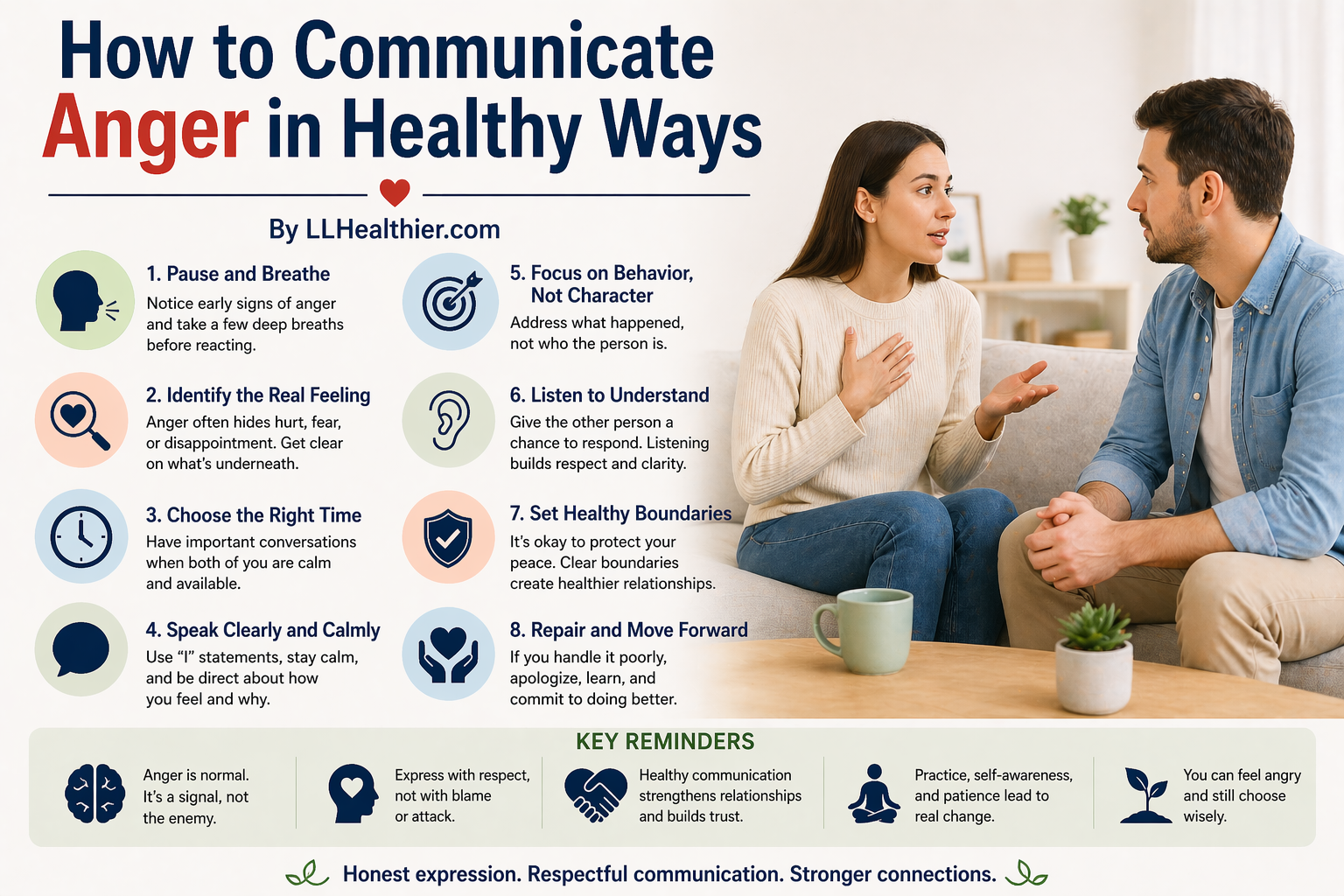
Notice Early Warning Signs
Healthy anger communication begins before words are spoken. The body often signals anger early through tension, clenched jaw, racing thoughts, faster heartbeat, shallow breathing, heat in the face, or a strong urge to react immediately.
When you notice these signs, pause. That pause can prevent many regrets. Taking several slow breaths, stepping away briefly, or relaxing your shoulders can help calm the nervous system enough to think clearly.
It is easier to steer anger early than after it becomes explosive.
Identify What You Actually Feel
Anger is often a cover emotion. Underneath it may be sadness, fear, shame, loneliness, disappointment, or feeling unimportant. Many people say “I’m mad” when the deeper truth is “I’m hurt.”
This matters because communicating the real feeling usually leads to better outcomes. Saying, “I felt dismissed when you laughed at that,” invites connection more than saying, “You are impossible.”
Anger gets attention, but vulnerability often gets understanding.
Choose the Right Time
Timing can shape the entire conversation. If someone just walked in the door exhausted, is in the middle of a work crisis, or both of you are emotionally flooded, it may not be the best moment for a serious discussion.
Healthy communication sometimes means waiting until both people can actually hear each other. This does not mean avoiding forever. It means choosing conditions that support success.
You might say, “I need to talk about something important. When would be a good time tonight?” That simple approach often works better than ambushing someone in the heat of the moment.
Speak Clearly and Directly
Many people communicate anger through sarcasm, coldness, passive aggression, or vague criticism. These methods usually create confusion rather than resolution. The other person senses anger but may not understand the actual issue.
Clear communication names the problem directly and respectfully. You can say, “I felt frustrated when the plans changed without telling me,” or “I need more follow-through on what we agreed to.”
Directness is kinder than hidden hostility. It gives the relationship a real chance to improve.
Use a Calm Tone
Words matter, but tone often matters just as much. The same sentence can feel constructive or hostile depending on how it is delivered. A sharp, mocking, or contemptuous tone tends to trigger defensiveness quickly.
You do not need to sound cheerful when angry. You simply want to sound steady. A firm but calm tone communicates seriousness without escalating unnecessary conflict.
People are more likely to hear difficult truths when they are not being attacked by the delivery.
Focus on Behavior, Not Character
One of the most damaging habits during anger is attacking identity instead of addressing behavior. Statements like “You’re selfish,” “You’re lazy,” or “You never care” often create shame and counterattack.
It is more effective to focus on what happened. Try saying, “When you ignored my calls after we made plans, I felt disrespected,” or “Leaving dishes repeatedly creates stress for me.”
Behavior can be discussed and changed. Character attacks usually harden walls.
Listen After You Speak
Healthy anger communication is not a speech. It is a conversation. Once you express your concerns, allow space for the other person to respond.
They may offer context you did not know. They may apologize. They may disagree with parts of your view. Listening does not erase your feelings, but it increases the chance of real resolution.
Many conflicts calm down once both people feel heard.
Set Boundaries When Needed
Not all anger should end in compromise. Sometimes anger is a signal that stronger boundaries are needed. Repeated disrespect, dishonesty, manipulation, or emotional harm may require limits rather than endless discussion.
A boundary may sound like, “If you continue yelling, I’m ending this conversation,” or “I’m no longer available for last-minute demands.”
Healthy anger sometimes protects dignity. Boundaries are often part of that protection.
Avoid Stockpiling Resentment
Some people stay silent for months to keep peace. They swallow frustration until one small issue triggers a giant reaction. Then others are confused by the intensity.
It is healthier to address concerns earlier and more often. Small honest conversations usually go better than explosive delayed ones.
Resentment grows in silence. Relief often begins with timely truth.
Write Before You Speak
If anger feels intense, journaling first can help. Write exactly what you feel without filtering. Then step back and ask what truly needs to be communicated.
Often the first draft contains raw emotion, while the second draft contains wisdom. You may discover the core issue is simpler than it first seemed.
Writing can turn chaos into clarity.
Repair if You Handle It Poorly
No one communicates perfectly all the time. You may raise your voice, use harsh words, or speak impulsively. If that happens, repair matters.
A healthy apology sounds like, “I was right to bring up the issue, but I handled it poorly. I’m sorry for how I spoke.” This keeps accountability clear while still honoring the underlying concern.
Mistakes do not ruin growth when they are owned and corrected.
When Anger Feels Constant
If anger is frequent, intense, or affecting work, family, or health, it may be worth looking deeper. Chronic anger can be linked to burnout, depression, unresolved trauma, anxiety, substance use, poor sleep, or long-term stress.
Sometimes people are not “angry people.” They are exhausted, wounded, or overwhelmed people.
Therapy, counseling, stress management, and lifestyle changes can be extremely helpful. Seeking support is strength, not failure.
Teaching Children by Example
Adults teach children about anger every day, whether intentionally or not. Children watch how parents, relatives, and caregivers respond under stress. If they see explosive reactions or silent resentment, those patterns can feel normal.
If they see calm honesty, repair, boundaries, and emotional responsibility, they learn healthier models.
Your anger style may become someone else’s blueprint.
Communicating anger in healthy ways means recognizing anger as valid information, calming yourself before reacting, identifying the deeper issue, and speaking with honesty and respect. It means focusing on behavior, listening in return, and setting boundaries when necessary.
Anger does not need to control your relationships or damage your peace. It can become a guide that helps you understand needs, protect limits, and improve communication.
You do not need to stop feeling angry. You need to learn how to use anger wisely.
Found this article interesting? Bookmark it to read again later.
Then, share it for others to read. 🌎
Thank you!








Post Comment