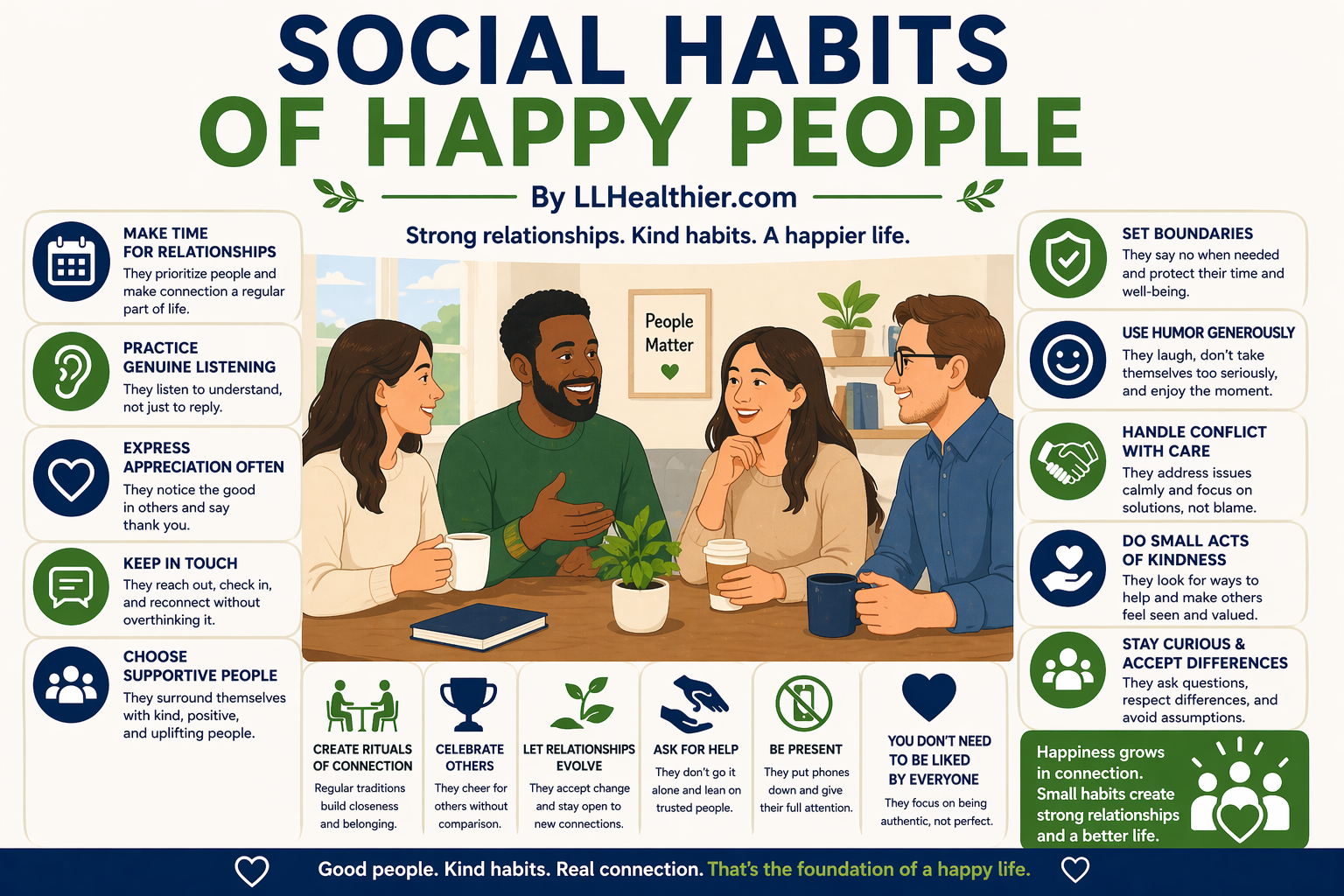
Social Habits of Happy People
Many people chase happiness through money, appearance, career milestones, or possessions. While those things can improve comfort and opportunity, they often do not create lasting emotional well-being on their own. Again and again, research and real life point to a simpler truth: strong human connection is one of the most reliable ingredients in a happy life.
This does not mean happy people are always outgoing, loud, or surrounded by crowds. Some are quiet, private, and deeply content. Happiness is not reserved for extroverts. What often matters more is the quality of relationships and the habits that help those relationships grow.
Social habits shape emotional life in powerful ways. The people we spend time with, the way we communicate, how we handle conflict, and whether we feel connected all influence mood, stress levels, and resilience.
The good news is that social habits can be learned and strengthened. Many people become happier not by changing who they are, but by changing how they relate to others.
They Make Time for Relationships
Happy people usually understand that relationships need attention. They do not assume friendships and family bonds stay strong automatically. They make time for calls, dinners, visits, messages, and shared moments even when life gets busy.
This does not require a packed social calendar. It often looks simple and steady. A quick check-in with a sibling, coffee with a friend, or regular dinner with family can matter more than occasional grand gestures.
Many unhappy people tell themselves they will reconnect later when life slows down. Later often keeps moving. Happy people tend to protect connection in the present.
They Practice Genuine Listening
One of the most underrated social habits is listening well.
Happy people are often good at making others feel heard. They ask follow-up questions, pay attention, and stay present instead of waiting for their turn to speak. This creates trust and warmth in relationships.
Being listened to is deeply comforting. It tells people they matter.
Strong listeners also benefit themselves. Real listening pulls attention out of self-absorption and into meaningful connection.
They Express Appreciation Often
Gratitude is not only a private feeling. It is also a social skill.
Happy people tend to thank others, notice effort, and speak appreciation aloud. They thank a spouse for everyday help, tell a friend they value them, compliment kindness, and recognize work done well.
Many relationships suffer not because love is absent, but because appreciation goes unspoken.
Simple words such as “I appreciate you,” “Thank you,” or “That meant a lot to me” can strengthen bonds more than people realize.
They Keep in Touch Without Overthinking It
Some people avoid reaching out because they think too much time has passed, they fear awkwardness, or they assume the other person is too busy.
Happy people often keep this simpler.
They send the text. They make the call. They invite the person. They reconnect without demanding perfect timing or perfect wording.
Most healthy relationships are strengthened by small contact maintained over time. You do not need a special occasion to tell someone you were thinking of them.
They Choose Supportive People
Not every social connection improves happiness.
Some people drain energy through constant negativity, chaos, criticism, gossip, or selfishness. Spending heavy amounts of time in unhealthy dynamics can wear down even strong people.
Happy people are not always surrounded by perfect people, but they tend to choose healthier company more consistently. They value kindness, humor, honesty, steadiness, and mutual respect.
Who you spend time with quietly shapes how you feel.
They Set Boundaries Without Excess Drama
Many people believe happiness requires pleasing everyone. In reality, chronic people-pleasing often leads to resentment, exhaustion, and shallow relationships.
Happy people usually understand boundaries.
They know when to say no, when to limit draining interactions, and when to protect time for rest, family, or personal priorities. They do this without needing to be harsh or combative.
Boundaries are not walls against love. They are structure that allows healthier love.
They Use Humor Generously
Laughter is social medicine.
Happy people often use humor to lighten stress, bond with others, and create warmth. They do not need to be comedians. They simply allow room for playfulness, silliness, and perspective.
Shared laughter can reduce tension quickly. It reminds people that life does not always need to be carried with clenched fists.
Humor used kindly, not cruelly, helps relationships breathe.
They Handle Conflict Directly and Calmly
No relationship avoids conflict forever.
Happy people are not conflict-free people. They are often people who address issues more skillfully. Instead of storing resentment for months, they speak honestly with respect.
They tend to focus on solving the problem rather than humiliating the person. They apologize when wrong, listen when challenged, and try not to turn every disagreement into a character attack.
Peace is often built through repair, not avoidance.
They Do Small Acts of Kindness
Many happy people regularly practice everyday kindness.
They hold doors, check on neighbors, encourage coworkers, help family members, and notice when someone is struggling. These actions may seem minor, but they create emotional meaning.
Kindness often benefits the giver as much as the receiver. It creates connection, perspective, and a sense of contribution.
A life centered only on personal convenience can feel empty. Service adds depth.
They Stay Curious About Others
Unhappy social patterns often involve assumptions.
We think we know what others meant, what they feel, or why they acted a certain way. This can create unnecessary hurt and distance.
Happy people are often more curious than reactive. They ask questions. They seek context. They allow room for complexity.
Curiosity keeps relationships flexible and less brittle.
They Accept Different Social Styles
Not everyone connects the same way.
Some people love long talks. Others bond through shared activity. Some text often. Others disappear for weeks and return warm as ever. Some need large gatherings. Others prefer one-on-one time.
Happy people often stop demanding that everyone relate exactly as they do. They adjust expectations and appreciate different temperaments.
This flexibility reduces disappointment and unnecessary conflict.
They Create Rituals of Connection
Strong relationships are often built through repetition.
Happy people frequently create rituals such as Friday dinner with family, Sunday calls with parents, monthly lunch with friends, morning coffee with a spouse, or annual trips with loved ones.
These rhythms create stability and belonging.
Connection becomes easier when it is built into life rather than left to chance.
They Celebrate Others Without Comparison
Comparison quietly poisons happiness.
Some people struggle to feel joy when others succeed because it triggers insecurity. Happy people are more likely to celebrate promotions, marriages, progress, healing, and milestones without turning everything into a contest.
This mindset protects both relationships and self-esteem.
Another person’s joy does not subtract from your future.
They Let Relationships Evolve
People change over time.
Some friendships deepen. Others become seasonal. Family roles shift. Children grow up. Careers move people apart. New communities form.
Happy people often accept this reality without clinging too tightly to old forms. They grieve changes when needed, but they remain open to new connection.
Emotional flexibility helps happiness survive life transitions.
They Ask for Help When Needed
Many people isolate when struggling.
Happy people are not always strong alone. They are often willing to lean on trusted people when life becomes heavy. They ask for support, advice, prayer, company, or practical help.
This creates intimacy and reduces the loneliness that often fuels emotional pain.
Being supported is part of healthy connection too.
They Put Phones Down Sometimes
Modern life offers endless digital contact and growing emotional disconnection.
Happy people often make space for real presence. They look up during meals, listen without multitasking, and give attention that feels human rather than divided.
Technology can connect people, but it can also dilute connection when overused.
Attention is one of the purest forms of care.
They Do Not Need to Be Liked by Everyone
Trying to win universal approval creates anxiety.
Happy people generally understand that not every person will connect with them, understand them, or choose them. They aim to be respectful rather than universally admired.
This freedom creates more authentic relationships.
When you stop performing for everyone, you relate more honestly with the right people.
The social habits of happy people are usually not flashy. They make time for relationships, listen well, express appreciation, maintain boundaries, handle conflict with maturity, laugh often, and stay connected through consistent small actions.
Happiness is rarely built through isolation. It is often built through warm, steady, meaningful connection.
You do not need hundreds of friends or constant social excitement. You need relationships that feel real and habits that help them grow.
Sometimes a happier life begins not with changing everything, but with calling someone back, listening more deeply, and showing up with heart.
Found this article interesting? Bookmark it to read again later.
Then, share it for others to read. 🌎
Thank you!










Post Comment