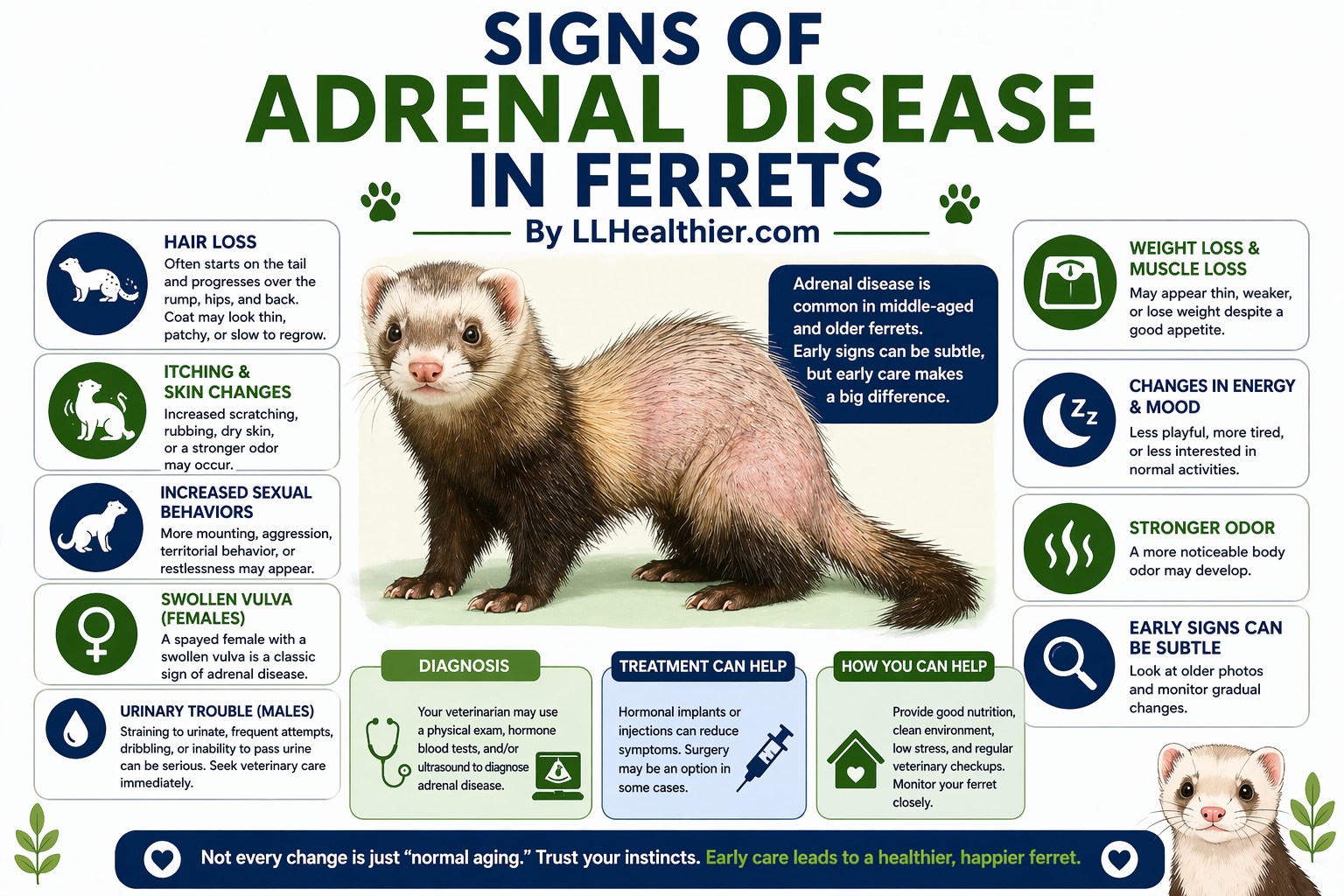
Signs of Adrenal Disease in Ferrets
Ferrets are playful, intelligent, curious pets with personalities much larger than their bodies. They can be affectionate, mischievous, and deeply entertaining companions. Because they are so active and expressive, owners often notice quickly when something about their ferret seems different.
One of the more common medical concerns in pet ferrets is adrenal disease. Many owners hear the term and immediately worry, but understanding the condition can help you respond early and wisely. Prompt veterinary attention often improves comfort, quality of life, and long-term management.
Adrenal disease in ferrets can develop gradually. The earliest signs are sometimes subtle and easy to dismiss as normal aging, seasonal shedding, or behavior changes. Learning what to watch for gives owners a better chance of catching problems before symptoms become more advanced.
What Adrenal Disease Means in Ferrets
In ferrets, adrenal disease usually refers to abnormal changes involving one or both adrenal glands. These glands sit near the kidneys and produce hormones that help regulate many body functions.
Unlike adrenal disease in dogs, which often involves cortisol problems, ferret adrenal disease more commonly leads to excess production of sex hormones. Those hormonal shifts can affect the skin, coat, behavior, reproductive tissues, and urinary tract.
This is why the signs can seem unusual or unrelated at first glance.
Owners may notice hair loss, itching, swelling, aggression, or bathroom difficulties before they ever think about the adrenal glands.
Hair Loss Is Often the First Sign
One of the most common early signs is hair loss.
Many ferrets begin losing fur on the tail first, then over the rump, hips, or lower back. In some cases, thinning progresses along the body while the head and legs remain furred longer. The coat may look sparse, patchy, or slow to regrow.
Because ferrets naturally shed with the seasons, some owners assume it is normal molting.
The difference is that adrenal-related hair loss often becomes progressive, symmetrical, or unusually persistent.
Itching and Skin Changes
Some ferrets with adrenal disease become itchier than usual. They may scratch often, rub their body against surfaces, or seem restless due to skin irritation.
The skin itself may appear dry, thin, or more noticeable because of hair loss. In some cases, owners notice a stronger body odor than usual.
Skin symptoms can have many causes, including parasites or allergies, so veterinary evaluation matters.
Still, when itching appears alongside hair thinning, adrenal disease should be considered.
Increased Sexual Behaviors
Because adrenal disease in ferrets often involves hormone overproduction, behavior changes are common.
A previously calm ferret may become more aggressive, more dominant, or unusually aroused. Mounting behavior may increase. Some ferrets become more territorial or reactive toward cage mates.
Owners are sometimes surprised by these changes, especially in neutered pets.
The behavior is not “bad attitude.” It may be biology signaling a medical issue.
Swollen Vulva in Female Ferrets
In spayed female ferrets, a swollen vulva is a classic warning sign of adrenal disease.
Since a spayed female should not cycle hormonally in the normal sense, vulvar enlargement can strongly suggest abnormal hormone activity. Some owners notice this change before any coat problems appear.
This sign deserves prompt veterinary attention.
It may be one of the clearer outward clues that hormones are no longer balanced.
Urinary Trouble in Male Ferrets
Male ferrets with adrenal disease can develop enlargement of tissues near the prostate due to hormonal effects. This may partially block urine flow.
Owners may notice straining in the litter box, frequent attempts to urinate, dribbling urine, discomfort, or inability to pass urine normally.
This can become an emergency.
A ferret who cannot urinate needs urgent veterinary care right away. Waiting can be dangerous.
Muscle Loss and Weakness
As adrenal disease progresses, some ferrets appear thinner or less muscular. They may lose weight despite eating reasonably well, or seem weaker during play.
Owners sometimes describe their ferret as looking older suddenly.
Any unexplained weight change or decline in energy should be investigated. While adrenal disease may be involved, many illnesses can cause similar signs.
Ferrets are small animals, so body changes can become significant quickly.
Changes in Energy and Mood
Some ferrets remain playful despite adrenal disease, especially early on. Others become more tired, less interactive, or less interested in normal routines.
You may notice your ferret sleeps more, explores less, or stops greeting you with the same enthusiasm.
Behavior changes are often one of the earliest ways pets communicate discomfort.
Even subtle shifts matter when they persist.
Why Owners Sometimes Miss the Signs
Adrenal disease often develops gradually, which makes it easy to normalize changes.
A little thinning on the tail may not seem urgent. Slight itchiness may be blamed on dry weather. A more irritable mood may be dismissed as aging.
Because the changes happen step by step, owners adapt without realizing the overall picture has changed.
Looking at older photos of your ferret can sometimes make the progression more obvious.
What Causes It
The exact causes are still discussed, but adrenal disease in ferrets is thought to involve multiple factors including genetics, early spaying or neutering practices, hormonal feedback changes, and age.
It is especially common in middle-aged to older pet ferrets, though younger animals can be affected.
Owners should understand this is not usually caused by something they did wrong.
Many well-cared-for ferrets develop adrenal disease despite loving homes and proper attention.
How Veterinarians Diagnose It
Diagnosis often begins with a physical exam and medical history. Your veterinarian will ask about hair loss patterns, itching, behavior changes, urinary habits, appetite, and age.
Some vets use blood hormone testing, ultrasound imaging, or both. Ultrasound can help assess adrenal gland size and appearance.
Diagnosis may involve ruling out other problems such as parasites, insulinoma, skin disease, or seasonal shedding.
An experienced exotic animal veterinarian is especially valuable.
Treatment Options Can Help Greatly
The encouraging news is that adrenal disease is often manageable.
Many ferrets respond well to hormonal implants or injections that reduce the effects of excess hormone production. These treatments can improve hair regrowth, itching, swelling, and behavior changes over time.
In selected cases, surgery to remove an affected adrenal gland may be considered.
The right plan depends on the ferret’s age, overall health, severity of symptoms, and veterinary findings.
Home Care During Treatment
Owners play an important role after diagnosis.
Monitor appetite, weight, bathroom habits, coat condition, and activity level. Keep the environment low-stress and comfortable. Provide good nutrition, clean bedding, and easy access to litter areas.
If urinary signs appear at any time, contact your veterinarian quickly.
Even treated ferrets need ongoing observation.
Why Early Care Matters
Some owners wait because the ferret still seems playful or because hair loss does not appear painful.
But earlier treatment often means less discomfort, fewer complications, and better quality of life. Hormonal changes can affect more than appearance.
Especially in male ferrets, delaying care can risk urinary obstruction.
When in doubt, getting checked sooner is usually the kinder path.
How to Support a Senior Ferret
Since adrenal disease is common in older ferrets, regular wellness exams become more important with age.
Aging ferrets benefit from weight checks, physical exams, and discussions about behavior changes or subtle symptoms. Early disease is often easier to manage than advanced disease.
Senior pets may slow down naturally, but not every change should be blamed on age alone.
Comfortable aging often depends on noticing what is treatable.
Signs of adrenal disease in ferrets commonly include hair loss, itching, swollen vulva in females, urinary trouble in males, behavior changes, odor changes, and declining body condition.
Because symptoms often develop gradually, owners may miss the pattern until the disease is more advanced.
The good news is that many ferrets do well with veterinary treatment and ongoing care. If your ferret seems different, trust your instincts and schedule an exam.
Attentive owners are often the first and best line of defense in protecting a ferret’s health.
Found this article interesting? Bookmark it to read again later.
Then, share it for others to read. 🌎
Thank you!







Post Comment