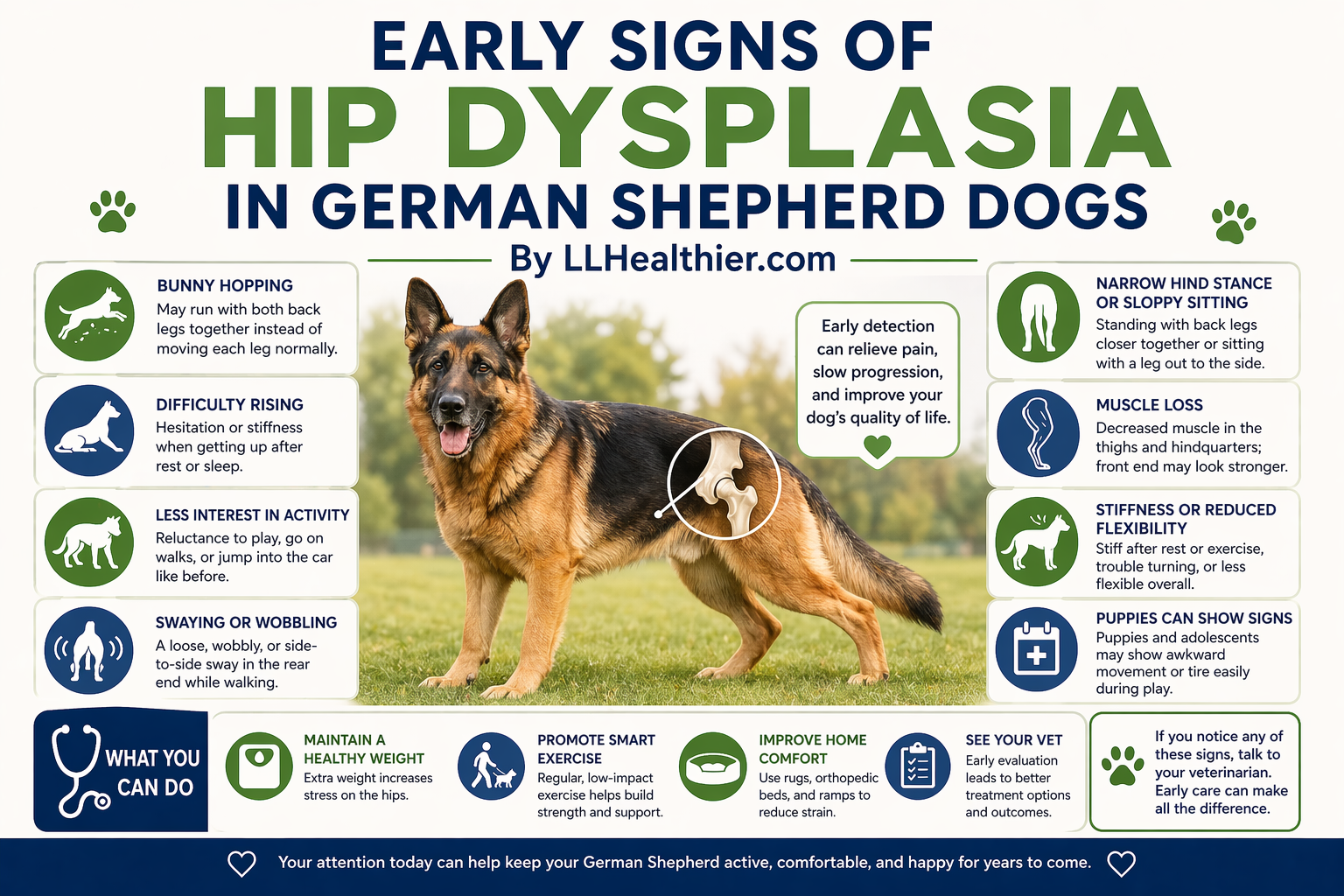
Early Signs of Hip Dysplasia in German Shepherd Dogs
German Shepherd Dogs are admired for their intelligence, loyalty, athleticism, and versatility. They serve as family companions, working dogs, protectors, and beloved pets in homes across America. They are strong, active animals that often enjoy play, training, long walks, and close involvement with their people.
Like many larger breeds, German Shepherds can be prone to certain orthopedic conditions. One of the most well-known is hip dysplasia. For owners, this diagnosis can sound frightening, but early recognition and proper management can make a meaningful difference in comfort and quality of life.
The key is knowing what to watch for before severe pain or major mobility problems develop. Many early signs are subtle and easy to dismiss as normal aging, laziness, or a minor strain. Learning those signs helps owners act sooner rather than later.
What Is Hip Dysplasia
Hip dysplasia is a developmental condition involving the hip joint. In a healthy hip, the ball of the femur fits securely into the socket of the pelvis and moves smoothly. In hip dysplasia, the joint may be loose, poorly aligned, or develop abnormally over time.
That poor fit can lead to friction, inflammation, wear, and eventually arthritis. Some dogs show signs when young, while others seem normal until adulthood when chronic joint damage becomes more noticeable.
Hip dysplasia often has a genetic component, but growth rate, body weight, nutrition, exercise habits, and environment may also influence how symptoms appear.
Why German Shepherds Are Commonly Mentioned
German Shepherd Dogs are a large, active breed with powerful hindquarters and substantial body mass. Because of breed genetics and physical structure, they are more commonly discussed in relation to hip dysplasia than many smaller breeds.
This does not mean every German Shepherd will develop hip problems. Many live active lives with healthy hips, especially when bred responsibly and cared for well.
It does mean owners should be informed and observant from puppyhood onward.
Knowledge is helpful, not alarming.
Early Sign: Bunny Hopping While Running
One classic early sign is a bunny hopping gait when running. Instead of each hind leg moving independently in a smooth stride, the dog may push off with both back legs together.
Some owners notice this during play in the yard or while chasing a ball.
This movement can be a way for the dog to reduce discomfort or compensate for hip instability. It may happen only occasionally at first, which is why it is sometimes overlooked.
If your German Shepherd repeatedly runs this way, it is worth mentioning to your veterinarian.
Early Sign: Difficulty Rising
A dog with early hip discomfort may hesitate when getting up from lying down. They may shift weight forward, brace with front legs, or take a moment before standing fully.
This can be especially noticeable after naps, overnight sleep, or long periods of rest.
Owners sometimes assume the dog is simply sleepy or stubborn. In reality, rising from the floor can place pressure on sore hips.
Repeated stiffness after rest deserves attention.
Early Sign: Reduced Interest in Activity
German Shepherds are often energetic and engaged dogs. If a previously active dog becomes reluctant to play, avoids stairs, lags behind on walks, or loses enthusiasm for jumping into the car, pain may be part of the story.
Dogs are not always dramatic about discomfort. Many simply do less.
Owners may think the dog is calming down with age, but if the change seems earlier than expected or happens suddenly, it should be evaluated.
Behavior changes are often physical clues in disguise.
Early Sign: Swaying or Wobbling in the Rear End
Some dogs with hip instability develop a subtle side-to-side sway when walking. The rear end may look loose, wobbly, or less coordinated.
This can be mild in early stages and more visible after exercise or when the dog is tired.
Because German Shepherds naturally have a unique gait and topline compared with some breeds, owners sometimes miss abnormal movement patterns.
Video recordings of your dog walking and trotting can be very helpful for your veterinarian.
Early Sign: Narrowing the Hind Leg Stance
A dog with sore hips may stand differently to reduce discomfort. They may place hind legs closer together than normal, shift weight forward, or sit in unusual positions.
Some dogs also “sloppy sit,” meaning one leg kicks out to the side rather than tucking neatly under the body.
While occasional odd sitting is not always a crisis, repeated posture changes can signal joint discomfort or weakness.
Dogs often adapt quietly long before they vocalize pain.
Early Sign: Muscle Loss in the Rear Legs
When hips hurt, dogs may use their back legs less efficiently. Over time, this reduced use can lead to muscle loss in the thighs and hindquarters.
Meanwhile, front shoulders may appear stronger because the dog shifts weight forward to compensate.
This body change can develop gradually, making it easy to miss if you see your dog every day.
Photos taken over time can sometimes reveal changes owners did not notice in real time.
Early Sign: Clicking, Stiffness, or Reduced Flexibility
Some owners notice stiffness during turning, slower movement after hard play, or difficulty stretching out comfortably. Others report hearing subtle clicking sounds, though not every dog with hip dysplasia has audible joint noise.
A dog may also seem less flexible when climbing stairs or jumping onto furniture.
Anything that suggests repeated discomfort with normal movement deserves a closer look.
Dogs often communicate through movement more than sound.
Puppies Can Show Signs Too
Hip dysplasia is not only a senior dog issue.
Some German Shepherd puppies and adolescents show signs early, especially during rapid growth phases. They may tire quickly, struggle after intense play, move awkwardly, or show intermittent rear leg lameness.
Because puppies can also be clumsy for harmless reasons, it is tempting to wait it out.
Still, persistent or repeated mobility concerns in a growing puppy should be examined.
Early management can matter greatly.
What Owners Should Not Assume
Owners sometimes assume limping must mean a paw injury or that slowing down means laziness. Others think a dog who still eats, wags, and plays cannot be hurting.
Dogs often mask pain remarkably well.
They may continue doing favorite activities while quietly compensating afterward.
By the time pain becomes obvious, the condition may already be more advanced.
How Veterinarians Diagnose It
A veterinarian will typically start with history, gait observation, and a physical exam. They may check hip range of motion, muscle symmetry, pain responses, and joint looseness.
X-rays are commonly used to evaluate hip structure and arthritis changes. In some younger dogs, sedation may be recommended for proper positioning and clearer imaging.
Diagnosis helps guide realistic treatment choices rather than guessing.
That clarity often relieves owners.
Treatment Does Not Always Mean Surgery
Many people fear that hip dysplasia automatically means major surgery. In truth, treatment depends on age, severity, pain level, and overall health.
Some dogs do well for years with weight management, controlled exercise, physical therapy, joint-support strategies, pain medication, or other veterinary-guided care.
Others may benefit from surgical options, especially severe or early cases.
The best plan is individualized, not one-size-fits-all.
Weight Control Is Powerful
One of the most effective ways to help hips is maintaining a lean body condition.
Extra weight increases stress on already unstable joints. Even moderate excess pounds can worsen discomfort over time.
Owners sometimes show love through food, but healthy weight is one of the kindest gifts for an orthopedic dog.
Your veterinarian can help determine an ideal body condition score.
Exercise Still Matters
Many owners think dogs with hip concerns should stop moving.
Usually, controlled movement is beneficial. Regular walks, swimming, strengthening exercises, and low-impact activity often help maintain muscle support and joint function.
The goal is smart movement, not weekend overexertion followed by days of soreness.
Consistency usually beats intensity.
Home Comfort Changes Help
Simple household adjustments can improve daily comfort. Rugs or runners can help prevent slipping on smooth floors. Orthopedic bedding may ease pressure during rest.
Ramps for cars or steps for furniture can reduce strain if your dog uses those spaces.
Small environmental changes often add up significantly.
Prevention Starts Before Purchase
If you are considering a German Shepherd puppy, ask breeders about health testing for hips and elbows. Responsible breeding programs often screen parent dogs to reduce inherited risk.
No breeder can promise perfection, but thoughtful breeding can improve odds.
Choosing responsibly is one of the earliest health decisions an owner makes.
When to Call the Vet Promptly
Call your veterinarian if your dog is limping, cries out, stops bearing weight, struggles significantly to rise, refuses activity suddenly, or seems painful.
Even if the issue is not hip dysplasia, those symptoms deserve timely attention.
Waiting too long can allow suffering and worsen compensation injuries elsewhere.
Hip dysplasia in German Shepherd Dogs often begins with subtle signs such as bunny hopping, stiffness after rest, reduced activity, awkward gait changes, difficulty rising, or muscle loss in the rear legs.
These signs are easy to miss or explain away, especially in a stoic breed.
Early veterinary evaluation, healthy weight management, smart exercise, and individualized care can greatly improve comfort and long-term mobility.
If something about your dog’s movement feels off, trust your observations. Owners are often the first to notice when a beloved dog is trying to cope quietly.
Found this article interesting? Bookmark it to read again later.
Then, share it for others to read. 🌎
Thank you!






Post Comment