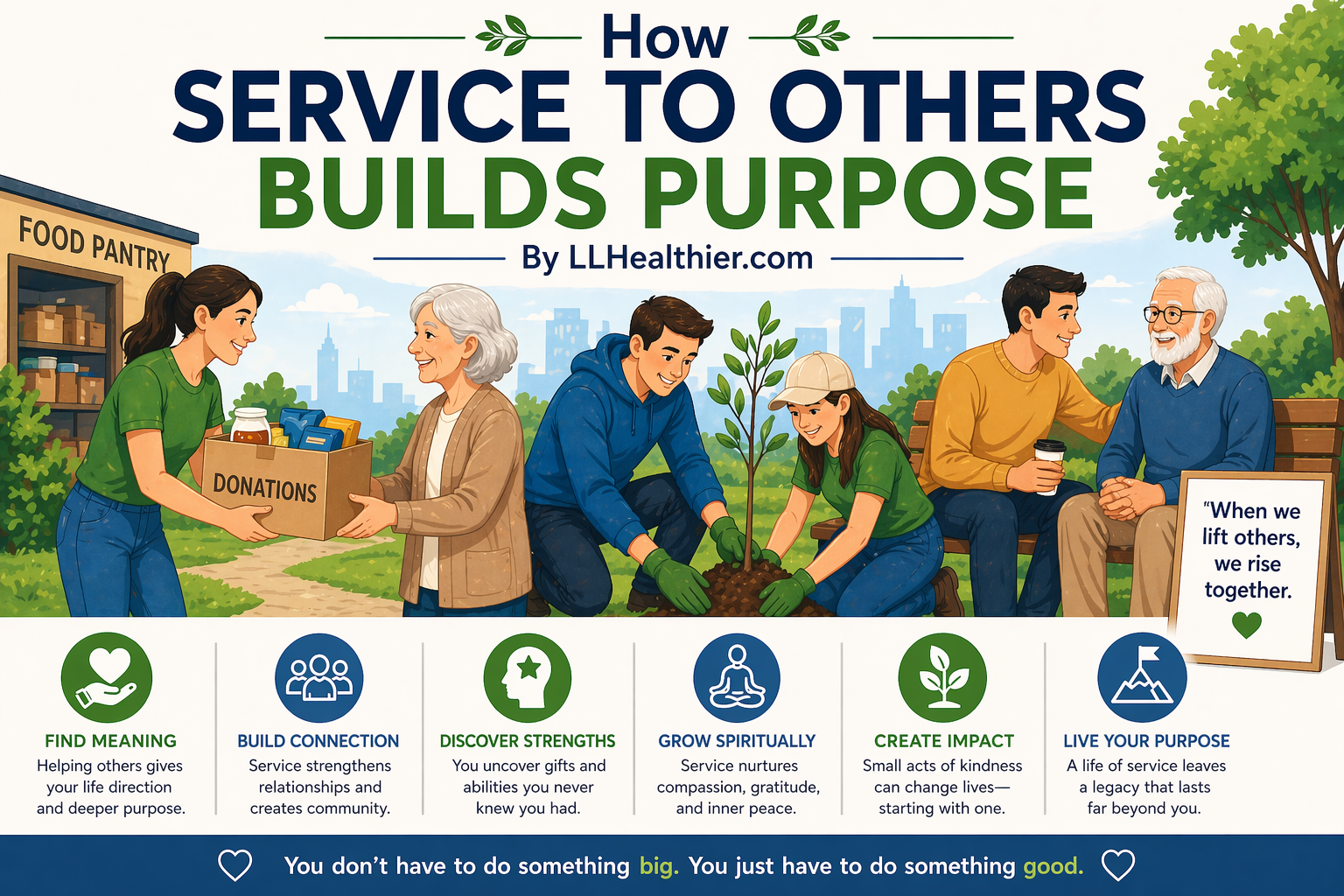
How Service to Others Builds Purpose
Many people spend years searching for purpose. They look for it in careers, accomplishments, money, relationships, status, travel, or personal milestones. Some of those things can bring satisfaction, but many people still reach a point where they quietly ask, “Is this all there is?”
Purpose is often misunderstood as one dramatic calling that arrives in a flash of clarity. In reality, purpose is usually built through daily choices that connect our lives to something larger than ourselves. One of the strongest and most reliable ways to build that kind of meaning is through service to others.
Service does not always mean grand gestures or public recognition. It often looks simple and human. It may be helping a neighbor, caring for family, mentoring a younger person, volunteering in the community, listening to someone in pain, or using your skills to improve another person’s life.
These acts may appear small from the outside, but they can profoundly shape the person offering them.
When we serve others, we often discover that purpose was not hiding far away. It was waiting in the act of giving.
Why So Many People Feel Aimless
Modern life can be busy yet strangely hollow. Many Americans are constantly occupied but not deeply fulfilled. They rush from task to task, pay bills, manage responsibilities, and stay connected through devices, yet still feel disconnected internally.
Part of the problem is that modern culture often teaches people to focus almost entirely on the self. Improve yourself. Brand yourself. Protect yourself. Entertain yourself. Compare yourself. Optimize yourself.
There is value in healthy self-care and growth, but when life becomes centered only on personal gain, emptiness can follow.
Human beings are relational by nature. We often feel more alive when we contribute, not only when we consume.
Purpose Grows When You Matter to Someone Else
One reason service is so powerful is that it reminds you that your life has impact.
A kind word can steady someone’s rough day. A ride to an appointment can reduce another person’s stress. Sharing wisdom with a younger person can change a future. Cooking a meal for someone overwhelmed can create real relief.
These moments matter.
Many people feel purposeless because they underestimate how meaningful ordinary acts can be. They assume purpose must be huge, public, or profitable. Often it is personal, quiet, and deeply practical.
When someone benefits because you showed up, your life is expressing purpose in real time.
Service Pulls You Out of the Self-Focus Trap
When people are anxious, depressed, discouraged, or lost, the mind often turns inward. Thoughts loop around personal worries, regrets, insecurities, and fears. While reflection has value, constant self-focus can become emotionally exhausting.
Service interrupts that cycle.
Helping another person often shifts attention away from internal noise and toward useful action. You begin noticing real needs outside yourself. You experience the satisfaction of contribution rather than the fatigue of endless rumination.
This does not mean serving others cures every emotional struggle. It means that meaningful outward focus can be healing in ways many people overlook.
You Discover Strengths You Did Not Know You Had
Many people do not fully know themselves until they begin helping others.
A person may discover patience while caring for an aging parent. Another may discover leadership while organizing a local effort. Someone may learn they are gifted at teaching, comforting, problem-solving, encouraging, or building community.
Service often reveals abilities that comfort and convenience never uncover.
Purpose grows when gifts meet needs.
You may spend years wondering what you are meant to do, then discover part of the answer while simply trying to help.
Service Builds Spiritual Depth
For many people, purpose is tied to spiritual life. Whether through formal faith or a broader sense of connection, people often feel most grounded when their lives reflect compassion, generosity, humility, and love.
Service strengthens those qualities.
It teaches patience when helping someone difficult. It teaches humility when no applause comes. It teaches gratitude when you witness other people’s burdens. It teaches compassion when you listen to pain without trying to escape it.
These qualities shape character, and character often becomes the deeper foundation of purpose.
A meaningful life is rarely measured only by what a person owned or achieved. It is often measured by how they treated others.
You Stop Waiting for the Perfect Moment
Many people imagine they will serve later.
They will volunteer when work slows down. They will give back when they earn more. They will mentor others after they feel more qualified. They will care more deeply once life becomes easier.
That perfect season rarely arrives.
Service teaches that purpose can begin now, inside ordinary life. A busy parent can still encourage others. A worker with long hours can still show kindness. A retiree can still offer wisdom. A student can still help peers.
Purpose does not require a perfect schedule. It often begins with willingness in imperfect circumstances.
Relationships Become Richer
Service strengthens connection.
When you show up for people consistently, trust grows. When you listen sincerely, relationships deepen. When you help without keeping score, bonds become stronger.
Many people long for better relationships while focusing mainly on what they are receiving. A healthier path is often asking what you can bring.
This does not mean becoming a doormat or ignoring boundaries. Healthy service includes wisdom. It means choosing generosity where appropriate and letting relationships become more than transactions.
People are drawn to those who make life better around them.
Service Helps During Painful Seasons
One of the surprising truths about purpose is that it often becomes clearest during hardship.
People facing grief, illness, unemployment, divorce, loneliness, or disappointment sometimes feel useless. Yet even in those seasons, many still have something meaningful to give.
A person in grief may comfort another grieving person with rare understanding. Someone who battled addiction may guide others toward recovery. A person who struggled financially may mentor younger families wisely.
Pain does not automatically erase purpose. Sometimes it prepares it.
What you survive can become part of what you offer.
Service Does Not Need to Be Dramatic
Many people reject service because they picture huge commitments.
They imagine running charities, traveling overseas, or giving away fortunes. While those paths can be beautiful, they are not the only forms of service.
Service can look like checking on a widowed neighbor. Helping a child with homework. Volunteering monthly. Donating blood. Supporting a food pantry. Driving someone to a medical appointment. Being fully present with a lonely relative. Using professional skills to help someone who cannot afford them.
Small acts done consistently often matter more than occasional dramatic gestures.
Purpose tends to grow through rhythm, not spectacle.
Boundaries Keep Service Healthy
Service should not mean self-erasure.
Some people give from guilt, fear of rejection, or the hope of earning worth. That kind of giving often leads to resentment and burnout. Healthy service comes from strength, not desperation.
You are allowed to rest. You are allowed to say no when needed. You are allowed to protect your family, finances, time, and mental health.
Purposeful service flows best when boundaries are present. A well-rooted person usually serves more sustainably than an exhausted one.
How to Begin If You Feel Stuck
If you feel unsure where to start, begin close to home.
Ask who around you may need encouragement, practical help, mentorship, company, or relief. Consider your natural strengths. If you are organized, help someone who feels overwhelmed. If you are calm, support someone under stress. If you are skilled, teach. If you are financially able, give wisely. If you are compassionate, listen.
Do not wait for the perfect mission statement.
Start with one person, one need, one act of care.
Purpose often becomes visible after movement begins.
What Service Gives Back to You
Although true service is not selfish, it often gives back generously.
People who serve others frequently experience stronger connection, gratitude, perspective, confidence, and emotional resilience. They may feel less trapped in their own problems. They often gain a clearer sense that their life matters.
This return is not always immediate. Some acts go unseen. Some efforts are tiring. Some people will not appreciate what you give.
Still, over time, service tends to enrich the giver in ways possessions cannot.
A Life That Echoes Beyond Itself
One day, most people will care less about titles, purchases, and social media impressions than they once imagined. They will care more about whether they loved well, helped others, and used their time meaningfully.
Service creates that kind of legacy.
You may never know all the ways your kindness shaped lives. A child you mentored may carry confidence into adulthood. A friend you encouraged may keep going during dark days. A family member you cared for may feel dignity because of your presence.
These effects often travel farther than we can see.
Service to others builds purpose because it connects your life to something larger than personal comfort. It reminds you that you matter, reveals strengths, deepens character, strengthens relationships, and creates meaning through action.
You do not need fame, wealth, or a dramatic platform to live purposefully.
You need willingness, compassion, and the courage to notice where help is needed.
Purpose is often not found by asking, “What can life give me?” It is found by asking, “How can I be useful, loving, and present today?”
Found this article interesting? Bookmark it to read again later.
Then, share it for others to read. 🌎
Thank you!










Post Comment