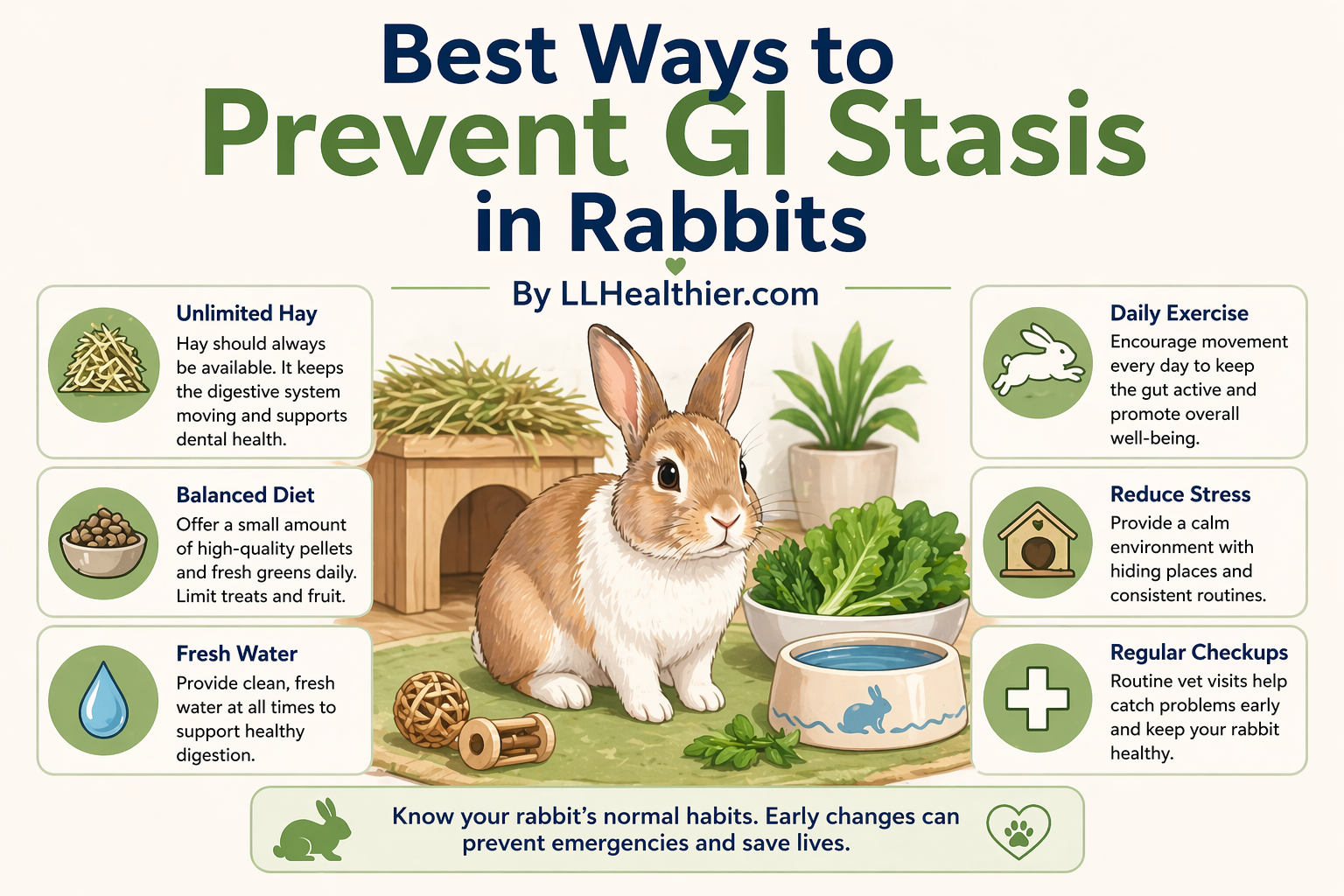
Best Ways to Prevent GI Stasis in Rabbits
Rabbits are gentle, intelligent animals that can make wonderful companions. They are playful, curious, and often full of personality once they feel safe in their environment. At the same time, rabbits have delicate digestive systems that require proper daily care. One of the most serious health problems rabbit owners should understand is gastrointestinal stasis, often called GI stasis.
GI stasis happens when the normal movement of the digestive tract slows down or stops. Food and hair can begin to sit in the stomach and intestines rather than moving through properly. Gas may build up, appetite often drops, and the rabbit can become uncomfortable very quickly. Without prompt attention, GI stasis can become life-threatening.
The encouraging news is that many cases can be reduced or prevented through good husbandry, proper nutrition, exercise, hydration, and early recognition of warning signs. Prevention is far easier than treating a rabbit who is already sick and refusing food.
Understanding how a rabbit’s digestive system works can help owners make choices that protect long-term health.
Why Rabbits Are Prone to GI Stasis
Rabbits are herbivores designed to graze frequently throughout the day and night. Their digestive tract works best when a steady stream of fiber keeps material moving. Unlike some animals that do well with a few meals each day, rabbits thrive when eating often.
When fiber intake drops, hydration decreases, pain develops, stress rises, or illness is present, the gut may slow down. Once appetite decreases, the problem can worsen because less food intake means less movement through the intestines.
This creates a cycle that can become serious quickly.
GI stasis is often not one single disease. It is commonly a result of another issue such as poor diet, dental pain, dehydration, stress, obesity, lack of movement, or underlying illness.
Unlimited Hay Is the Foundation
If there is one prevention strategy that matters most, it is unlimited access to fresh grass hay. Timothy hay, orchard grass, meadow hay, and other grass hays provide the fiber rabbits need to keep the digestive tract active.
Hay also supports dental health because the chewing motion helps wear teeth naturally. Since dental pain can trigger reduced eating and GI slowdown, hay helps in more than one way.
Many owners underestimate how much hay a rabbit should eat. Hay should make up the majority of the daily diet and should always be available.
A rabbit who nibbles only pellets and ignores hay is at higher risk for digestive trouble over time.
Choose Pellets Carefully
Pellets can be part of a healthy diet, but they should not dominate the menu. Overfeeding pellets may reduce hay consumption, which means less fiber intake and less chewing.
Choose plain, high-quality pellets made for rabbits rather than colorful mixes containing seeds, corn, nuts, or sugary extras. Those mixed products often encourage selective eating and poor nutrition.
Pellet portions should be appropriate for the rabbit’s size, age, and health status. Your veterinarian can help guide ideal amounts.
Think of pellets as a supplement to hay, not the main event.
Offer Fresh Greens Daily
Leafy greens can support hydration, variety, and nutrition when introduced properly. Many rabbits enjoy romaine lettuce, green leaf lettuce, cilantro, parsley, basil, and similar greens.
Fresh greens provide moisture, which supports healthy digestion. They also encourage natural foraging behavior and make meals more interesting.
Introduce new vegetables gradually. Sudden diet changes can upset digestion. If a rabbit has not eaten a certain food before, begin with a small amount and observe stool quality and appetite.
Variety is helpful, but consistency matters too.
Keep Fresh Water Available
Hydration plays a major role in digestive health. When rabbits are dehydrated, gut contents can become drier and harder to move normally.
Provide fresh water at all times. Some rabbits drink better from a heavy bowl than from a bottle, while others use both. Many owners offer both options and monitor preference.
Clean water containers daily.
A rabbit who is drinking less than usual should be watched closely, especially if appetite also declines.
Encourage Daily Exercise
Movement supports digestion.
Rabbits who spend long periods confined in small spaces may be less active, gain weight, and experience slower gut motility. Daily exercise allows the body to move naturally and helps stimulate normal intestinal function.
Provide safe time outside the cage or enclosure each day in a rabbit-proofed area. Tunnels, cardboard boxes, hideouts, and toys can encourage exploration.
Even rabbits in large enclosures benefit from time to run, stretch, and hop freely.
A moving rabbit is often a healthier rabbit.
Reduce Stress in the Environment
Rabbits are prey animals, which means they are sensitive to stress. Loud noises, rough handling, predator scents, sudden changes, overcrowding, loneliness, heat, and chaotic environments can affect appetite and gut function.
Create a calm, predictable home setup. Give your rabbit hiding spaces where they can retreat and feel secure. Handle gently and respectfully. Keep dogs and cats supervised around rabbits, even if they seem friendly.
Stress does not always look dramatic. Sometimes a rabbit simply becomes quieter and eats less.
That subtle change can matter.
Watch Dental Health Closely
Rabbit teeth grow continuously. If teeth beome overgrown, misaligned, or sharp, eating can become painful.
A rabbit with dental discomfort may still approach food but eat less, chew strangely, drop food, or prefer softer items. As intake declines, GI stasis risk rises.
Regular veterinary exams are important because some dental problems are hidden deep in the mouth and not obvious at home.
Hay helps prevent some dental issues, but it does not replace professional care.
Maintain a Healthy Weight
Obesity can contribute to lower activity levels, difficulty grooming, and overall health problems. Overweight rabbits may also struggle to clean themselves well, leading to excess hair ingestion during grooming.
At the same time, sudden weight loss can signal illness.
Routine weigh-ins help owners notice trends early. A kitchen scale works well for smaller rabbits, while larger rabbits may need a pet or baby scale.
Healthy body condition supports mobility and resilience.
Help During Shedding Seasons
Rabbits groom themselves often and swallow hair during molts. Normally, hair passes through the digestive tract when fiber intake and motility are strong.
Problems arise when the gut slows and hair accumulates rather than moving through.
During heavy shedding periods, brush your rabbit regularly if they tolerate it. Increase attention to hay intake, hydration, and stool output.
Owners sometimes blame hair as the cause of GI stasis, but hair is often part of the picture rather than the root cause. The real issue is usually slowed gut movement.
Avoid Sudden Diet Changes
Rabbit digestion prefers stability.
Abruptly switching pellets, removing hay types overnight, adding large amounts of new treats, or introducing unfamiliar vegetables too quickly can upset the digestive system.
If changing foods, do so gradually over several days or longer when possible.
Consistency may sound boring to humans, but rabbits often thrive on it.
Limit Sugary Treats
Fruit and commercial rabbit treats can be enjoyed in moderation, but too many sweet foods may displace hay and contribute to digestive imbalance.
Yogurt drops and similar processed treats are not appropriate for rabbits, despite marketing claims.
Use treats sparingly and focus on species-appropriate nutrition first.
Many rabbits are just as happy receiving fresh herbs or a favorite leafy green.
Know Your Rabbit’s Normal Habits
One of the best prevention tools is simple observation.
Know how much your rabbit usually eats, drinks, poops, moves, and behaves. Rabbits often show subtle signs before serious illness becomes obvious.
If your normally food-motivated rabbit ignores breakfast, sits hunched, hides more, produces fewer droppings, or seems quieter than usual, pay attention.
Early action can prevent a minor slowdown from becoming an emergency.
Warning Signs That Need Prompt Attention
A rabbit who is not eating normally should always be taken seriously. Loss of appetite is often one of the earliest signs of trouble.
Other warning signs include smaller or fewer droppings, no droppings, tooth grinding, bloating, lethargy, hiding, reluctance to move, pressing the belly to the floor, or signs of pain.
Rabbits can decline quickly.
Do not wait a day or two hoping it resolves if appetite and stool output are clearly abnormal.
Why Home Remedies Alone Can Be Risky
Owners sometimes search for quick home fixes such as pineapple juice, random oils, or over-the-counter products. These approaches can delay proper treatment.
GI stasis often requires veterinary assessment because pain control, hydration, assisted feeding, imaging, medication, or treatment of the underlying cause may be needed.
A blockage can mimic stasis and requires urgent care.
When in doubt, call a rabbit-savvy veterinarian promptly.
The Importance of Routine Veterinary Care
Annual or semiannual exams can catch problems before they become emergencies. Dental disease, weight issues, arthritis, chronic pain, parasites, and subtle illness may all increase stasis risk.
Older rabbits especially benefit from closer monitoring.
Building a relationship with a veterinarian experienced in rabbit medicine before an emergency happens is wise.
Not every clinic has deep rabbit expertise, so planning ahead matters.
A Healthy Daily Routine
A strong prevention routine often looks simple. Fresh hay available at all times. Clean water always accessible. Measured pellets. Daily leafy greens. Exercise time. Clean housing. Gentle handling. Observation of appetite and droppings.
These basics create the conditions where digestion usually works best.
Most rabbit health success stories are built on consistent daily care rather than fancy products.
GI stasis in rabbits is serious, but many risk factors are manageable. Unlimited hay, proper hydration, daily movement, stress reduction, dental care, weight management, and close observation can dramatically support digestive health.
Rabbits often give subtle warnings before a crisis. Owners who know their pet’s normal habits are in the best position to notice change early.
If your rabbit stops eating, produces fewer droppings, seems painful, or acts unusually quiet, seek veterinary help promptly.
Prevention begins with routine care, and routine care can help your rabbit enjoy a longer, healthier, more comfortable life.
Found this article interesting? Bookmark it to read again later.
Then, share it for others to read. 🌎
Thank you!







Post Comment