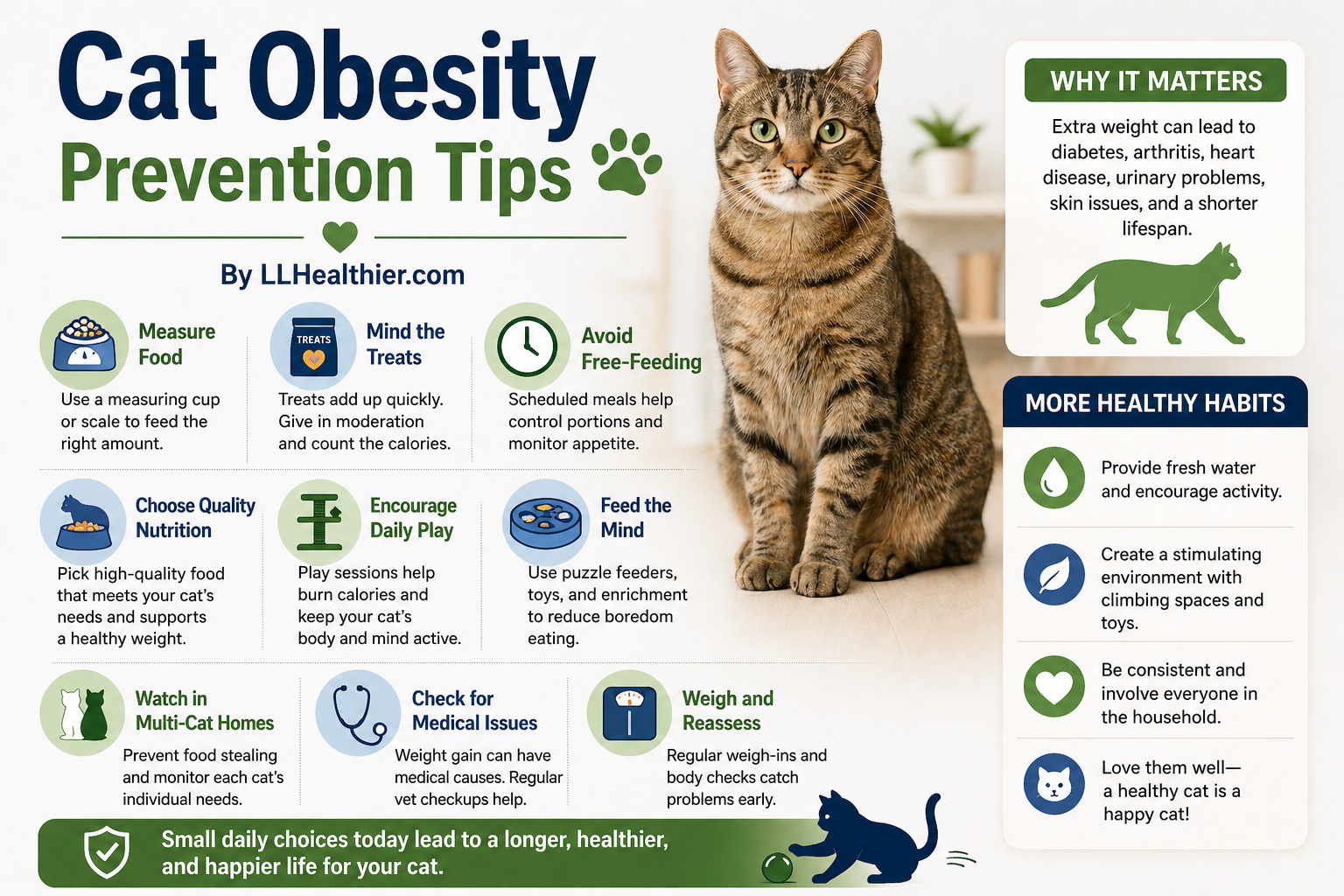
Tips to Prevent Cat Obesity
Cat obesity is one of the most common health problems veterinarians see today. Many loving owners do not realize their cat is overweight until the issue has already become significant. Because weight gain often happens slowly, a heavier body can begin to look normal over time. What seems like a harmless extra pound on a cat can place real stress on a much smaller frame.
Preventing obesity matters because excess weight can affect nearly every part of a cat’s health. It increases the risk of diabetes, arthritis, heart strain, urinary problems, skin issues, and reduced mobility. Overweight cats may groom less effectively, play less often, and experience lower overall quality of life. The good news is that prevention is usually much easier than reversing severe weight gain later.
Many people associate feeding with love. Food can certainly be part of care, but true love also includes protecting long-term health. Smart feeding habits, daily movement, and regular veterinary guidance can help cats stay leaner, more comfortable, and more active through the years.
Why Cats Gain Weight So Easily
Most house cats live safer lives than outdoor cats, which is wonderful in many ways. They face fewer dangers, avoid traffic, and are less exposed to disease and predators. However, indoor living can also mean less natural movement and more easy access to food.
Cats were designed to stalk, chase, climb, and hunt in bursts throughout the day. A cat who naps near a full bowl and moves very little may burn far fewer calories than their body expects. Add calorie-dense treats or oversized portions, and gradual weight gain becomes common.
Age, genetics, neuter status, and medical conditions can also play a role. Still, daily habits remain one of the biggest factors.
Learn What a Healthy Body Looks Like
Many owners judge weight by the scale alone, but body shape matters too. A healthy cat often has a visible waist when viewed from above and a slight abdominal tuck when viewed from the side. You should generally be able to feel the ribs under a light layer of padding without pressing hard.
If the waist disappears, the belly hangs heavily, or the ribs are difficult to feel, excess weight may be developing. Long-haired cats can hide body changes under thick fur, which makes hands-on assessment especially helpful.
Your veterinarian can provide a body condition score and show you what healthy looks like for your specific cat.
Measure Food Instead of Guessing
One of the most effective obesity prevention habits is measuring meals. Many people pour food into a bowl by eye and unintentionally overfeed. Even small daily excesses can add up over months and years.
Use a measuring cup or kitchen scale based on your veterinarian’s guidance and the calorie content of the food. Packaging directions are general estimates and may not fit your cat’s age, activity level, or metabolism. Precision often prevents problems that guesswork creates.
Understand Calories in Treats
Treats are a common hidden source of weight gain. Owners may give several small treats a day without realizing how quickly calories accumulate in a small animal. For a cat, what seems tiny to us may be meaningful nutritionally.
Treats do not need to disappear completely, but moderation matters. Reserve them for training, bonding, or occasional rewards rather than constant habit. Some cats are just as happy with play, brushing, or affection.
Love does not always need to come in edible form.
Avoid Free-Feeding When Possible
Free-feeding means leaving food available all day for grazing. While some cats self-regulate well, many do not. Cats prone to boredom eating or competition in multi-cat homes may consume more than needed.
Scheduled meals often make portion control easier and let owners monitor appetite changes. Appetite shifts can be an early clue to illness, so knowing what your cat normally eats has value beyond weight control. Meal structure can create healthier rhythms for both cats and humans.
Choose Food Quality Wisely
Not all cat foods are equal in calorie density or nutritional profile. Some formulas pack many calories into a small volume, making overeating easy. Others may be more filling or better suited for weight maintenance.
Cats are obligate carnivores, so quality protein is important. Your veterinarian can help guide choices based on age, health conditions, and body condition. Wet food can be useful for some cats because it often provides hydration and can help with satiety.
The best food is not always the most expensive one. It is the one that fits your cat’s needs.
Encourage Daily Movement
Exercise is not just for dogs. Cats benefit greatly from movement, especially indoor cats. Short, playful sessions each day can help burn calories, preserve muscle, reduce boredom, and support mental health.
Use wand toys, feather teasers, balls, laser pointers followed by a real toy reward, or food puzzles that require effort. Many cats prefer brief bursts of activity rather than long sessions. Two or three ten-minute playtimes may work better than one long attempt. Movement should feel like fun, not forced labor.
Use the Home Environment
Cats often become more active when the environment invites it. Cat trees, window perches, tunnels, shelves, scratching posts, and climbing spaces can naturally increase movement. Curiosity drives many cats to explore when interesting options exist.
You can also place beds, water bowls, and litter boxes in ways that encourage walking rather than placing everything in one tiny zone. Rotating toys keeps novelty alive.
A stimulating home supports a healthier body.
Feed the Mind Too
Some cats eat from boredom rather than hunger. If a cat spends long days alone with little stimulation, food may become the main event. This can lead to repeated bowl visits and extra calories.
Interactive toys, bird-watching windows, puzzle feeders, scent enrichment, and regular owner interaction can help. Mental stimulation often reduces passive eating..A busy brain may need less comfort from the food bowl.
Be Careful in Multi-Cat Homes
Weight management becomes trickier when multiple cats share space. One cat may eat slowly while another steals food. A lean cat may need more calories while a heavier cat needs less.
Separate feeding areas or scheduled supervised meals can help. Microchip feeders may be useful in some households. Monitoring each cat individually is important because group feeding can hide problems..Every cat deserves a personalized plan.
Watch for Medical Causes
Not all weight gain is purely lifestyle related. Some cats gain weight due to reduced activity from arthritis pain, endocrine disorders, or other medical issues. Others may seem hungry because of stress or illness.
If your cat gains weight despite reasonable habits, schedule a veterinary exam. Sudden changes in appetite, mobility, thirst, grooming, or behavior should also be evaluated. Health problems are easier to manage when caught early.
Do Not Crash Diet a Cat
If your cat is already overweight, avoid severe calorie restriction without veterinary supervision. Cats are not small dogs, and rapid weight loss can be dangerous. A serious liver condition called hepatic lipidosis can occur if cats stop eating or lose weight too quickly.
Safe weight loss should be gradual, structured, and monitored. This often includes specific calorie targets and follow-up weigh-ins. Slow progress is healthy progress.
Weigh and Reassess Regularly
Routine check-ins matter. Weighing your cat periodically at home or during veterinary visits helps catch gradual changes early. You can weigh yourself holding the cat, then subtract your weight, or use a pet scale if available.
Numbers tell part of the story, while body shape and energy tell the rest. If a trend starts moving upward, small adjustments now are easier than major corrections later.
Prevention works best when changes are noticed early.
Keep Everyone in the Home Consistent
One family member may measure meals while another slips extra snacks under the table. Inconsistent habits can quietly sabotage progress. Everyone in the home should understand the feeding plan.
This includes children who love giving treats and grandparents who equate snacks with affection. Unified routines create better outcomes.
Consistency is often more important than perfection.
Cat obesity prevention comes down to thoughtful daily habits. Measured meals, moderate treats, quality nutrition, regular play, environmental enrichment, and routine veterinary care all help protect a healthy weight. These habits support not only appearance, but mobility, comfort, and long-term wellness.
Cats rarely complain when weight gain starts, so owners must notice what cats cannot explain. Prevention is one of the kindest gifts you can give a feline companion.
A leaner cat is often a happier, more active cat with more healthy years ahead.
Found this article interesting? Bookmark it to read again later.
Then, share it for others to read. 🌎
Thank you!







Post Comment