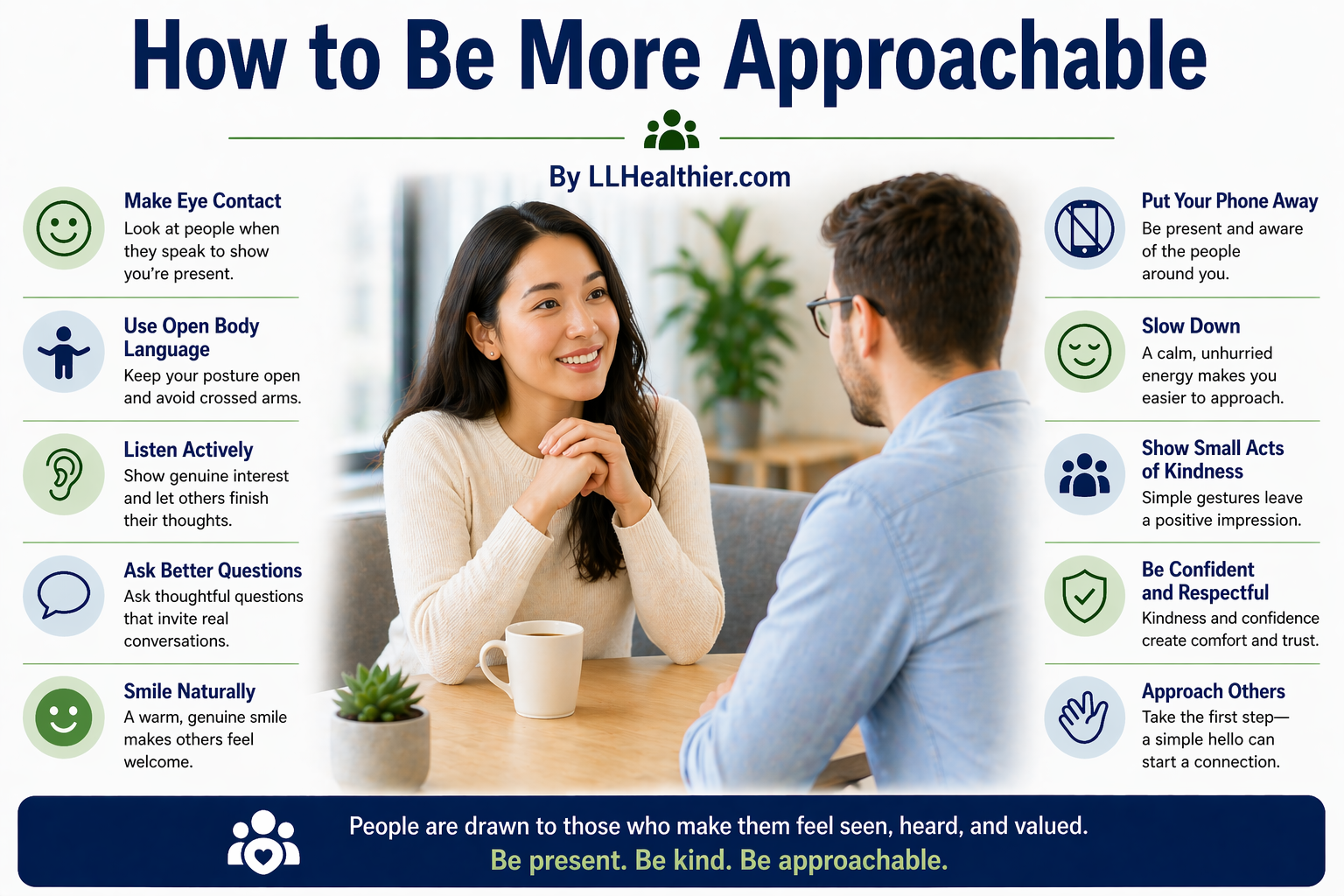
How to Be More Approachable
Many people want stronger friendships, better networking opportunities, warmer relationships, and easier conversations, yet they unknowingly give off signals that keep others at a distance. They may seem rushed, distracted, guarded, tense, or uninterested without meaning to. Then they wonder why people rarely start conversations, open up, or include them. In many cases, the issue is not personality. It is presentation.
Being approachable does not mean becoming fake, overly cheerful, or available to everyone all the time. It means creating an atmosphere that feels safe, welcoming, and easy to enter. Approachable people tend to communicate openness through body language, tone, attention, and emotional steadiness. Others often feel more comfortable around them without fully knowing why.
The encouraging part is that approachability is not a trait reserved for extroverts. It is a skill set that can be learned by quiet people, busy people, shy people, and naturally reserved people. Small adjustments often create noticeable results.
What Approachability Really Means
Approachability is the sense that someone is emotionally and socially accessible. It suggests that speaking to you is likely to feel pleasant, respectful, and low-risk. People are naturally drawn toward those who seem calm, kind, attentive, and grounded.
This does not mean everyone must like you. It does not mean you should tolerate poor treatment or become endlessly accommodating. Healthy approachability includes warmth and boundaries at the same time. You can be welcoming without losing yourself.
Many people confuse approachability with popularity. In reality, it is more about comfort than status.
Your Face Speaks Before You Do
Long before words begin, facial expression sends signals. A tense jaw, furrowed brow, blank stare, or distracted look can unintentionally suggest irritation or disinterest. Meanwhile, a softer expression often communicates safety and openness.
You do not need to smile constantly like a customer service robot. Forced cheerfulness can feel unnatural. Instead, aim for a relaxed face, gentle eye contact, and moments of genuine warmth when interacting with others.
Many people are told they look intimidating when they are simply thinking deeply. Awareness alone can make a major difference.
Eye Contact Builds Trust
Eye contact is one of the clearest signals of engagement. When someone speaks and you glance up briefly, maintain comfortable eye contact, and stay present, they feel acknowledged. When you constantly look at your phone, scan the room, or stare past them, they may assume you would rather be elsewhere.
Healthy eye contact does not mean staring intensely. It means natural connection with occasional breaks. Think of it as showing attention rather than proving dominance.
Even a few extra seconds of warm eye contact can make you seem far more approachable.
Put the Phone Away More Often
Phones are one of the biggest barriers to modern connection. Many people sit in waiting rooms, cafes, elevators, and gatherings with eyes locked to a screen. This creates an invisible wall around them.
If you want more conversation and connection, become visibly available sometimes. Lift your head. Put the phone away during pauses. Notice the people around you.
A person looking up at life is easier to approach than a person buried in a device.
Use Open Body Language
Body language often matters more than spoken words. Crossed arms, turned shoulders, closed posture, or standing far away can signal discomfort or disinterest. Open posture tends to invite interaction.
Try uncrossing your arms, facing people directly, and keeping shoulders relaxed. If seated, avoid curling inward as if protecting yourself from the room. If standing, give your body a settled, grounded presence.
The body can say “welcome” before the mouth ever does.
Slow Down the Rushed Energy
Some people move through life with hurried intensity. Their pace is fast, answers are short, and attention feels divided. Even if they are kind, others may hesitate to engage because they seem too busy.
Approachability often grows when energy becomes calmer. Pause before responding. Walk with a little less urgency when possible. Let your attention land fully for a moment.
People tend to approach those who seem to have room for human interaction.
Learn the Power of Small Warmth
Warmth is rarely dramatic. It lives in small behaviors. Saying hello first, remembering a name, asking how someone is doing, holding a door, thanking a cashier, or greeting neighbors consistently can change how others experience you.
These moments communicate friendliness without requiring deep extroversion. Many people assume approachability means being highly social. Often it simply means being lightly warm on a regular basis.
Tiny gestures build a reputation over time.
Listen in a Way People Can Feel
Nothing makes a person feel welcomed like being genuinely heard. Many conversations fail because people are waiting to speak rather than listening to understand. They interrupt, redirect, or mentally check out.
Approachable people tend to listen with their eyes, posture, and responses. They ask follow-up questions. They notice details. They let others finish thoughts.
Being a good listener often makes people experience you as charismatic, even if you say little.
Ask Better Questions
Some people want connection but rely on flat conversation starters. Asking only “How are you?” or talking mainly about logistics can keep interactions shallow. Better questions create easier openings.
You might ask, “How has your week been?” or “What are you looking forward to lately?” or “How did you get into that line of work?” These questions invite fuller answers without being intrusive.
Curiosity is one of the most approachable qualities a person can have.
Be Less Self-Critical in Public
Many people become guarded because they are focused on themselves. They worry how they look, what others think, whether they sound awkward, or if they are being judged. This self-monitoring can create stiff energy and emotional distance.
When attention turns outward with kindness, approachability increases. Notice others more than your own performance. Become interested rather than self-protective.
Most people are not grading you nearly as much as you imagine.
Manage Irritability
Chronic stress can make kind people seem unapproachable. Lack of sleep, burnout, anxiety, financial pressure, and overstimulation often show up as impatience, sharpness, or emotional flatness.
If people seem to keep their distance, it may be worth asking whether stress is leaking through your presence. Sometimes the solution is not social technique. It is rest, healing, and nervous system care.
A regulated person often feels safer to approach.
Confidence Without Arrogance
Approachability is helped by quiet confidence. People are often comfortable around those who seem secure without needing to impress anyone. They speak clearly, stay humble, and do not dominate every interaction.
Arrogance tends to repel because it creates hierarchy. Insecurity can repel when it demands constant reassurance. Quiet confidence creates ease because it does not make the interaction about status.
Calm self-respect is inviting.
Smile When It Is Real
A genuine smile remains powerful. It softens tension, communicates friendliness, and lowers social barriers quickly. This does not mean smiling nonstop or forcing happiness when miserable.
It means allowing warmth to show when it naturally arises. Smile when greeting someone, hearing something amusing, or appreciating a moment.
Authenticity matters more than frequency.
Approach Others Too
Some people complain that nobody talks to them while never initiating themselves. Waiting passively can reinforce loneliness. Approachability includes willingness to meet others halfway.
Say hello first sometimes. Start simple conversations. Compliment sincerely. Introduce yourself in group settings. Ask a coworker about their weekend.
Often the social world opens when you become part of opening it.
Respect Boundaries
Being approachable does not mean oversharing, interrupting others, or forcing conversation. Warmth works best when paired with awareness. Notice cues. If someone seems rushed or uninterested, let it go gracefully.
Healthy social energy respects space. That respect often makes future connection more likely.
Pushiness and approachability are not the same thing.
Practice in Ordinary Places
You do not need a major personality makeover. Practice in everyday settings. Make eye contact with the barista. Greet neighbors. Chat briefly with a cashier. Ask one extra question at work. Relax your posture in waiting rooms.
These low-pressure repetitions retrain your social presence. Small wins build confidence naturally.
Consistency matters more than intensity.
Being more approachable is less about becoming louder or more outgoing and more about becoming warmer, calmer, and more present. Facial expression, eye contact, body language, listening, emotional steadiness, and small acts of friendliness all play a role.
You do not need to become someone else. You may simply need to remove habits that accidentally create distance.
Approachability is often the visible result of inner security and outward kindness. When people feel safe near you, connection becomes much easier to begin.
Found this article interesting? Bookmark it to read again later.
Then, share it for others to read. 🌎
Thank you!









Post Comment