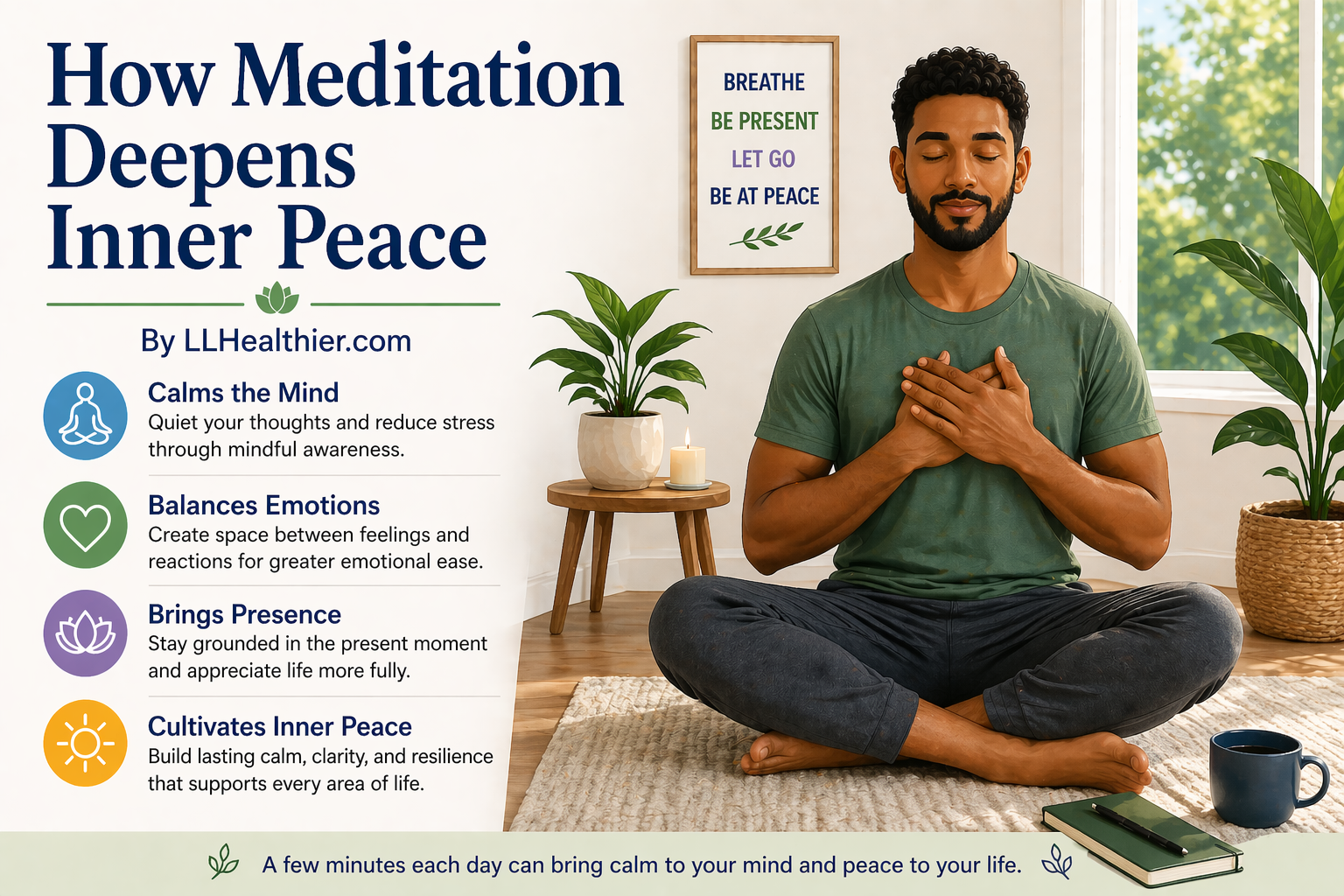
How Meditation Deepens Inner Peace
Many people want inner peace, yet they search for it only in outside circumstances. They tell themselves peace will come after the bills are paid, the workload slows down, the relationship improves, or life becomes more predictable. While practical improvements can certainly reduce stress, lasting peace usually grows from the inside rather than arriving from the outside. This is one reason meditation has remained valuable across generations and cultures.
Meditation is often misunderstood. Some imagine it requires hours of silence, unusual poses, or removing every thought from the mind. In truth, meditation is a practical skill that helps people become calmer, clearer, and more present. It teaches the mind how to rest, the body how to soften, and the heart how to respond rather than react.
For the average American dealing with schedules, responsibilities, digital noise, and constant demands, meditation can become a steady refuge. It does not remove life’s challenges, but it changes how those challenges are experienced. Over time, that shift can create a deeper sense of peace that remains available even during stressful seasons.
What Inner Peace Really Means
Inner peace does not mean a life without problems. It does not mean you never feel sadness, anger, frustration, or uncertainty. It means there is a steadiness within you that remains present even when emotions rise and circumstances change. Peace is less about perfection and more about groundedness.
Many people confuse peace with excitement or pleasure. Those feelings can be enjoyable, but they often come and go quickly. Inner peace is quieter and more durable. It feels like calm confidence, emotional balance, and the ability to breathe fully in the moment you are living.
Meditation helps cultivate this steadiness because it trains attention. Instead of being dragged around by every thought and feeling, you learn to witness them with more wisdom. That alone can change daily life in meaningful ways.
The Modern Mind Is Often Overloaded
Most Americans live in an environment that keeps the nervous system activated. Phones buzz, messages arrive constantly, headlines compete for attention, and responsibilities rarely pause for long. Even moments that could be restful are often filled with more stimulation. Many people have become so accustomed to mental noise that silence feels uncomfortable.
An overloaded mind often becomes a reactive mind. Small frustrations feel larger, patience shortens, and sleep becomes more difficult. Thoughts race from one topic to the next without much space in between. In that state, peace can feel far away.
Meditation offers something different. It creates a pause in the flood of input. It allows the mind to settle, sometimes slowly, sometimes quickly, but always beneficially when practiced with consistency.
Meditation Teaches Presence
One of the strongest ways meditation deepens peace is by bringing attention into the present moment. Much emotional suffering comes from living mentally in the past or future. People replay mistakes, worry about tomorrow, imagine worst-case scenarios, or compare themselves endlessly to others. The body may be in the present, but the mind is elsewhere.
Meditation gently brings awareness back to now. You notice your breath, the feeling of your body in the chair, the sounds around you, and the simple fact that this moment is manageable. The present often contains more safety than the thoughts surrounding it. Returning to now can feel like stepping out of a storm and into shelter.
Presence also improves appreciation. When attention is here, you notice things that rush normally hides. A warm cup of coffee, sunlight through a window, a child’s laugh, or a peaceful evening breeze can become meaningful again.
Thoughts Lose Some of Their Power
Many people assume every thought deserves belief. If the mind says you are failing, they believe it. If the mind predicts disaster, they panic. If the mind replays embarrassment, they feel trapped in it again. Thoughts can become loud authorities when left unexamined.
Meditation changes that relationship. You begin noticing thoughts as events passing through the mind rather than facts carved in stone. A worried thought may arise, but instead of chasing it, you observe it and let it move on. A self-critical thought may appear, but you recognize it as mental activity, not ultimate truth.
This creates tremendous relief. You do not need to fight every thought or obey every thought. Sometimes peace comes simply from realizing the mind speaks often, but not always accurately.
The Body Learns to Relax
Stress is not only mental. It lives in the body as tight shoulders, shallow breathing, jaw tension, headaches, digestive discomfort, and restless sleep. Many people carry tension so constantly that they stop noticing it. The body remains braced long after the stressful moment has passed.
Meditation helps reverse that pattern. Slow breathing signals safety to the nervous system. Stillness invites muscles to release. Awareness helps you notice where tension is hiding so it can soften. With practice, the body remembers how to relax more easily.
When the body calms, the mind often follows. Peace is harder to access when the nervous system believes it is always under threat. Meditation teaches the system a new message.
Emotional Reactions Become Less Intense
Life will always include difficult moments. Someone cuts you off in traffic, a coworker sends a frustrating email, a family member says the wrong thing, or plans fall apart unexpectedly. Without awareness, these moments can trigger fast reactions that create even more stress. Anger rises quickly, words come sharply, and regret follows later.
Meditation helps build a pause between stimulus and response. That pause may be only a few seconds, but it can change everything. In those seconds, you notice your reaction, take a breath, and choose a wiser next step. Over time, this becomes a powerful form of emotional freedom.
Peace is not never being triggered. Peace is gaining skill in how you meet what triggers you.
Self-Compassion Grows
Many adults are far harder on themselves than they realize. They criticize mistakes, compare themselves harshly, and treat their own struggles with impatience. This inner voice can become a steady source of stress. Even when life is going well externally, self-judgment can keep peace out of reach.
Meditation increases awareness of inner dialogue. You begin hearing the tone you use with yourself. Once noticed, that tone can be softened. You can learn to meet yourself with patience, honesty, and kindness.
Self-compassion does not make people weak or complacent. It often makes growth more sustainable because change rooted in kindness tends to last longer than change rooted in shame.
Consistency Matters More Than Length
Many people avoid meditation because they think they need large blocks of free time. In reality, five to ten minutes practiced consistently can be powerful. A short morning session can shape the tone of the day. A midday pause can reset stress. An evening practice can prepare the body for rest.
Meditation works much like physical exercise. Occasional marathon sessions are less helpful than regular modest practice. The benefits build through repetition. Calm becomes more familiar each time you return.
This makes meditation realistic for busy people. You do not need to disappear to a retreat center to experience change. You simply need a few honest minutes and the willingness to begin again tomorrow.
How to Start Simply
Starting can be uncomplicated. Sit comfortably in a chair or on the edge of the bed. Set a timer for five minutes. Close your eyes or soften your gaze. Notice your breathing without forcing it.
When the mind wanders, gently bring it back to the breath. It will wander many times, and that is normal. Returning attention is not failure. Returning attention is the practice itself.
Some people prefer guided meditations, calming music, or mindful walking. There is no single perfect method. The best practice is the one you will continue.
Peace Extends into Daily Life
The benefits of meditation do not stay on the cushion or chair. They follow you into conversations, decisions, traffic, parenting, work stress, and quiet evenings at home. You may notice greater patience, better listening, clearer thinking, and less emotional whiplash. Others may notice it before you do.
Daily life still happens, but it feels different when met by a steadier mind. Problems remain problems, yet they do not dominate the whole inner landscape. There is more room to breathe and think clearly.
That is how meditation deepens peace. It does not change every circumstance. It changes the one meeting those circumstances.
Meditation deepens inner peace by calming the nervous system, strengthening presence, loosening the grip of stressful thoughts, and helping emotions move through with less chaos. It teaches the mind to return, the body to soften, and the heart to respond with greater wisdom. These changes are often gradual, but they are real and lasting when practiced consistently.
You do not need to become a different person to benefit from meditation. You simply need moments of stillness and a willingness to keep showing up. Peace is often not missing at all. It is simply waiting beneath the noise.
Found this article interesting? Bookmark it to read again later.
Then, share it for others to read. 🌎
Thank you!






Post Comment