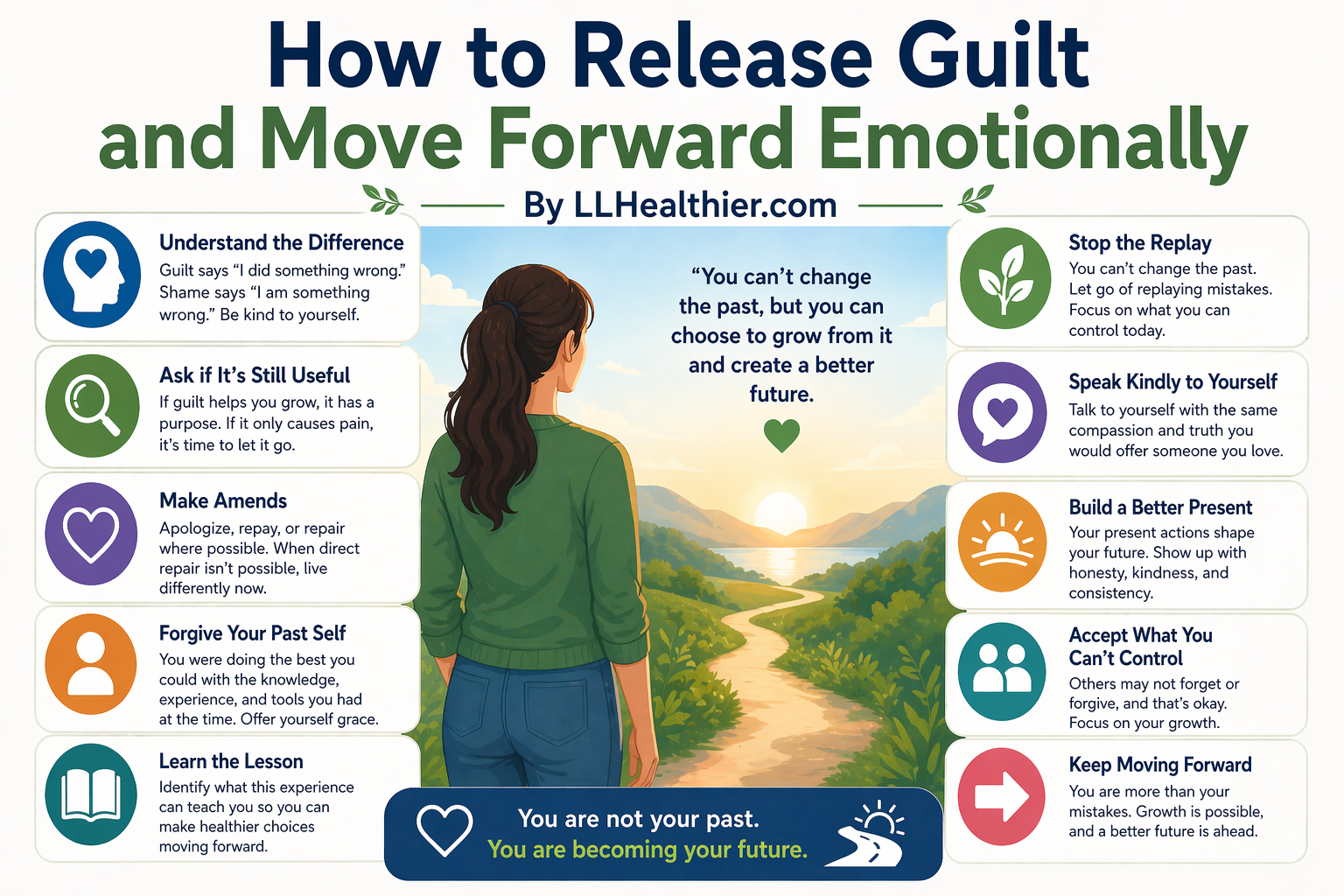
How to Release Guilt and Move Forward Emotionally
Guilt is one of the heaviest emotions a person can carry. It can follow you into quiet moments, interrupt sleep, cloud relationships, and keep the mind replaying old decisions long after the moment has passed. Many people appear fine on the outside while privately carrying years of regret, shame, and self-blame.
In some cases, guilt serves a healthy purpose. It can alert us when our actions were out of alignment with our values. It can motivate repair, honesty, growth, and change. This kind of guilt can be useful because it points us back toward integrity.
The problem begins when guilt never leaves after the lesson has already been learned. Instead of guiding growth, it becomes a prison. It keeps people emotionally stuck in chapters that are over.
If you have been carrying guilt for a long time, please know that healing is possible. Releasing guilt does not mean pretending nothing happened. It means learning from the past without living there forever.
Understanding the Difference Between Guilt and Shame
Many people use guilt and shame as if they are the same, but they are different experiences.
Guilt usually says, “I did something wrong.”
Shame says, “I am something wrong.”
That difference matters deeply. Healthy guilt can lead to responsibility and repair. Shame attacks identity and creates hopelessness. It convinces people they are permanently damaged, unworthy, or beyond redemption.
When trying to heal emotionally, it helps to identify which one you are carrying. You may think you feel guilt, when in truth you are living under shame.
Why Guilt Can Linger for Years
Some guilt remains because the issue was never fully addressed. There may have been no apology, no honest reflection, or no closure. In other cases, guilt lingers because a person has unrealistic standards and expects perfection from themselves.
Sometimes guilt is tied to grief.
A person may feel guilty after a loved one dies, replaying things they wish they had said or done. Parents often feel guilt about mistakes with children. People feel guilt after divorce, addiction, financial trouble, or seasons where mental health was poor.
Human beings are complicated. Life is rarely lived with complete clarity in the moment. Many decisions are made while tired, wounded, uninformed, stressed, immature, or overwhelmed.
Remembering that context matters.
Ask Whether the Guilt Is Still Useful
Not all guilt deserves lifelong residence in your mind.
Ask yourself a simple question: Is this guilt helping me grow today, or is it only punishing me?
If guilt is leading you to make amends, change behavior, and become more honest, it may still have a role. If it only creates self-hatred, paralysis, anxiety, or emotional exhaustion, it is no longer serving a healthy purpose.
Many people keep guilt because they believe punishment proves they care.
It does not.
Growth proves you care more than endless suffering ever will.
Accept That You Cannot Redo the Past
One reason guilt becomes chronic is the fantasy that enough mental replay might somehow change history.
People revisit conversations, mistakes, lost opportunities, betrayals, and poor choices over and over. The mind searches for a different ending that reality cannot provide.
This is understandable, but exhausting.
The past can be remembered, learned from, and honored. It cannot be edited. No amount of self-punishment changes what happened.
Healing often begins when you stop negotiating with time.
Make Amends Where Appropriate
Sometimes the healthiest path through guilt is action.
If you harmed someone and it is appropriate and safe to do so, a sincere apology may matter. If you owe money, begin repayment. If you neglected responsibilities, begin showing up differently now. If trust was broken, practice consistency and accountability.
Not every situation allows direct repair. Some people are unavailable, deceased, unsafe, or unwilling to reconnect. In those cases, indirect amends may be more realistic.
You can live differently now. You can become the kind of person who would not repeat the same harm.
That is a meaningful form of repair.
Forgive the Imperfect Version of You
Many people judge their past self using the wisdom they gained later.
They ask, “How could I have done that?” without remembering who they were then. Perhaps they were younger, scared, traumatized, addicted, depressed, lonely, desperate for approval, or lacking tools they have now.
This does not excuse harmful choices. It explains them in human terms.
Growth often requires compassion for the version of you who did not know what you know now.
You are allowed to acknowledge wrongdoing and still understand your humanity.
Stop Making One Chapter Your Whole Identity
A common emotional trap is turning one painful season into a permanent identity.
“I cheated, so I am a terrible person.”
“I failed financially, so I am irresponsible forever.”
“I was not a perfect parent, so I ruined everything.”
“I struggled with addiction, so I can never be trusted.”
People are more than their worst season.
A mistake may be part of your story, but it does not have to become your name.
Human beings are capable of growth, maturity, healing, and change.
Speak to Yourself the Way You Would Speak to Someone You Love
Many people carry guilt because their inner voice is brutal.
They say things to themselves they would never say to a friend. They use words like pathetic, disgusting, selfish, worthless, ruined, stupid, or beyond help.
Imagine someone you love made the same mistake and truly wanted to grow. How would you speak to them?
You would likely be honest, but also compassionate. You would encourage accountability without cruelty.
That tone matters. Harshness rarely creates lasting change. Truth with compassion often does.
Learn the Lesson Clearly
Sometimes guilt stays because the lesson has not been fully named.
Write it down plainly.
Maybe the lesson is to stop lying when afraid. Maybe it is to set boundaries sooner. Maybe it is to ask for help before crisis builds. Maybe it is to drink less. Maybe it is to choose healthier partners. Maybe it is to slow down before major decisions.
When the lesson becomes clear, guilt often loosens because it no longer needs to keep sounding the alarm.
The message has been received.
Release the Need to Be Innocent
Some people struggle deeply with guilt because they cannot tolerate being flawed.
They need to see themselves as the good spouse, perfect parent, responsible child, honest worker, kind friend, or strong person at all times. When life exposes imperfection, they collapse emotionally.
Maturity includes accepting that all people are mixed. We are capable of kindness and selfishness, courage and fear, wisdom and mistakes.
You do not need to be spotless to be worthy.
You need honesty and willingness to grow.
Let Grief Move Beside the Guilt
Sometimes guilt hides grief.
A person says, “I should have done more,” when the deeper pain is, “I miss them terribly.” Another says, “I ruined everything,” when the deeper truth is, “I am grieving what was lost.”
If loss is underneath your guilt, allow grief its rightful place.
Cry. Remember. Talk. Write. Honor what mattered.
Some guilt softens once grief is finally felt.
Build a Better Present
One of the strongest ways to release old guilt is to build a present life that reflects who you are now.
Be honest now. Love well now. Show up now. Parent better now. Manage money better now. Protect sobriety now. Speak kindly now. Keep promises now.
Current character can become stronger than past mistakes.
When your present life changes, the past gradually loses its power to define you.
Understand That Others May Not Forget
Part of guilt work involves accepting that some people may remain hurt or cautious.
You may apologize sincerely and still not receive reconciliation. You may change deeply and still carry consequences. This can feel unfair, but it is part of reality.
Healing does not always require everyone else’s approval.
Sometimes emotional freedom comes from doing your part and accepting what you cannot control.
When Therapy Can Help
Persistent guilt can be tied to trauma, obsessive thinking, depression, religious fear, childhood conditioning, or unresolved grief.
A therapist can help sort realistic responsibility from distorted blame. They can also help with forgiveness work, intrusive rumination, family wounds, and rebuilding self-worth.
You do not need to untangle everything alone.
Seeking help is a wise step, not a failure.
What Moving Forward Often Looks Like
Moving forward is rarely dramatic.
It may look like fewer mental replays. Better sleep. More patience with yourself. Less fear when the memory surfaces. A calmer ability to say, “Yes, I regret that, and I am not living there anymore.”
It may look like making wiser choices because of what you learned.
That is real healing.
Releasing guilt and moving forward emotionally does not mean denying mistakes or escaping accountability. It means learning from the past without chaining your identity to it.
Acknowledge what happened. Make amends where possible. Understand the person you were then. Learn the lesson. Build a better present. Practice self-compassion rooted in truth.
You cannot become your healthiest self while demanding lifelong punishment.
At some point, growth asks you to put the stone down and keep walking.
Found this article interesting? Bookmark it to read again later.
Then, share it for others to read. 🌎
Thank you!










Post Comment